Séfora Camazano · Art About Migration
Art About
Migration
Contemporary portraiture exploring migration, identity, memory, displacement and the emotional meaning of belonging.
“Migration changes geography, but it also transforms memory, language, identity and the way a person understands home.”
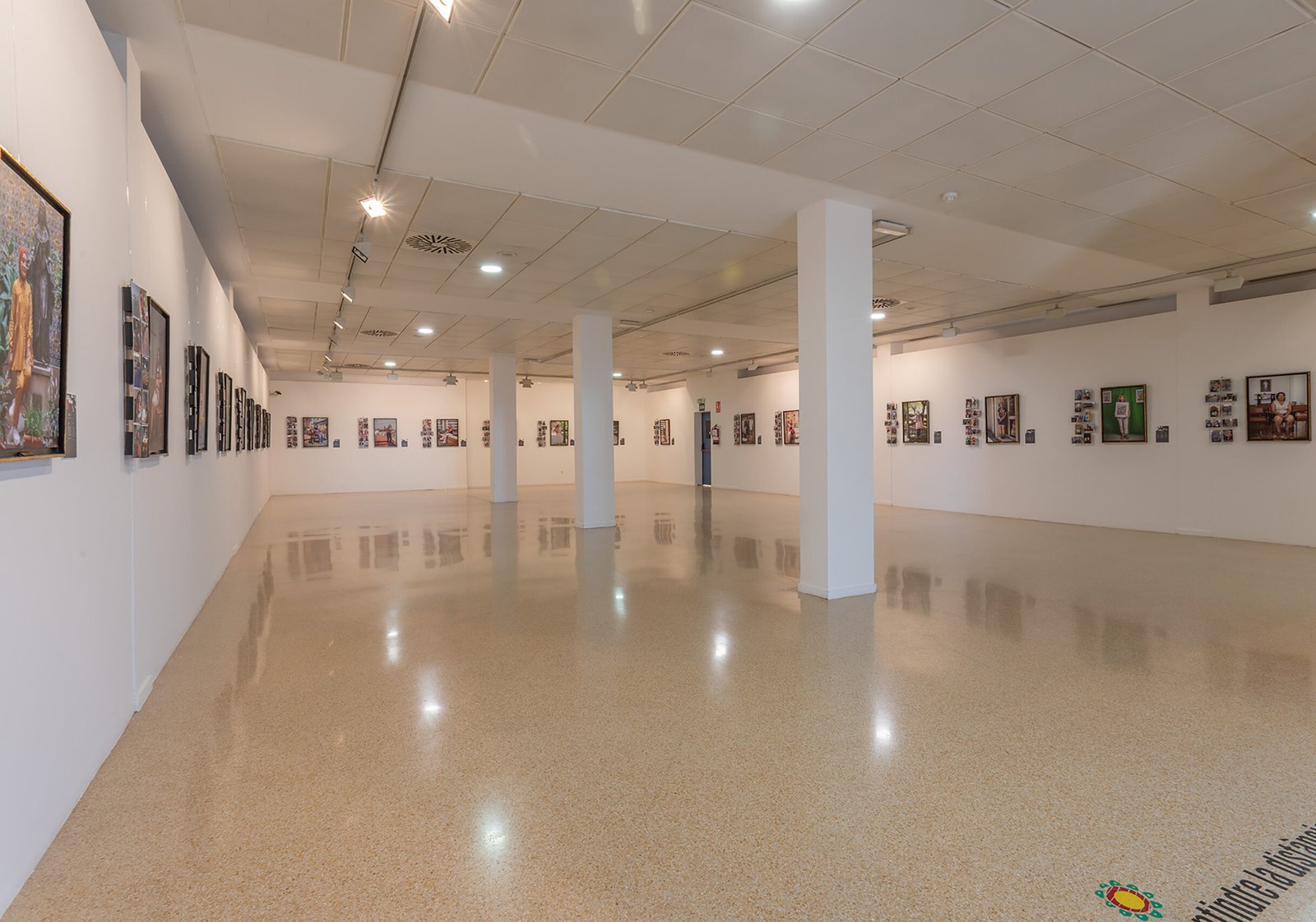
Female Portraits: Migrants · Casa de la Cultura, Alboraya, 2025
Migration in contemporary art
Art about migration as
a record of human experience
Séfora Camazano creates contemporary art about migration, identity and memory. Her work approaches migration not as an abstract statistic or political category, but as a lived experience shaped by departure, adaptation, loss, resilience and belonging.
Through portraiture, photography, digital painting and mixed-media intervention, Camazano examines how people carry their origins into new countries and how personal identity changes across languages, cultures and generations.
Her own journey from Brazil to Argentina and later to Spain gives this research a personal dimension. Migration is therefore not an external subject in her work, but part of the emotional and cultural position from which she creates.
Identity, memory and belonging
What remains when
a person leaves home?
Migration is often defined by movement between territories, but its effects continue long after arrival. Memory, language, family photographs, inherited traditions and everyday gestures become ways of preserving continuity.
Camazano’s work explores this tension between origin and present life. The people represented are shaped by where they come from, but they are never confined to a single national or cultural identity.
Their portraits reveal identity as something constructed over time: through encounter, adaptation, absence, cultural exchange and personal transformation.
The artwork becomes a space in which multiple places and moments can coexist.
“A migrant does not leave one identity behind and acquire another. Both continue to exist, change and negotiate their place within the same person.”
— Séfora CamazanoFemale Portraits: Migrants
Portraits as a living archive
of migration and memory
Female Portraits: Migrants is a photographic project bringing together portraits of migrant women from different countries and cultural backgrounds.
Each participant contributes personal photographs connected to her country of origin, childhood, family and migration experience. These images are presented alongside her contemporary portrait.
The resulting dialogue links past and present, private memory and public representation. Family photographs become historical documents, while the new portrait records the woman as she exists today.
The project creates a collective visual archive without erasing individual experience. Each woman retains her own voice, biography and relationship with migration.
 v
v
Artistic methodology
Transforming migration stories
into visual memory
01
Personal testimony
Conversation reveals the participant’s experience of origin, departure, adaptation, family and belonging.
02
Portrait and archive
Contemporary portraiture is placed in dialogue with personal photographs, family history and visual evidence of a life lived across places.
03
Collective memory
Individual stories form a wider visual archive about displacement, cultural continuity and the construction of identity.
Central themes
Migration understood through
people, images and memory
Displacement
Leaving a country alters relationships with territory, language, family, history and the idea of home.
Belonging
Belonging is presented not as a fixed condition, but as something reconstructed through community, memory and daily life.
Cultural identity
Identity is formed through the coexistence of different languages, traditions, places and personal experiences.
Visual memory
Portraits and family photographs preserve individual lives while contributing to a wider history of migration.
Explore Séfora Camazano’s work
Discover contemporary art about
migration, identity and belonging.
Projects and artworks for collectors, galleries, museums and cultural institutions