Séfora Camazano · Artist Statement
Artist
Statement
Through large-scale figurative portraiture, Séfora Camazano transforms the testimonies of real women into symbolic works that explore identity, migration, memory and human dignity.
"Each work is a dialogue between the visible and the intimate — a territory where human resilience becomes image and the image becomes symbol."
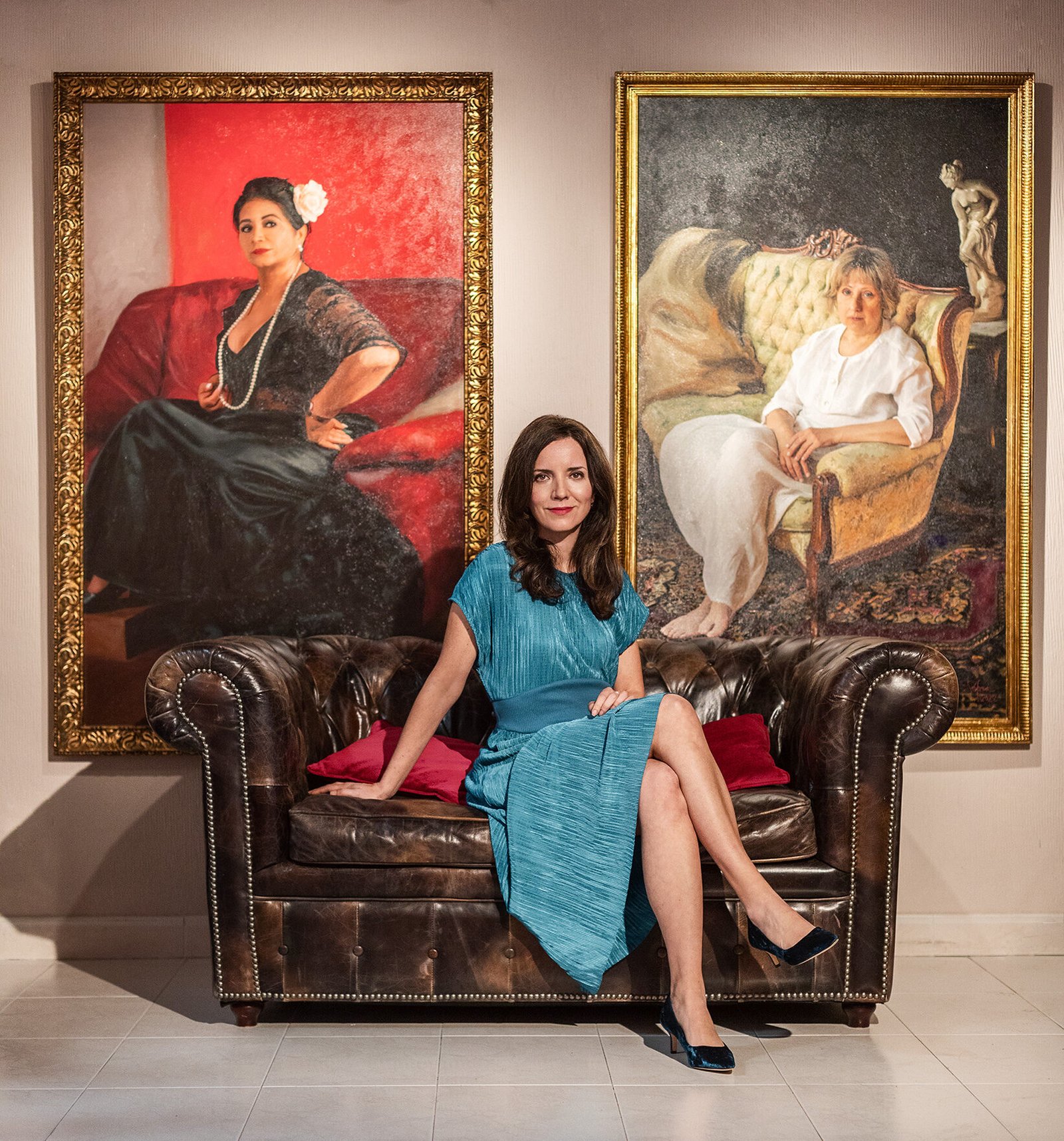
Identity and origin
A perspective shaped by
two cultures
I am a Spanish-Brazilian artist based in Valencia, with over twenty years of experience in painting, photography, and visual arts. My practice began in Brazil, was shaped through design and multimedia, and matured at the intersection of photographic imagery and large-scale painting.
This dual cultural heritage — Latin American and Spanish — is not merely biographical. It is the core of my perspective. It allows me to inhabit the margins, to listen to stories left outside the official narrative, and to transform them into images that endure.
The practice
Portraiture as an
act of recognition
My artistic practice is rooted in contemporary figurative portraiture, where photography, painting and mixed media converge to create works that move beyond representation. Rather than depicting appearances, each piece seeks to reveal the invisible layers of memory, identity and human experience that shape a person's life.
Every work begins long before the first photograph. It emerges through conversations, attentive listening and the gradual construction of trust. The portrait is never the final subject of the work; it is the language through which I explore dignity, belonging, resilience and the complex relationship between personal memory and collective history.
The women I portray are not fictional characters or anonymous models. They are individuals whose lives have been marked by migration, violence, loss or profound transformation. Yet these experiences never define them. My intention is not to illustrate suffering, but to create images that affirm their agency, presence and humanity.
The photographic session is therefore not a document but an encounter. On the canvas, the image undergoes another transformation through layers of paint, texture, glazes and photographic interventions. What finally emerges is no longer a portrait of a person, but the symbolic presence of a lived experience.
"My works do not document suffering. They preserve the dignity that endures beyond it."
— Séfora CamazanoMain Series · 2022–2024
Female Portraits:
Looking Back to the Past
Female Portraits: Looking Back to the Past is a series of 25 large-scale works created in dialogue with real women from different countries whose lives have been shaped by migration, forced displacement and gender-based violence.
Inspired by paintings by Joaquín Sorolla, each work reinterprets a historical composition through the testimony of a contemporary woman. The result is not a reconstruction of the past, but a new visual narrative in which history, memory and lived experience converge.
Rather than documenting trauma, the series explores resilience, dignity and human presence. Each portrait becomes a symbolic space where personal experience transcends biography to speak about universal questions of identity, belonging and recognition.
Works from the series have been exhibited internationally in cities including Paris, Venice, Dubai, New York, Florence and Berlin, while the project has also been presented in museums and cultural institutions in Spain, contributing to an ongoing dialogue between contemporary figurative art and social memory.
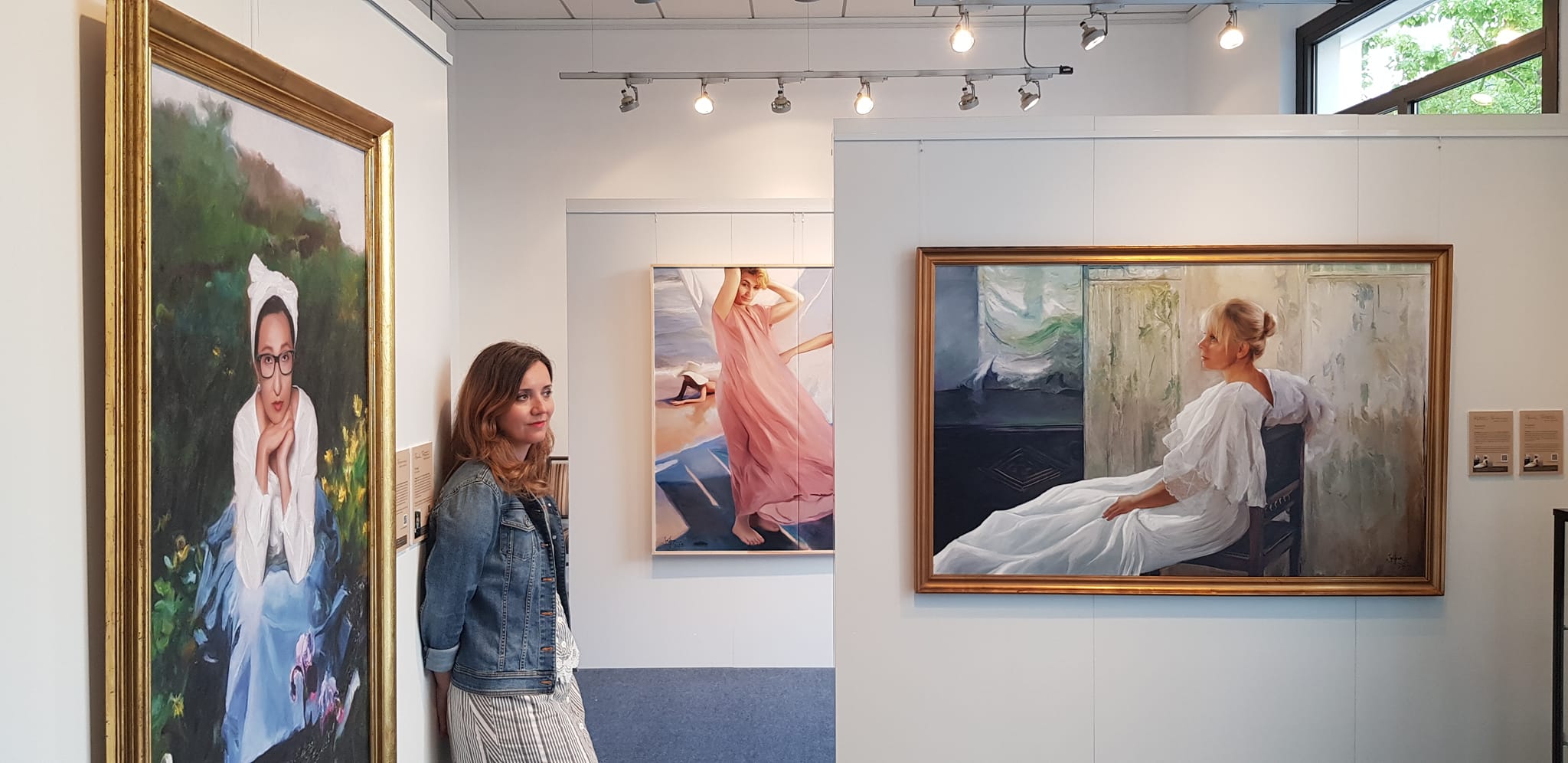
Female Portraits - The Westin Hotel Valencia, 2023
Creative methodology
How a work
comes to life
01
Encounter and listening
Each work begins with a conversation. I meet the person, listen to their story without filters, and build a relationship of trust before turning on any camera.
02
The photographic session
Photography is the beginning of the process, never its conclusion. I seek the moment when the person stops posing and simply begins to be. That is the moment I will paint.
03
Painting as translation
On the canvas, the photographic image transforms. Layers of material, color, and texture turn a photograph into a presence. The final work contains what the camera cannot capture.
Recurring themes
Ideas that
shape the work
Human dignity
Every portrait begins with the conviction that dignity is inherent to every person. The work does not seek to define people through what has happened to them, but through the humanity that remains beyond adversity.
Memory and identity
Personal memory becomes collective memory. Through portraiture, forgotten stories are preserved and transformed into enduring images that question identity, belonging and cultural inheritance.
Resilience and transformation
Rather than representing suffering, the work explores the capacity to rebuild after rupture. Each portrait reflects transformation as an ongoing process of resilience, autonomy and hope.
Symbolic portraiture
Real people become universal figures. Their individual stories transcend biography, allowing each work to speak simultaneously about a specific life and shared human experience.
Continue exploring
View the work.
Connect with the story.
25 portraits available for collectors, galleries, and institutions