Séfora Camazano · Art About Women
Art About
Women
Contemporary portraiture centred on women, identity, dignity, memory, migration and resilience.
“To represent a woman is not to reduce her to a symbol. It is to recognise the complexity of a life that deserves to be seen.”
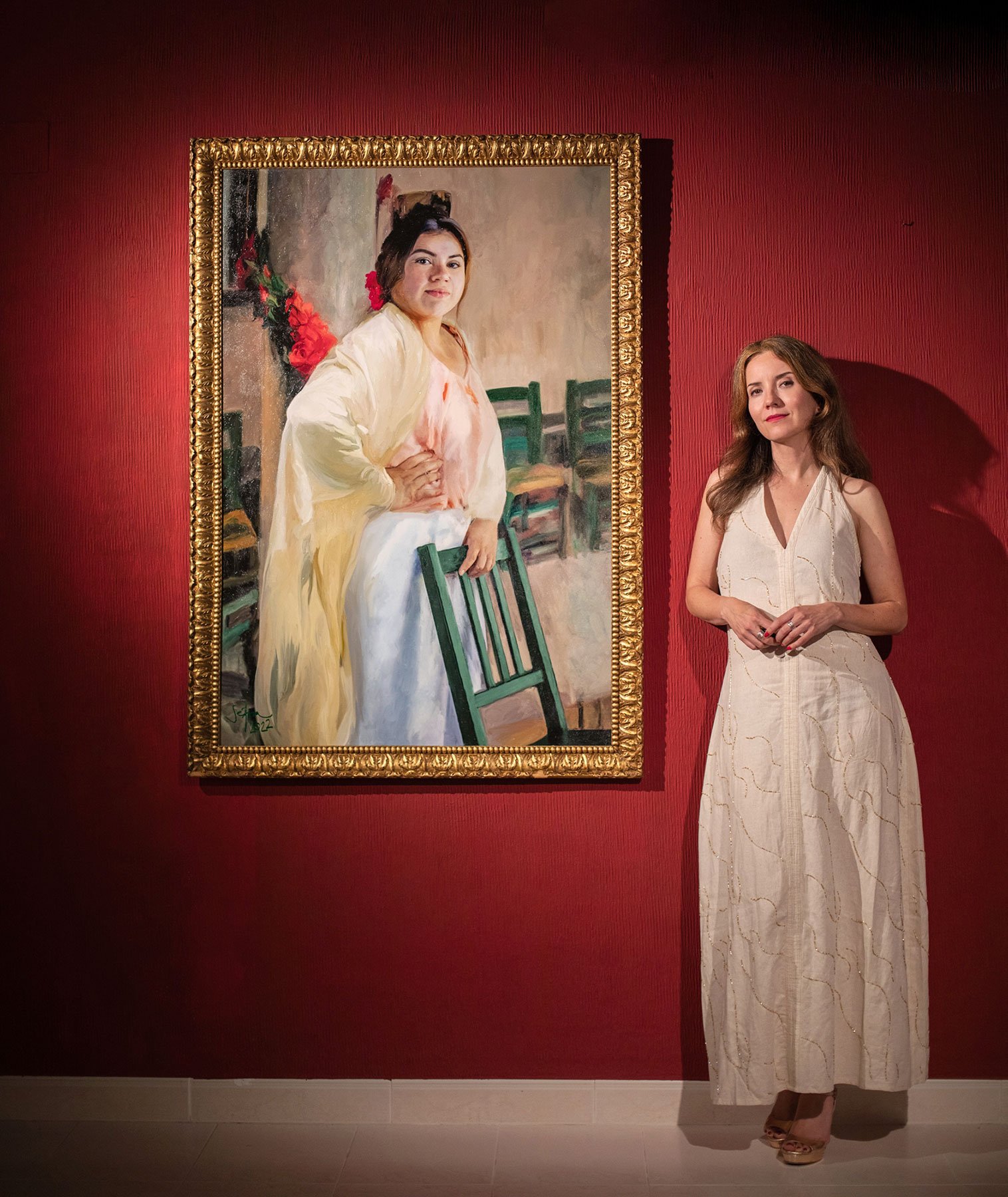
Women in contemporary art
Art about women as
an act of visibility
Séfora Camazano creates contemporary art about women, identity and human dignity. Her work focuses on the experiences of women whose lives have been shaped by migration, violence, resilience, cultural change and personal reconstruction.
Through portraiture, photography, digital painting and mixed-media intervention, Camazano gives each subject a monumental visual presence. The women represented are not anonymous figures or illustrations of a social issue. They are individuals with names, memories, choices and distinct biographies.
The portrait becomes a space of recognition in which the woman can be seen beyond stereotypes, categories and simplified narratives.
Representation and dignity
Beyond victimhood:
women as complete subjects
Social narratives often represent women through what has happened to them. Camazano’s work resists this reduction.
Experiences of violence, displacement or loss may form part of a woman’s history, but they do not define the totality of her identity. Strength, desire, contradiction, humour, vulnerability, memory and autonomy remain equally present.
By placing women at the centre of large-scale figurative compositions, the work challenges inherited visual hierarchies and restores a sense of authority to the represented person.
Dignity is not added by the artist. It is recognised as something that was already there.
“The work does not give women a voice. It creates the conditions for a voice that already exists to be heard.”
— Séfora CamazanoFemale Portraits
Portraits built from
real women and real stories
Camazano’s projects are developed through direct contact with the women who participate in them. Conversation, personal testimony and photographic sessions form the foundation of each image.
In Female Portraits: Looking Back to the Past, women from different countries are connected with reinterpretations of works by Joaquín Sorolla. Their personal stories transform the historical image and give it a new contemporary meaning.
In Female Portraits: Migrants, contemporary portraits are presented alongside personal and family photographs contributed by each participant. The project creates a visual dialogue between origin, present identity and migration.
In both series, representation begins with listening. The concept does not erase the person; the person transforms the concept.

Female Portraits: Migrants · Museum of History of Valencia, 2023
Artistic methodology
Representing women through
listening, collaboration and presence
01
Listening
The process begins with testimony, conversation and an understanding of the woman’s personal history and perspective.
02
Collaboration
Gesture, clothing, posture, references and photographic choices are developed through direct participation rather than imposed representation.
03
Visibility
Scale, materiality and exhibition context give each woman a strong physical and symbolic presence within the work.
Central themes
Women represented through
dignity, memory and autonomy
Visibility
Monumental portraits place women at the centre of the image and challenge forms of social and historical invisibility.
Dignity
Each subject is represented as a complete person whose value does not depend on her circumstances or public recognition.
Resilience
Resilience appears not as an idealised form of strength, but as the complex process of continuing, adapting and rebuilding.
Memory
Personal stories and family images preserve women’s experiences and connect private lives with collective history.
Explore Séfora Camazano’s work
Discover contemporary art about
women, dignity and identity.
Projects and artworks for collectors, galleries, museums and cultural institutions