Retrats Femenins: Migrants in Pego — Faces, Archive, and the Memory of Female Migration
November 9th, 2026
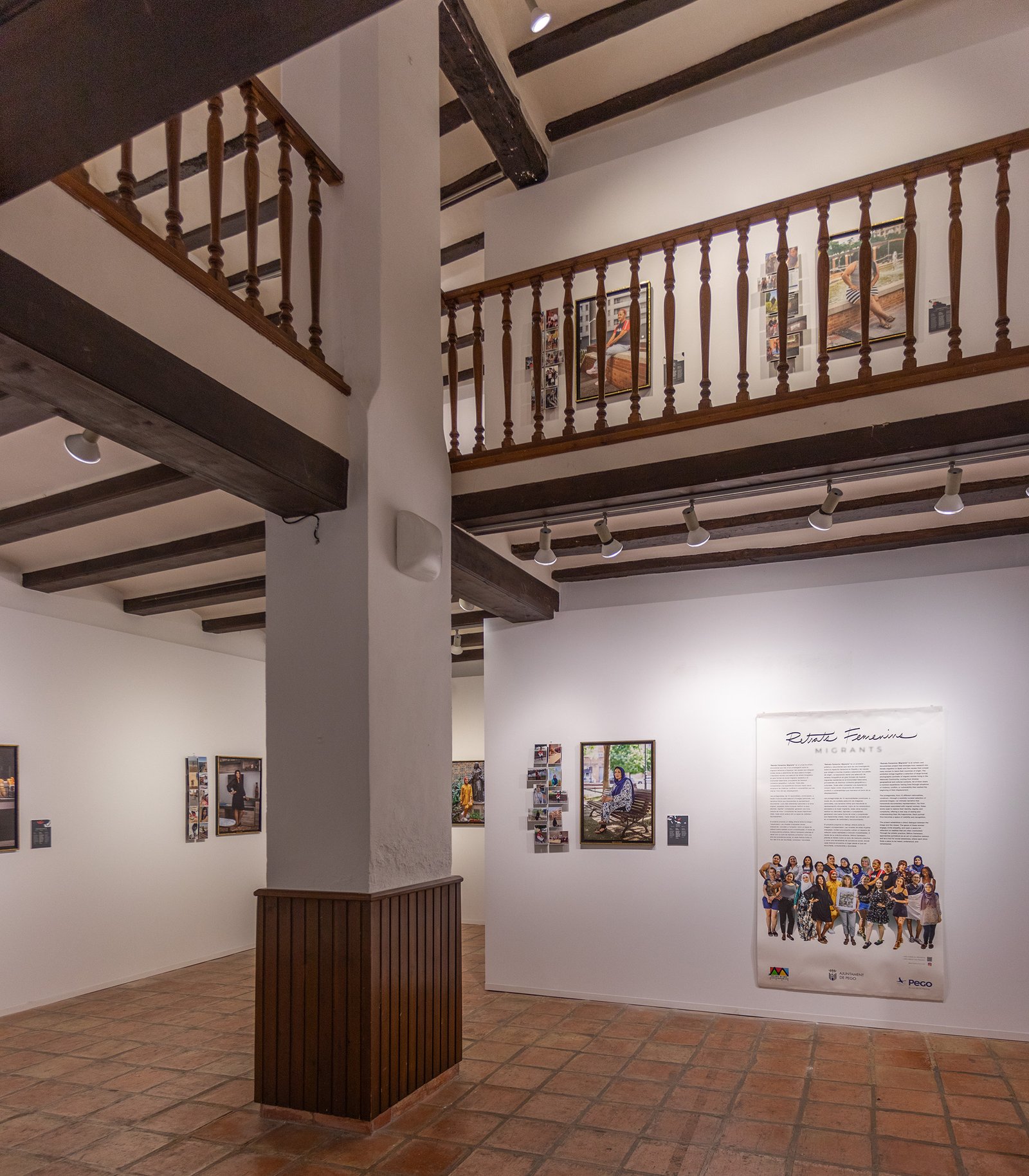
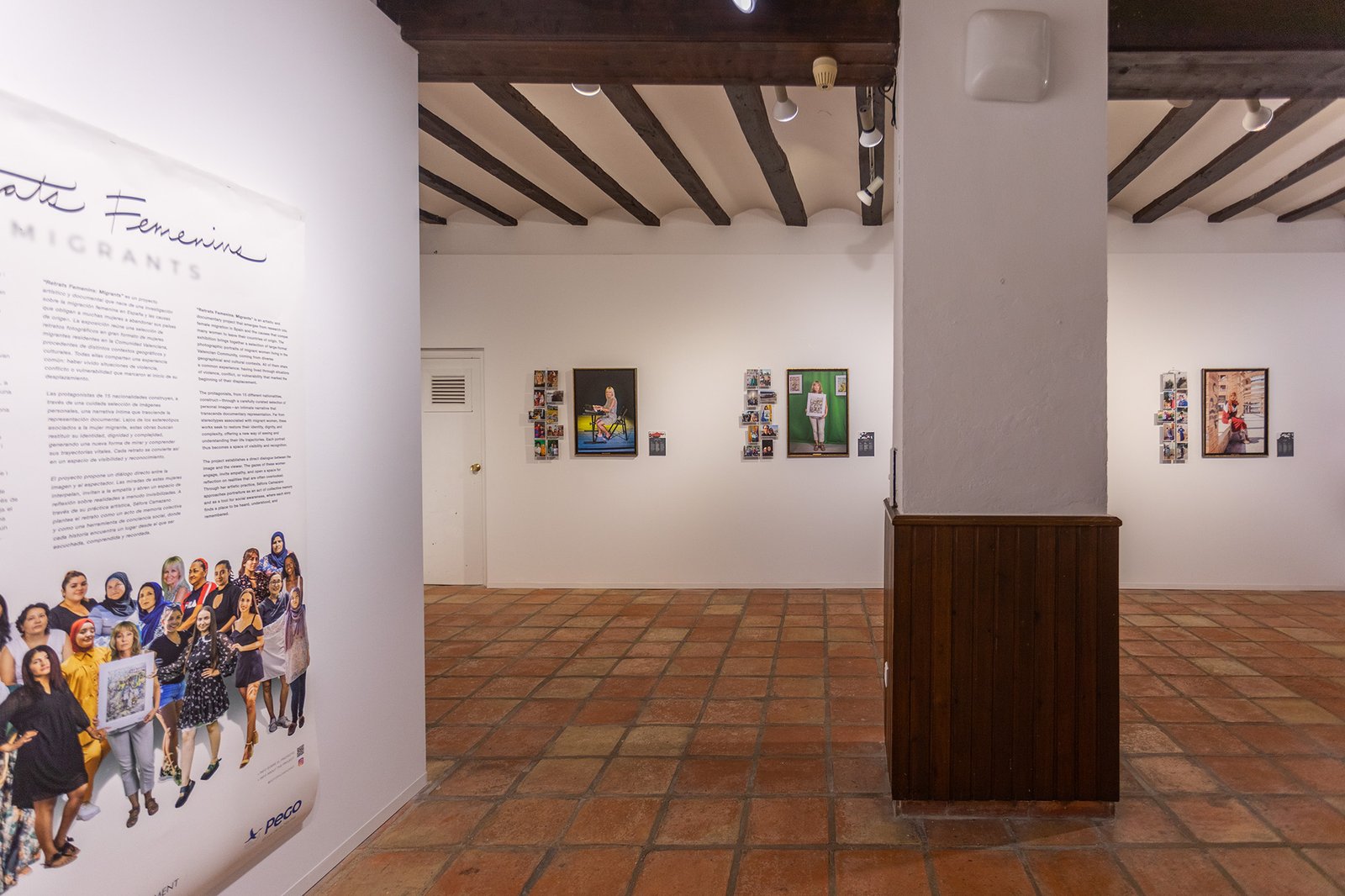
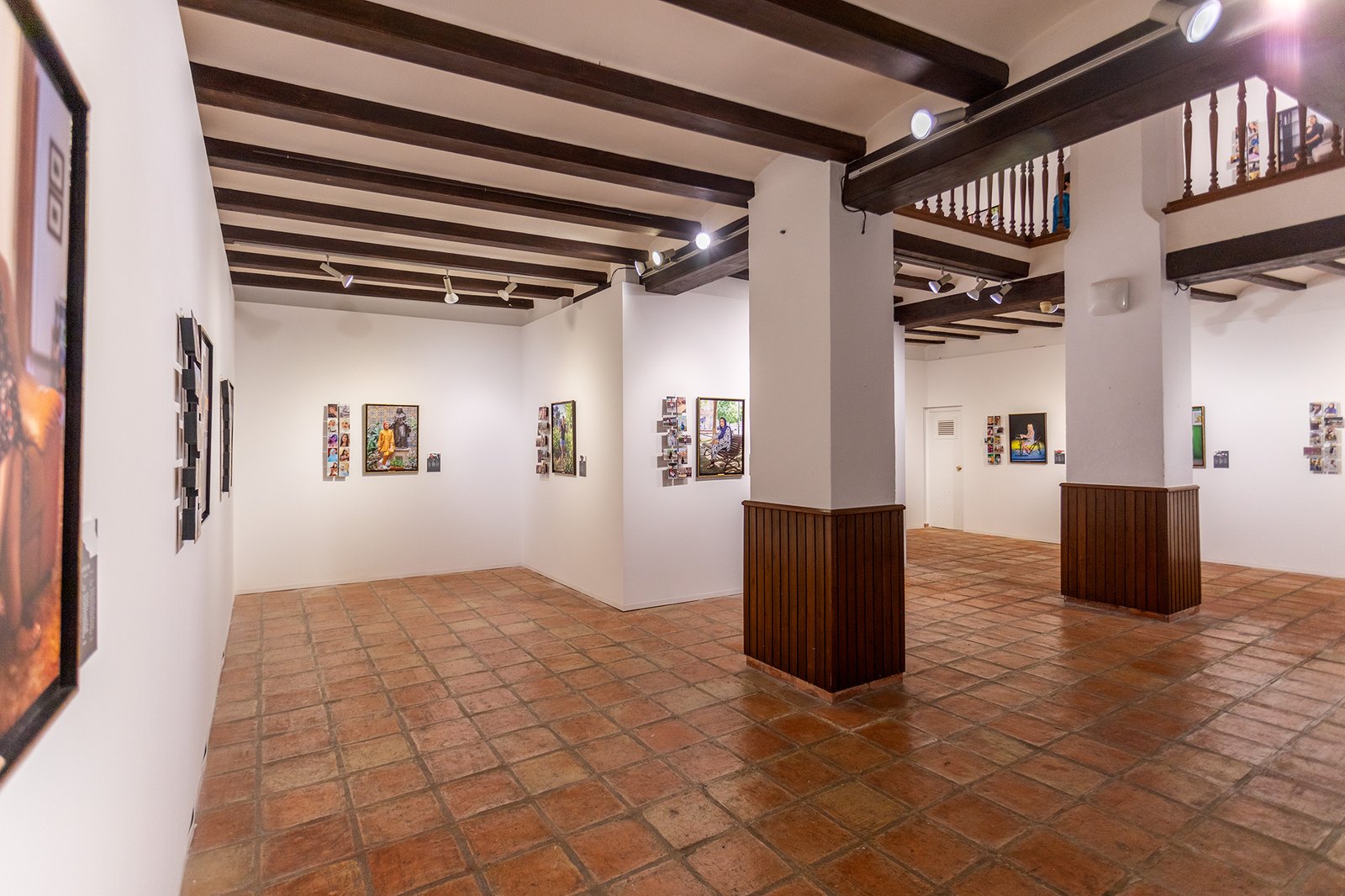
Retrats Femenins: Migrants at the Centre d'Exposicions de Pego
On November 6th I opened Retrats Femenins: Migrants at the Centre d’Exposicions de Pego (Alicante), a photographic project built from the stories of women of different nationalities who had to leave their countries of origin and rebuild their lives far from everything they knew. The exhibition is part of the City of Pego’s cultural programme marking November 25th, the International Day for the Elimination of Violence against Women.
What the public conversation leaves out
We talk about migration almost exclusively through the language of numbers and borders: flows, integration policy, statistics. It’s a necessary language, but an insufficient one — it rarely asks what made one particular person leave. Retrats Femenins: Migrants grew out of that question, and out of the answers that surfaced through the testimonies behind the project: violence — domestic, structural, political — emerges again and again as a reason women emigrate. And it often doesn’t disappear once a border is crossed; it changes shape. Discrimination, precarious work, bureaucratic obstacles, a lack of recognition: new obstacles for women who had already lived through something especially difficult.
I didn’t want to build a project about suffering. I wanted to build one about the capacity to keep going — learning a new language, starting a career over, holding a family together across years of distance — without that meaning the pain is denied or the injustice behind it minimized. Resilience, as this project understands it, isn’t the absence of a wound. It’s the decision to keep building a future in spite of it.
The portrait as a form of listening
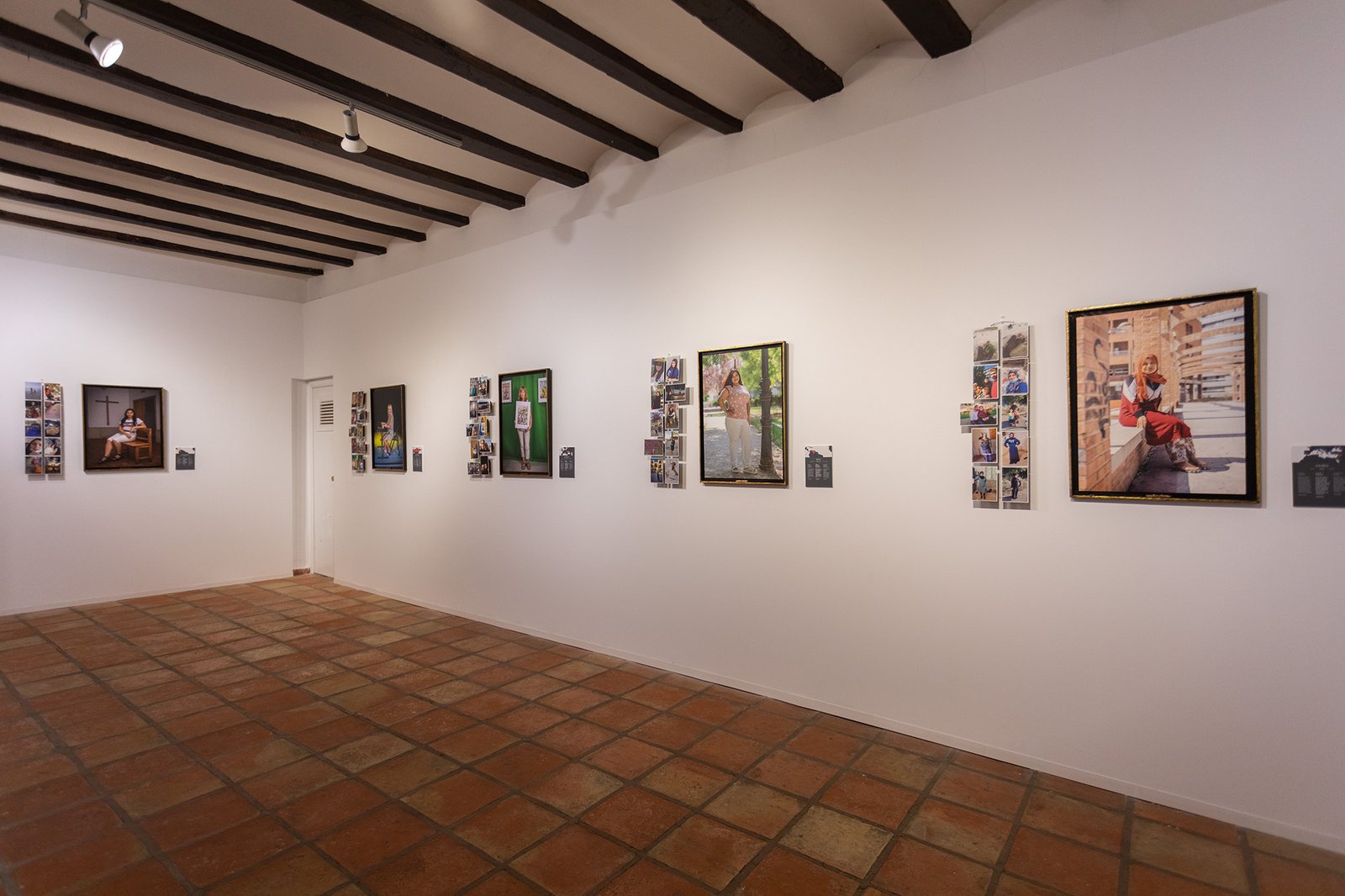
Each photograph in the series incorporates images from the sitters’ own personal archives: fragments of an earlier life — family, country, memory — that recall something essential and too easily forgotten: none of these women’s stories began the day they arrived in Spain. Before emigrating there was a career, relationships, a future being planned; some were able to hold on to part of that past, others had to rebuild almost all of it.
This layering of personal archive and present-day portrait is also a formal choice: the aim isn’t to represent these women as “migrants” — a category that flattens and simplifies — but to restore a singular identity within a shared experience. They aren’t framed as victims in this series. They are subjects with a story of their own, met with a dignity the project tries to make visible without narrating it on their behalf.
A current issue that calls for a different lens
Choosing the frame of November 25th for this show was deliberate. Violence against women knows no borders, culture, or social class, and its consequences can follow a person long after she has left the place where it began. Understanding women’s migration, then, means asking what pushed these women to leave — and what difficulties they continue to face as they try to rebuild. Art cannot resolve these situations, but it can make them visible, open a more nuanced conversation than the one public debate usually offers, and remind us that behind every migration story is a person who deserves to be heard.
Acknowledgements
My thanks to the City of Pego for hosting this exhibition, and in particular to the Councillor for Culture, Josep Mengual Femenia, and the Councillor for Equality, Paula Orihuel Espinós, for joining the opening. Thanks also to Marisol for her help organizing it, and to everyone who came to see the project.
Visitor information
Retrats Femenins: Migrants remains open to the public through November 28th, 2026, at the Centre d’Exposicions de Pego (Calle Hospital, Alicante).
I’d invite anyone who can to visit, and to stand with each portrait for as long as its story asks. My hope is that visitors leave not only with the memory of a photographed face, but with a deeper understanding of the circumstances that shaped it — and, with it, a strength that deserves to be recognized.