01 · Expression
Reserve and presence
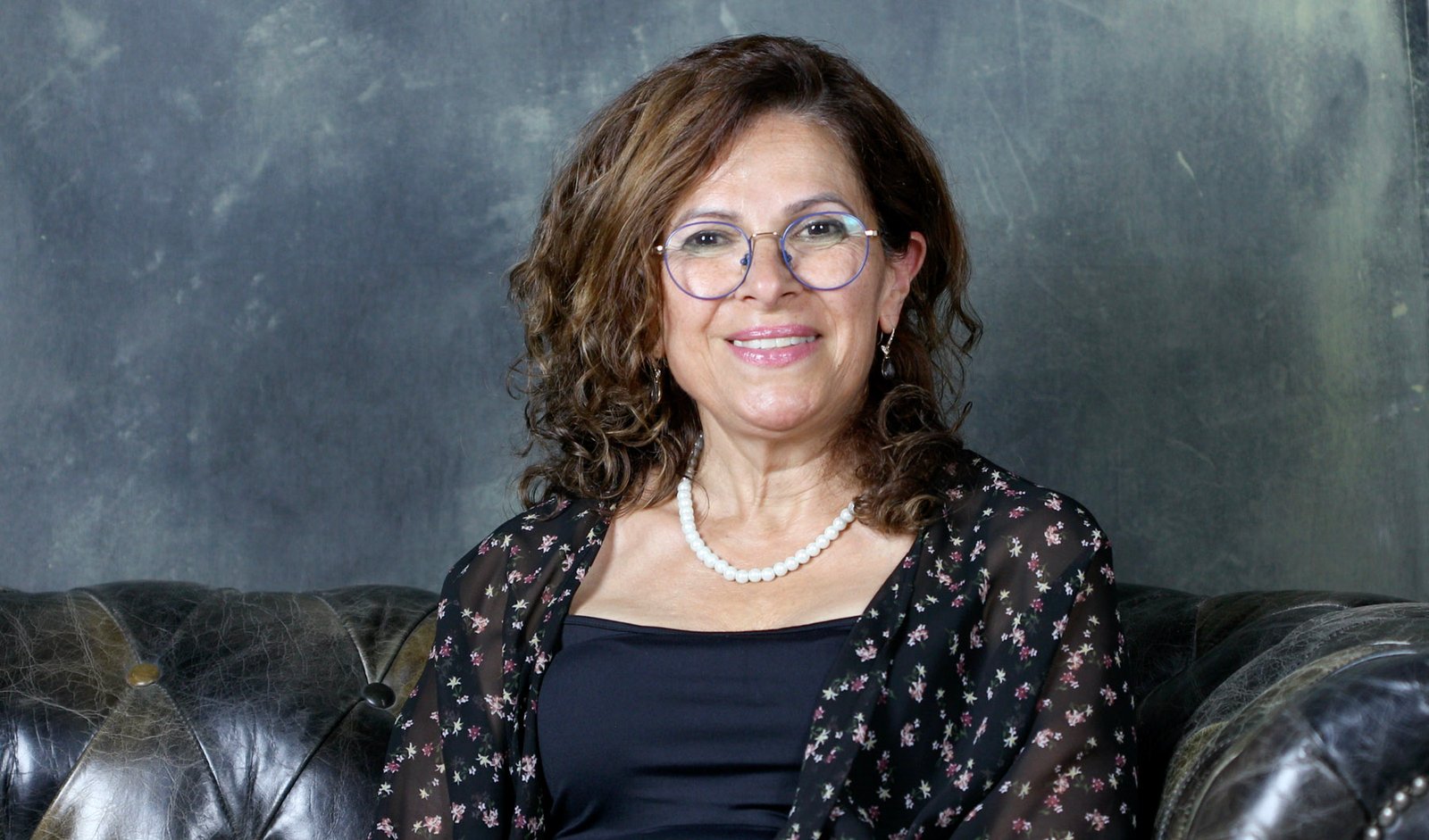
Rezvan’s restrained expression avoids any dramatic emphasis. Her presence is asserted through composure, without turning biography into spectacle.

Female Portraits: Looking Back to the Past
2024
Decision (2024) portrays Rezvan, an Iranian woman who arrived in Spain at the age of seventeen. The work does not depict her departure from Iran or the events that preceded it. It belongs to another time: after the choice has been made. Through a restrained and deliberately classical composition, Séfora Camazano approaches decision as the moment when a person ceases to live solely in response to fear and begins to define for herself who she wants to be.
Technique
Mixed media — photography and digital painting, Giclée Fine Art print on 100% cotton canvas, hand-painted intervention and conservation-grade UV varnish
Dimensions
92 × 73 cm (36.22 × 28.74 in)
Year
2024
Series
Female Portraits: Looking Back to the Past
The protagonist
Rezvan was born in Iran into the Bahá’í community. From an early age, she knew what it meant to grow up feeling different: her religious identity placed her outside the majority, and that exclusion extended even to members of her own family.
During her adolescence, she also endured years of harassment and abuse from a member of her family circle. When she tried to speak about it, she did not find the protection she needed. At seventeen, when her mother realised that the political situation in the country was deteriorating and offered her the possibility of leaving Iran, Rezvan knew she had to go.
“Freedom began the day I boarded a plane and left fear behind.”
She arrived in Valencia and began an entirely new life. Spain did not immediately erase what she had experienced, but it eventually became her home: here she found a new community, built a family, and was able to live her faith and identity from a different place.
Decades later, Rezvan does not speak of freedom as a condition that someone else can grant her. She understands it as a practice: the possibility of thinking, believing, choosing, and living according to one’s own conscience.
Rezvan’s testimony · Decision · 2024
The meaning of the title
The title does not describe an action visible within the image. The decision to which the work refers took place much earlier: to leave, to break with what was harming her, and to accept the uncertainty of beginning another life.
The work does not attempt to reconstruct that moment in 1979. Rezvan appears more than four decades later, from within a life already built in Spain. The decision belongs to the past, yet it remains a turning point through which her present can be read: the choice that made possible another path, another family, and another way of living her identity and faith.
A decision may take only a few seconds. Its consequences can extend across an entire life.
Visual reading
01 · Expression
Rezvan’s restrained expression avoids any dramatic emphasis. Her presence is asserted through composure, without turning biography into spectacle.
02 · The hands
Resting on her legs, the hands close the composition without tension or narrative gesture. Their stillness reinforces the autonomy of the figure.
03 · The two flowers
Two flowers are enough to interrupt the gravity of the palette. Their colour introduces a concentrated intensity within an image built on restraint.
04 · The tulle
The transparency of the tulle and the neckline introduce a subtle tension between exposure and restraint. The material of the dress allows the body to remain an active part of the image.
05 · Hair and adornment
Her uncovered hair carries a precise biographical resonance: Rezvan left Iran before the new Islamic order imposed restrictions on women’s appearance. The necklace and delicate brooch complete this construction of a self-chosen identity.
06 · Space
Only a fragment of the sofa arm remains visible; Rezvan is not seated on it. Against a grey and burgundy background crossed by free, chaotic brushstrokes, the figure is suspended within a deliberately undefined space.
Curatorial reading
Decision avoids depicting the most visible moment in Rezvan’s story: her departure. Instead, it constructs an image of stillness. The choice has already been made; what remains before us is a woman occupying the space from another point in her life.
That distance between biography and image is essential. The black dress, pearls, flowers, and seated pose belong to the language of portraiture, not documentary illustration. Lived experience remains as context, but it does not become the protagonist’s entire visual identity.
The work is therefore situated within a precise tension: fear no longer governs every thought, yet memory still carries weight. Decision does not present freedom as a final destination, but as a choice that must continue to be practised.
Artistic reference
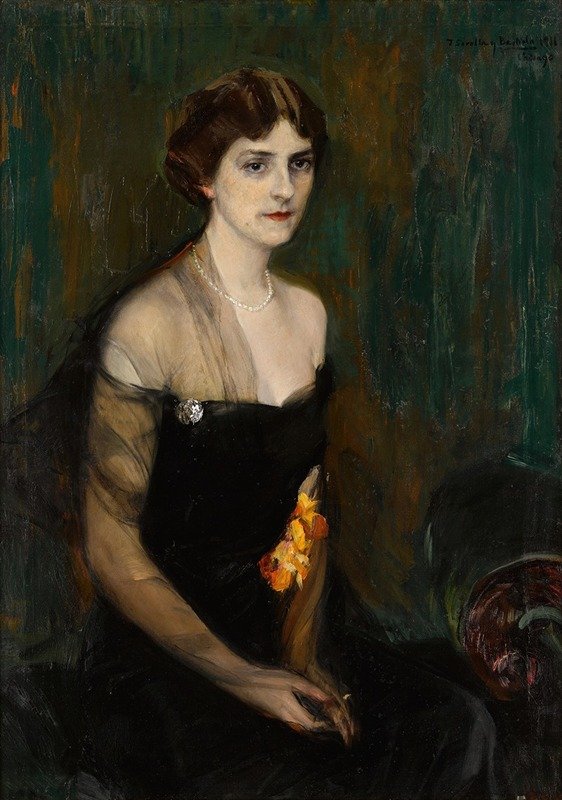
Decision takes as its reference Portrait of Mrs. Orville E. Babcock (1911), by Joaquín Sorolla. Séfora Camazano retains part of its visual architecture —the black dress, the transparency of the tulle, the jewellery, the flowers, the position of the hands, and the fragmented presence of the sofa— while shifting those elements into a contemporary construction.
In Sorolla, the sitter’s elegance and social position articulate a formal portrait of representation. In Decision, that same language acquires a different density when occupied by Rezvan. The space becomes less descriptive, the background loosens into grey and burgundy brushstrokes, and the figure no longer belongs to a recognisable interior. The historical reference remains visible, but no longer determines the meaning of the image: it is Rezvan’s biography and presence that transform the inherited composition.
Portrait of Mrs. Orville E. Babcock
Joaquín Sorolla, 1911
Creative process
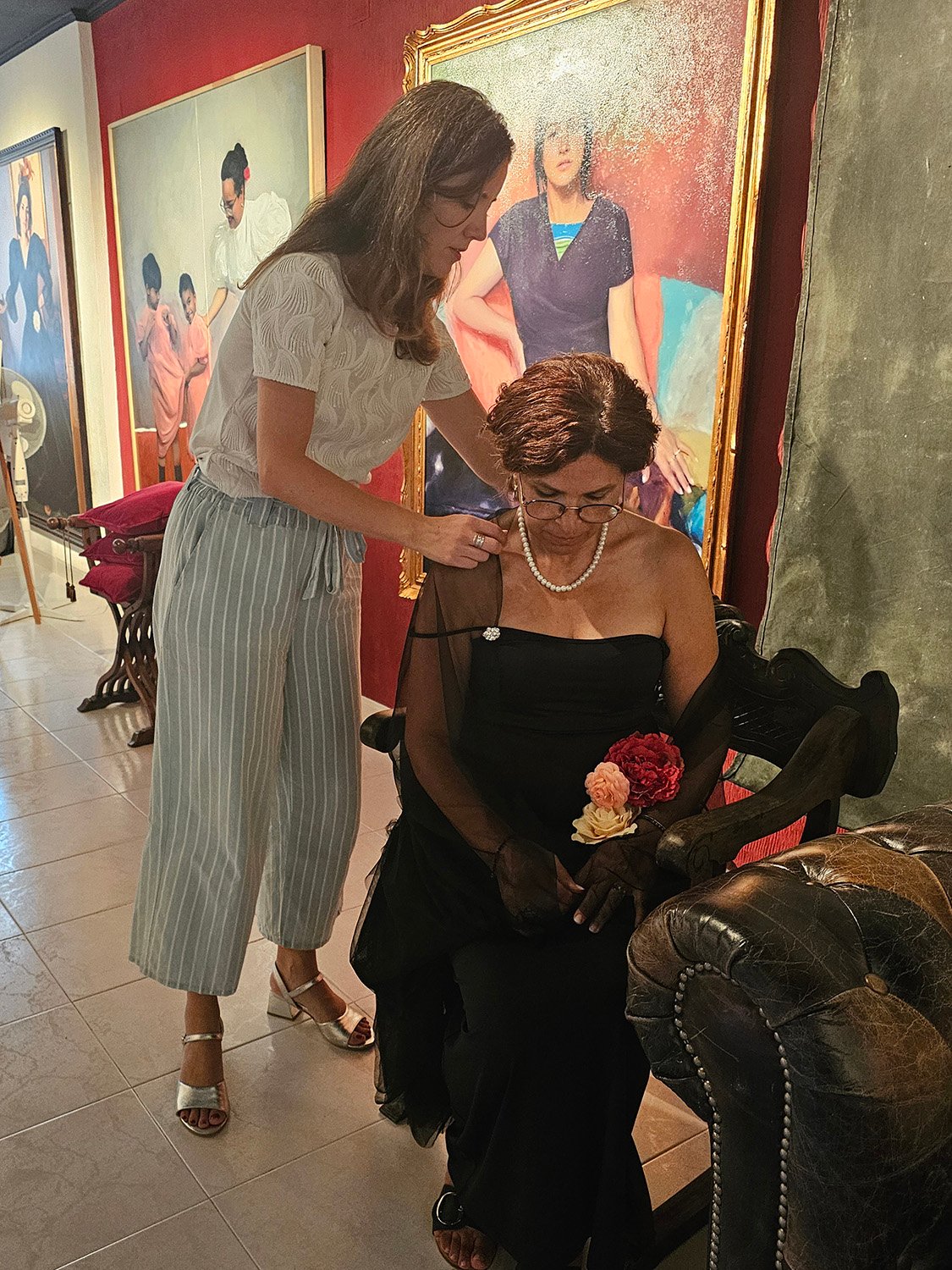
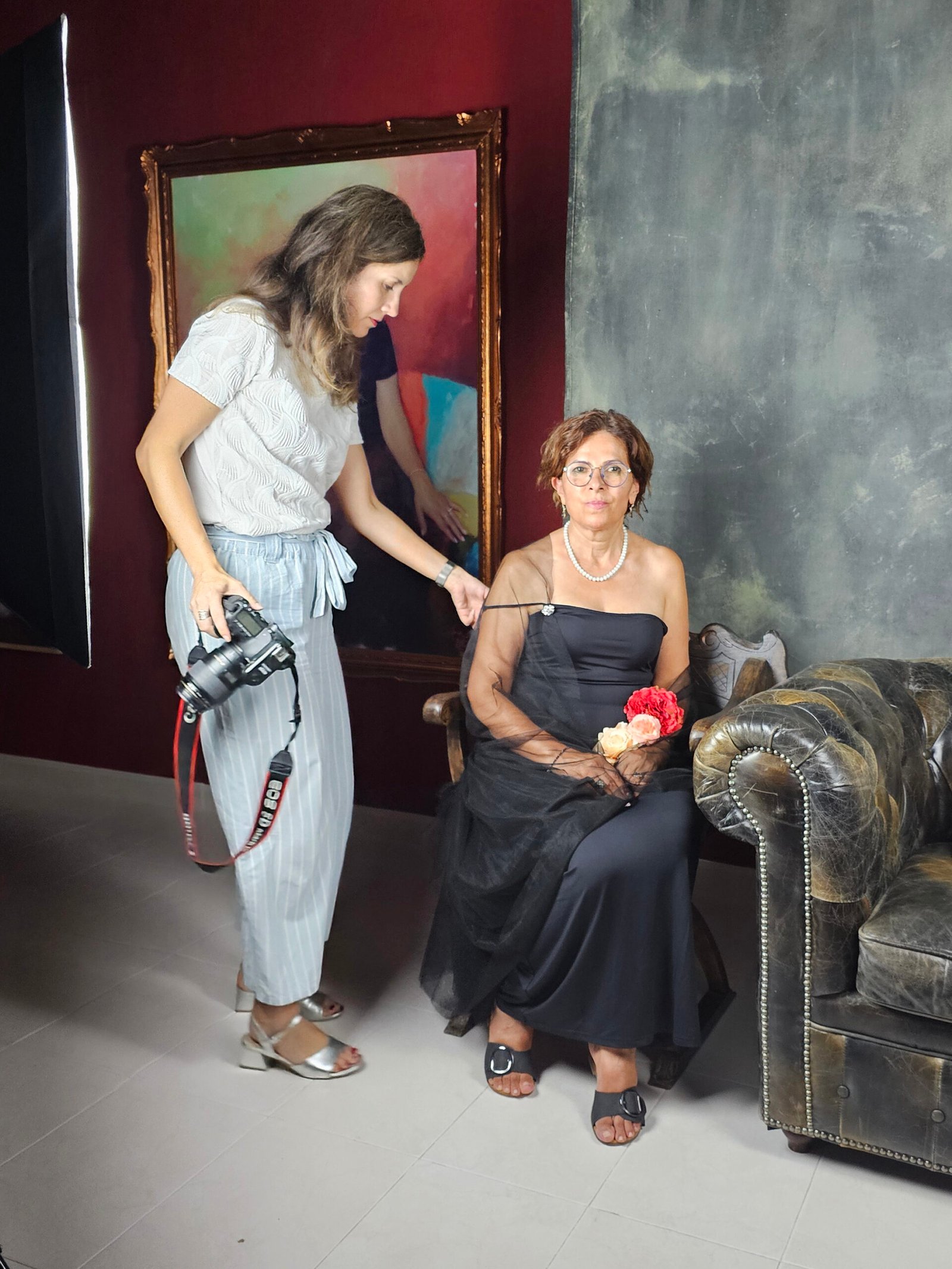
Decision began with a photographic session with Rezvan. The seated pose, black dress, pearls, flowers, and the relationship between the figure and the armchair established the visual architecture from which the work developed.
The image was subsequently transformed through digital painting and transferred onto cotton canvas as a Giclée Fine Art print. Hand-painted intervention introduces materiality and gesture onto the printed surface before the final application of conservation-grade UV varnish.
The result retains recognisable elements from the session while integrating them into a pictorial space that shifts the portrait from documentation towards a constructed presence.
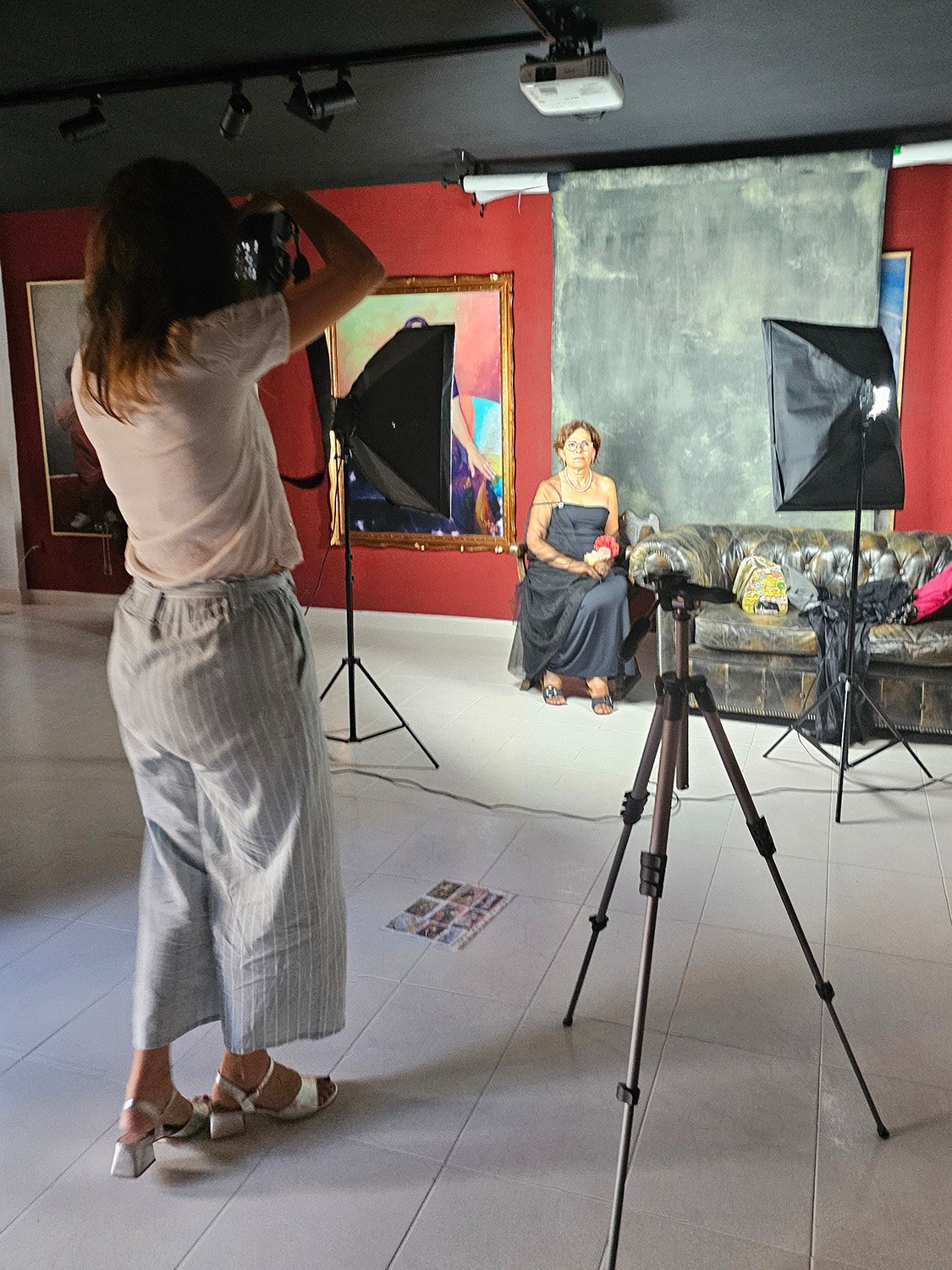
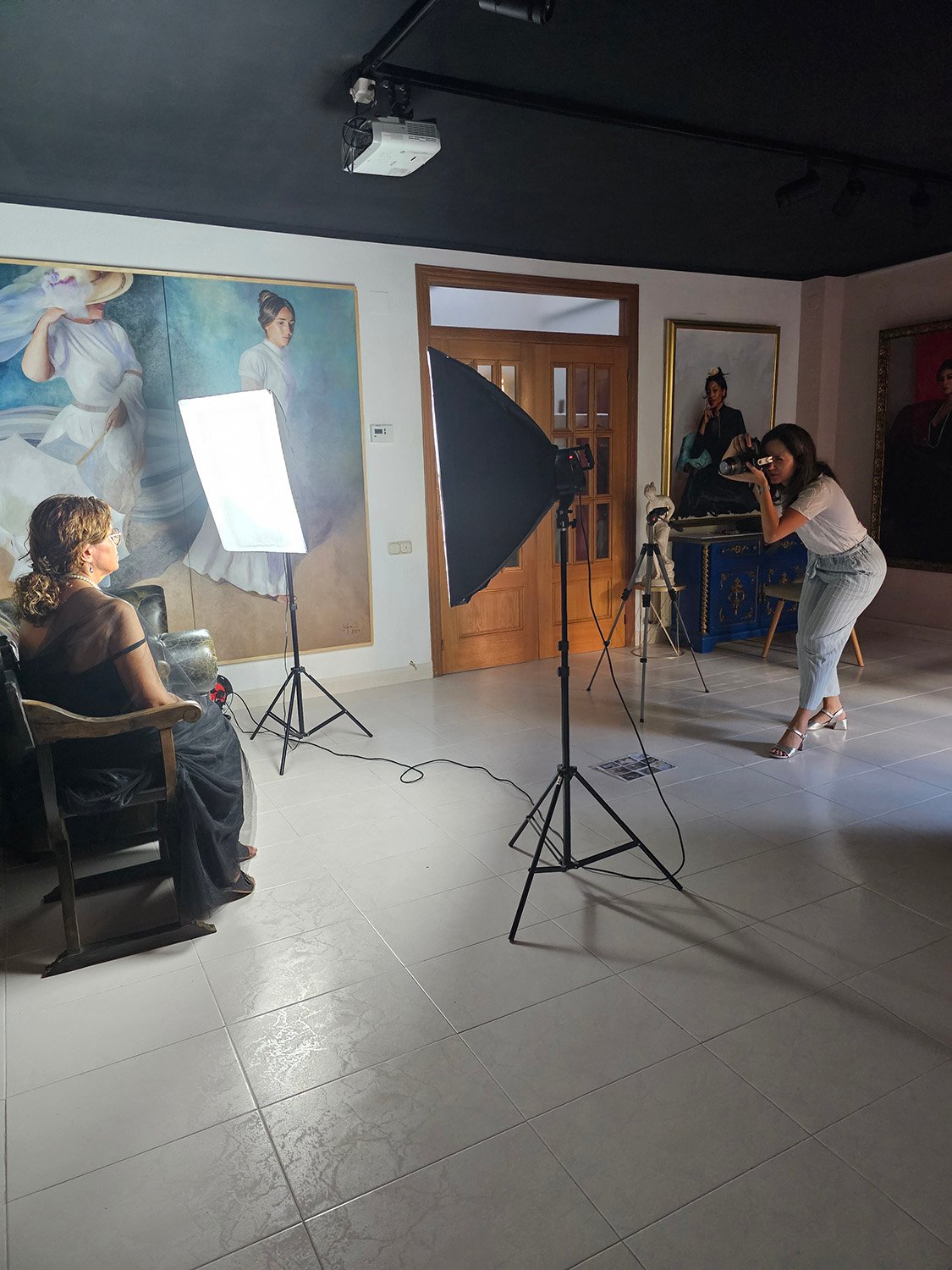
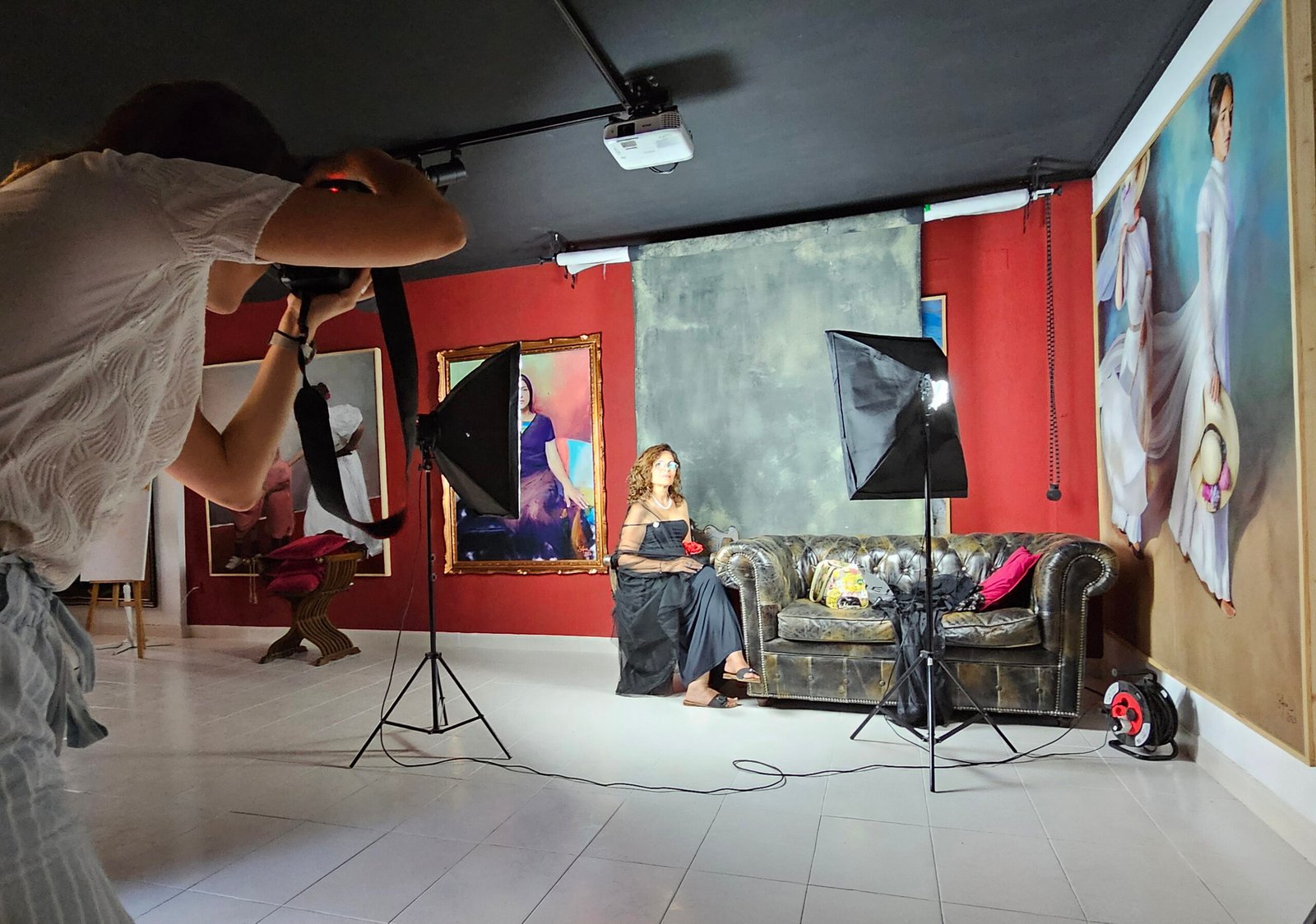
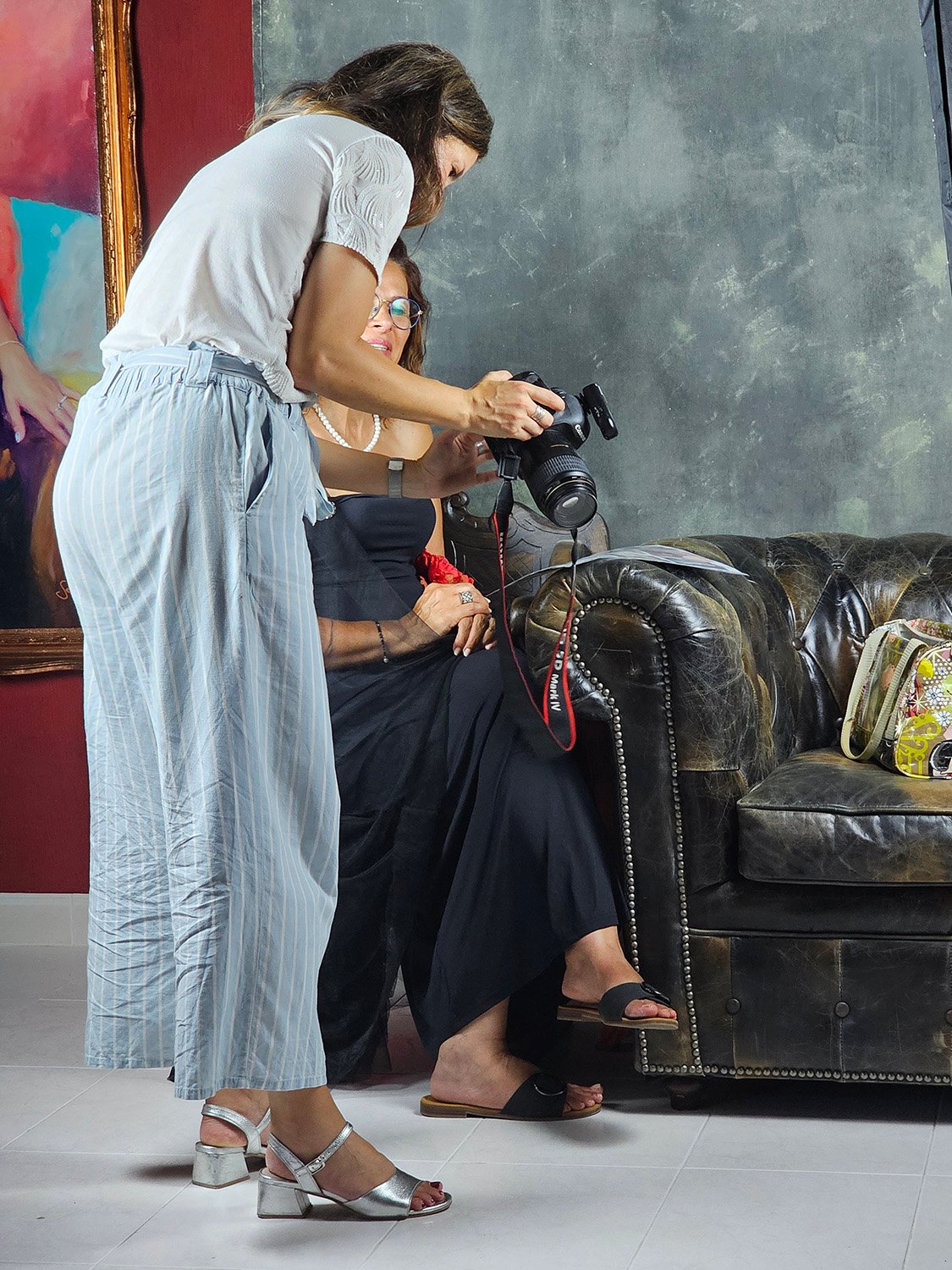
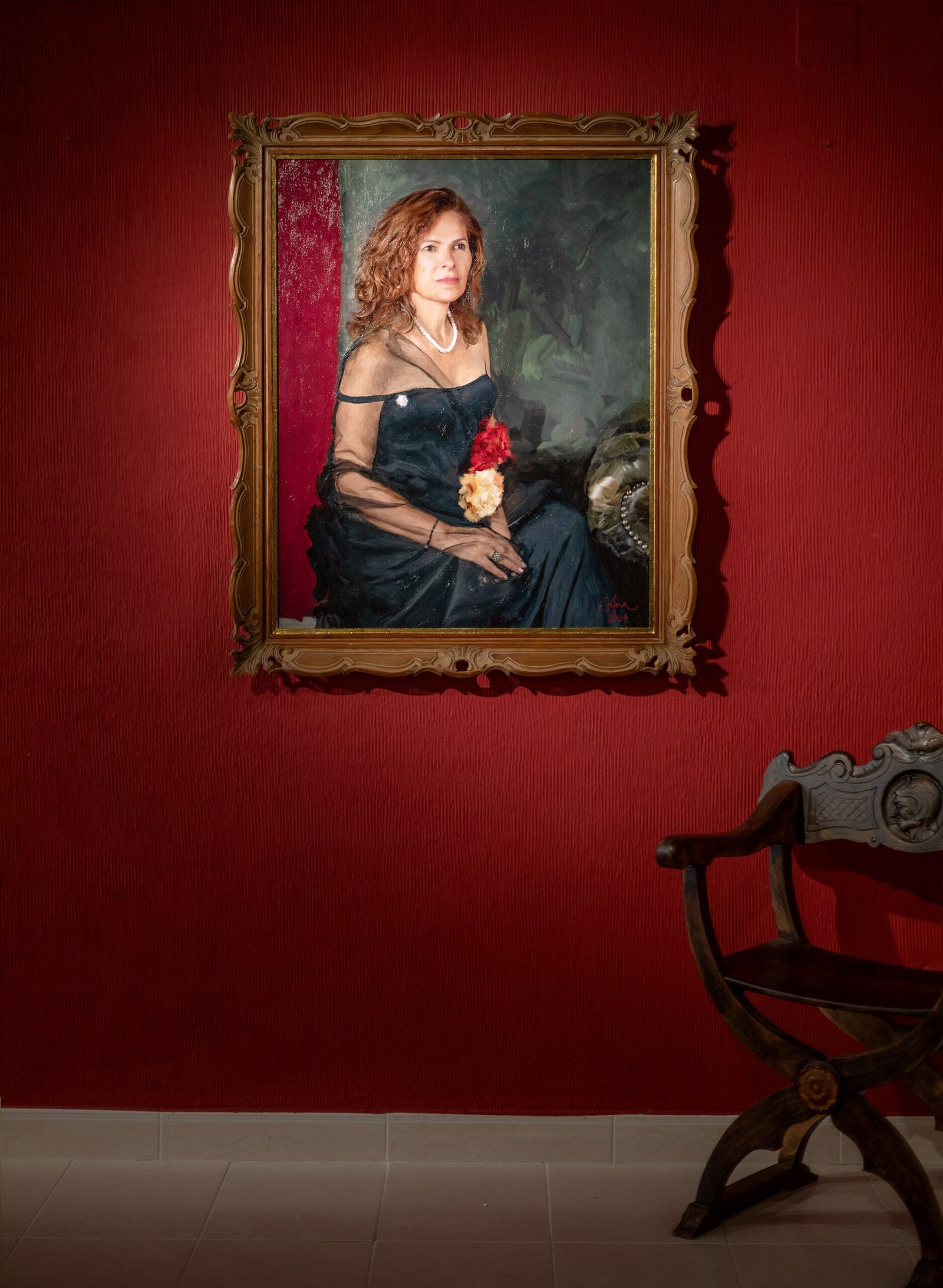
Decision in the artist’s studio · Valencia, 2024
Exhibition history
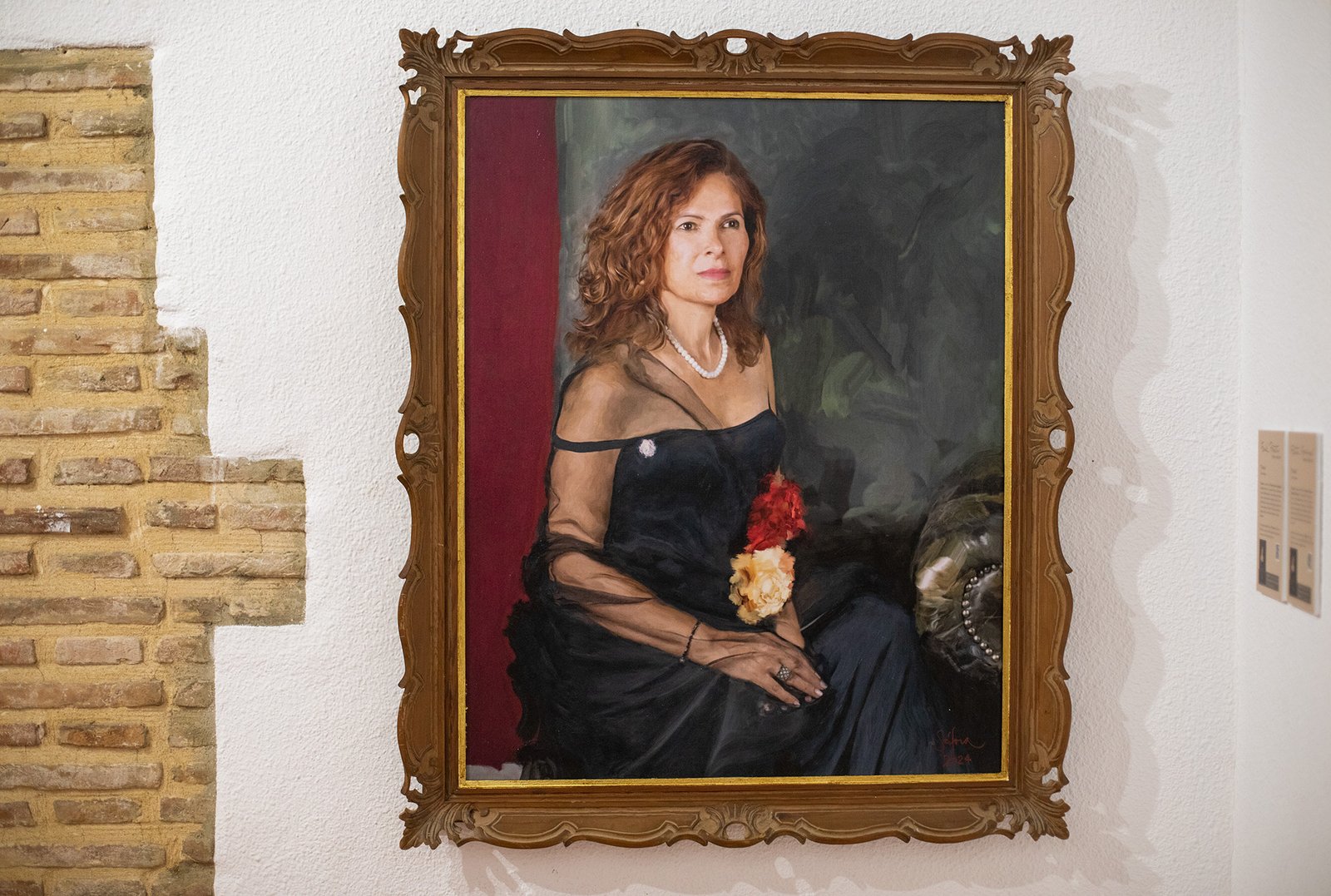
Female Portraits: Looking Back to the Past
Old Town Hall of Bétera · Bétera, Spain · 2024
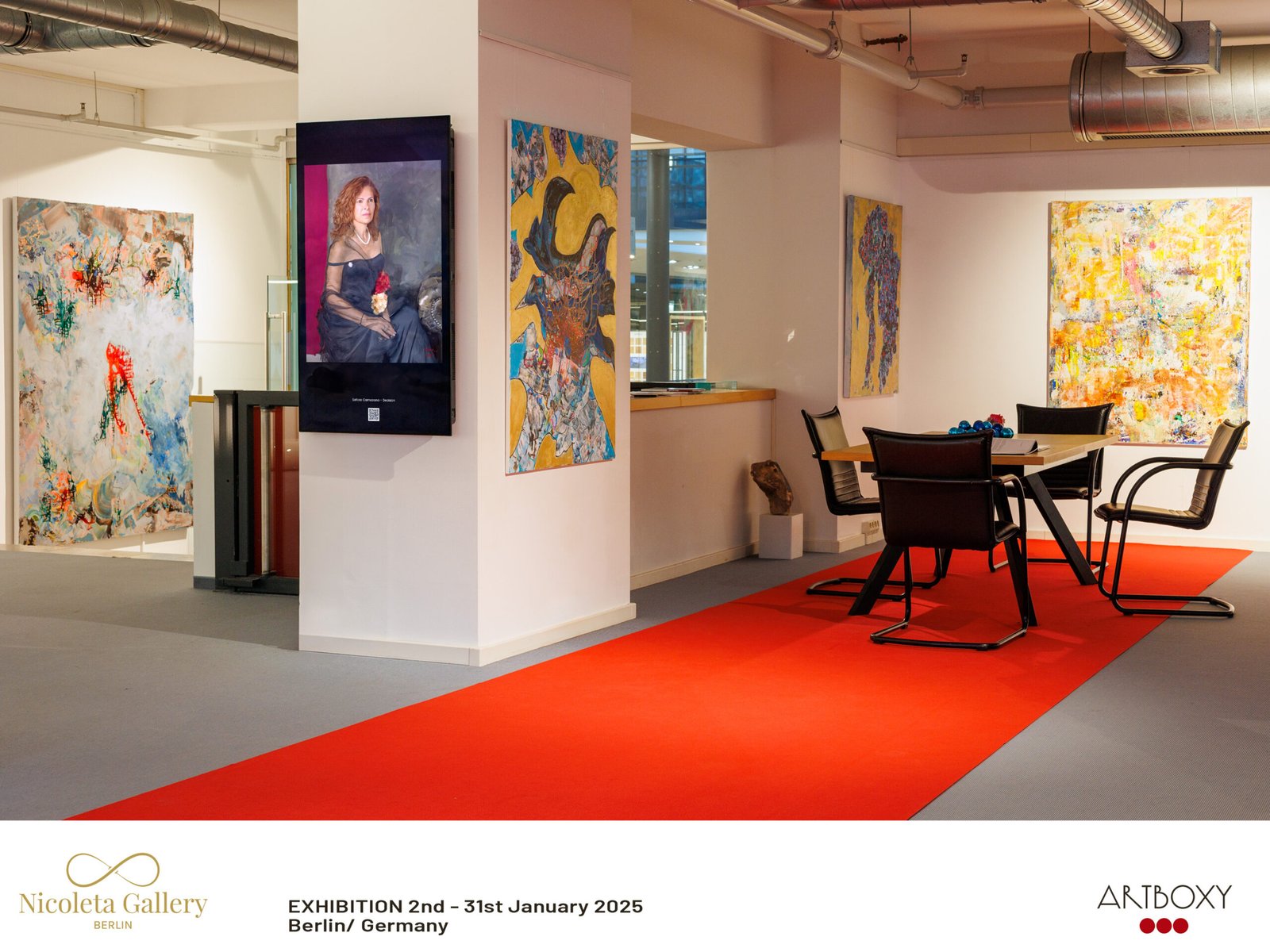
Nicoleta Gallery · Berlin, Germany · 2025
Digital presentation
Galerie Portraits
Interested in this artwork?
I respond personally within 48 hours
Request informationThe original artwork includes
