01 · The gaze
A direct presence
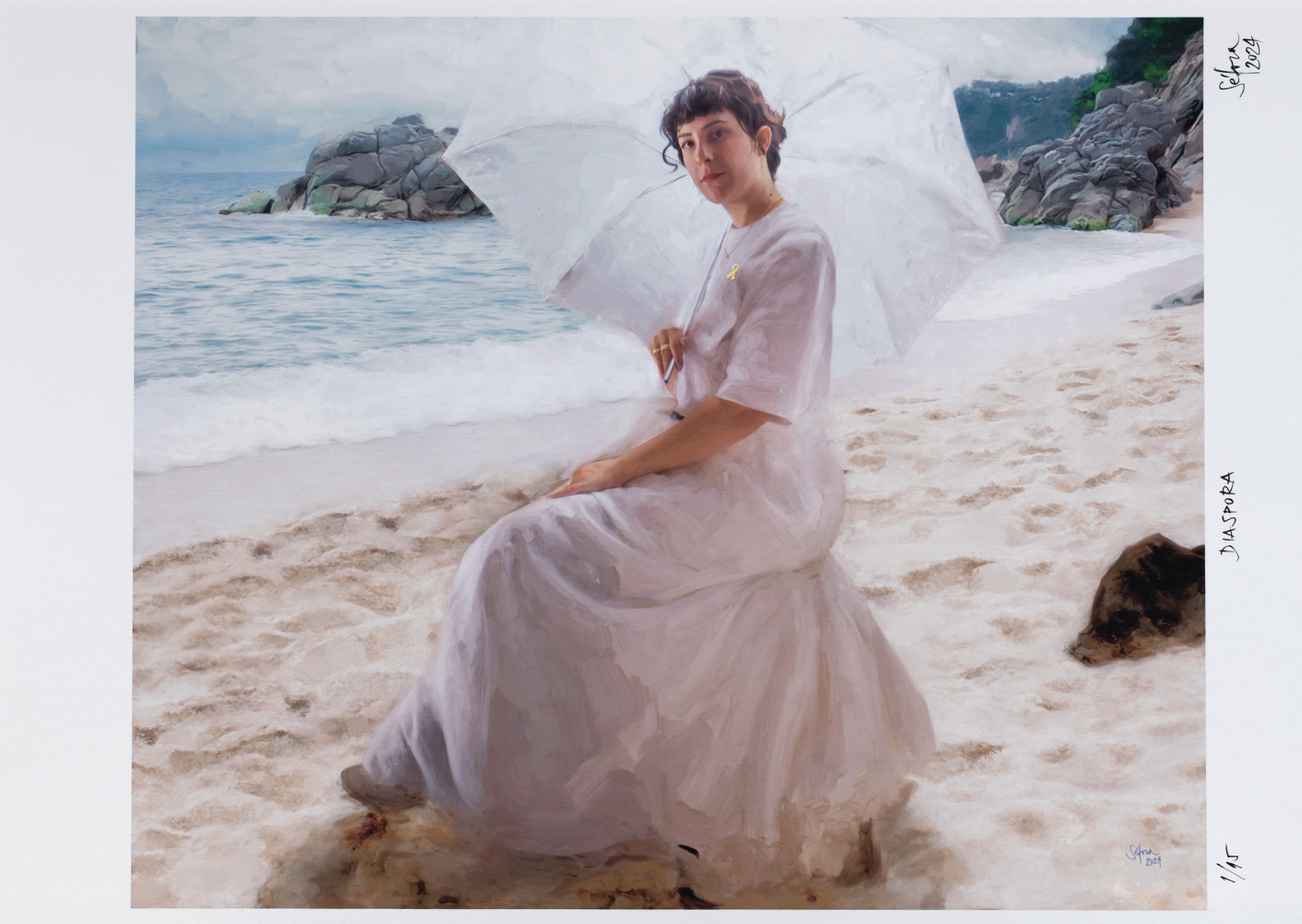
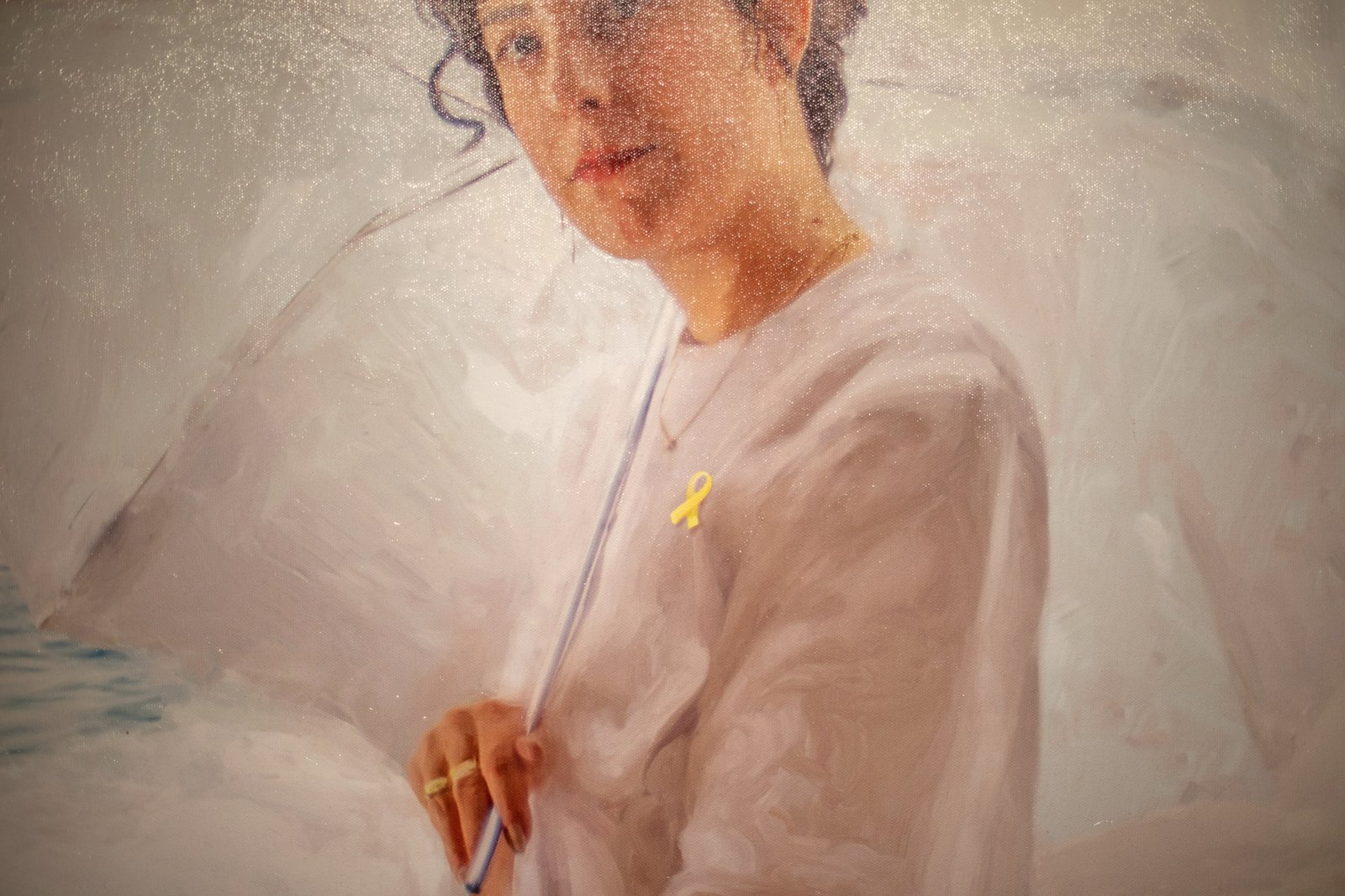
Dafna looks directly at the viewer. The expression is calm and open, creating a quiet encounter rather than a dramatic one.
Female Portraits: Looking Back to the Past
2024
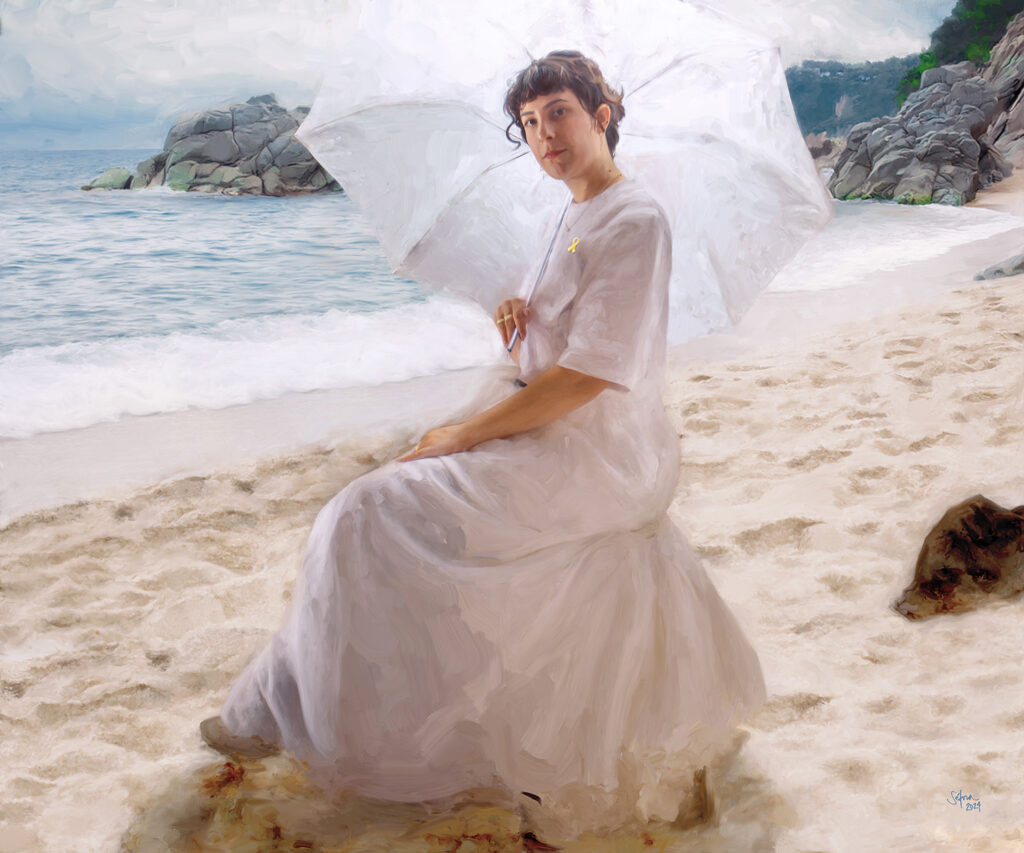
Diaspora (2024) is a large-scale contemporary artwork by Spanish-Brazilian artist Séfora Camazano. Inspired by Joaquín Sorolla’s Clotilde on the Beach (1904), the work places Dafna, an Israeli woman, within a quiet coastal composition to explore displacement, identity, belonging and the emotional distance between safety and home.
Technique
Mixed media: photography, digital painting, Giclée print, acrylic and manual intervention on 100% cotton canvas, finished with UV varnish
Dimensions
125 × 150 cm (49.21 × 59.05 in)
Year
2024
Series
Female Portraits: Looking Back to the Past
The protagonist
Dafna, from Rishon LeZion near Tel Aviv, grew up with the awareness that danger could enter daily life without warning. On 7 October 2023, she and her husband woke to air-raid sirens in Tel Aviv. Without a safe room in their apartment, they sheltered in the building’s staircase before leaving the city for a safer area.
They later made the difficult decision to leave Israel temporarily and move to Spain. Physical distance offered another kind of safety, but it did not erase the state of vigilance they had carried with them. Familiar sounds could still trigger memories, while adapting to a new country introduced a different form of uncertainty.
For Dafna, leaving did not mean leaving her identity behind. It made the meaning of home, belonging and visibility more complex.
Dafna describes herself as a proud Jewish Israeli and speaks about the difficulty of carrying that identity openly when she fears hostility or misunderstanding. Her participation in the project became a way of giving form to that tension without allowing it to define her solely through fear.
Dafna tells her history for Diaspora
The meaning of the title
The title does not refer only to geographical displacement. In Dafna’s portrait, diaspora becomes a personal condition: the experience of carrying identity, memory and belonging from one place into another while the idea of home remains unresolved.
The work holds that contradiction without trying to solve it. Distance can provide safety and, at the same time, intensify the awareness of what has been left behind. Dafna is physically present in a new landscape, yet the portrait carries another place with her.
To leave a place is not necessarily to stop belonging to it.
Visual reading
01 · The gaze
Dafna looks directly at the viewer. The expression is calm and open, creating a quiet encounter rather than a dramatic one.
02 · The white dress
The white dress approaches the tonal range of the sand and sky. The figure remains clearly present while appearing almost capable of dissolving into the landscape.
03 · The yellow ribbon
The small yellow ribbon on Dafna’s chest refers to the campaign for the return of the hostages taken on 7 October 2023. Its scale is discreet, but it anchors the portrait in a precise historical moment.
04 · The parasol
The translucent parasol establishes a direct dialogue with Sorolla while introducing the idea of shelter without enclosure: a protection that remains light, temporary and permeable.
05 · The shoreline
The beach is a threshold between solid ground and open water. Dafna occupies that transitional space as the work reflects on departure, distance and unstable belonging.
06 · The palette
Whites, muted blues and earthy tones create a restrained atmosphere. The apparent serenity of the image coexists with the emotional weight carried by its protagonist.
Curatorial reading
Diaspora does not depict departure itself. It concentrates on what follows it. The sea is quiet, Dafna is seated and the palette is restrained, yet the work is structured around movement: leaving, crossing borders and carrying one place into another.
The softness of the composition does not neutralise that tension. Dafna’s body appears almost absorbed by the landscape while her gaze remains direct. The result is a portrait in which vulnerability and self-possession coexist.
The yellow ribbon introduces a specific contemporary reference without turning the image into documentary narration. The work remains centred on a person and on the difficult question of how identity is carried when belonging can no longer be taken for granted.
Artistic reference
Diaspora was inspired by Joaquín Sorolla’s Clotilde on the Beach (1904). The seated female figure, the parasol and the coastal setting provide the compositional memory from which the contemporary portrait develops.
By placing Dafna within that structure, Séfora Camazano shifts the meaning of the scene. What in Sorolla belongs to an intimate Mediterranean moment becomes, in Diaspora, a reflection on identity, displacement and the changing meaning of home.

Clotilde on the Beach
Joaquín Sorolla, 1904
Creative process
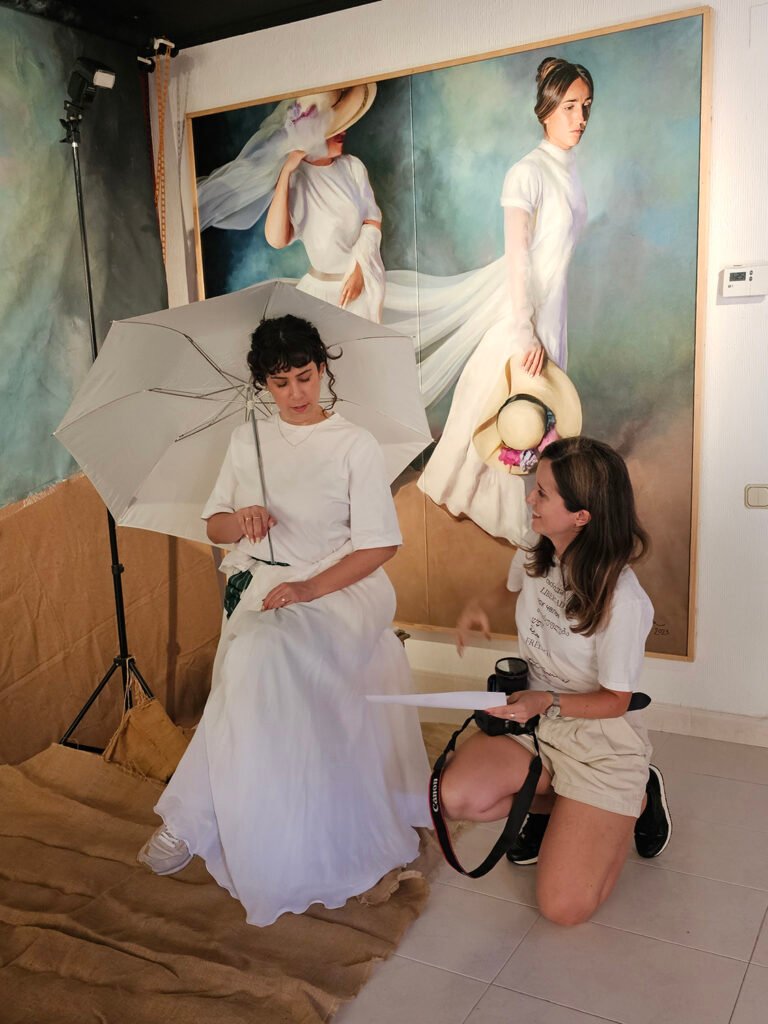
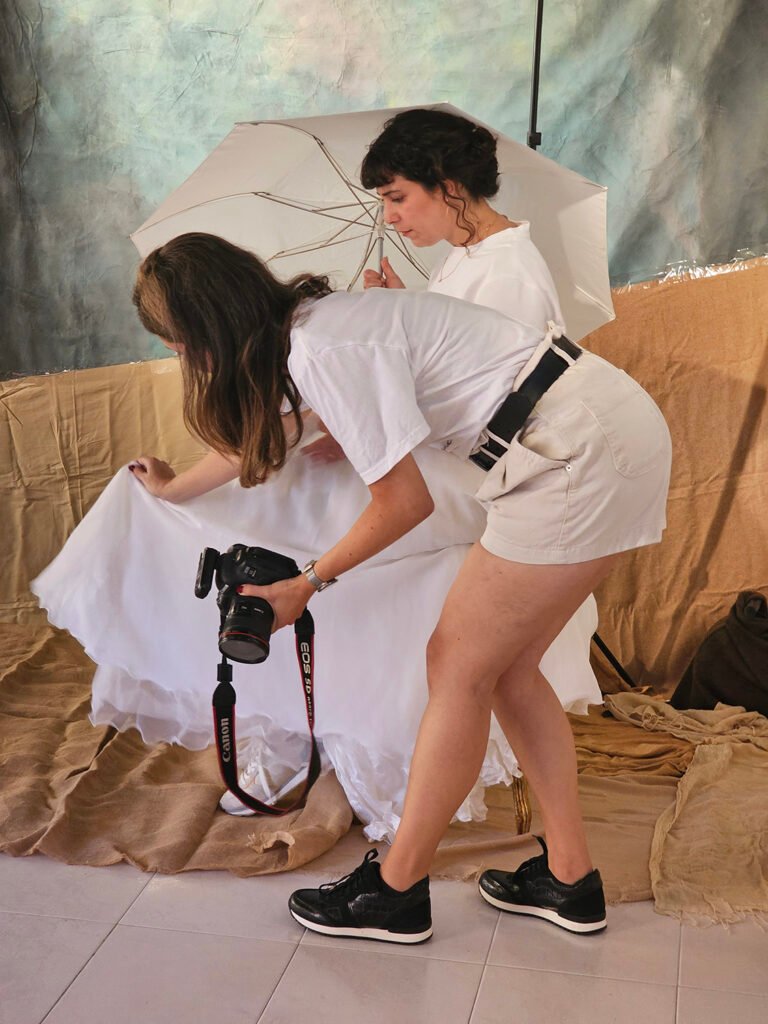
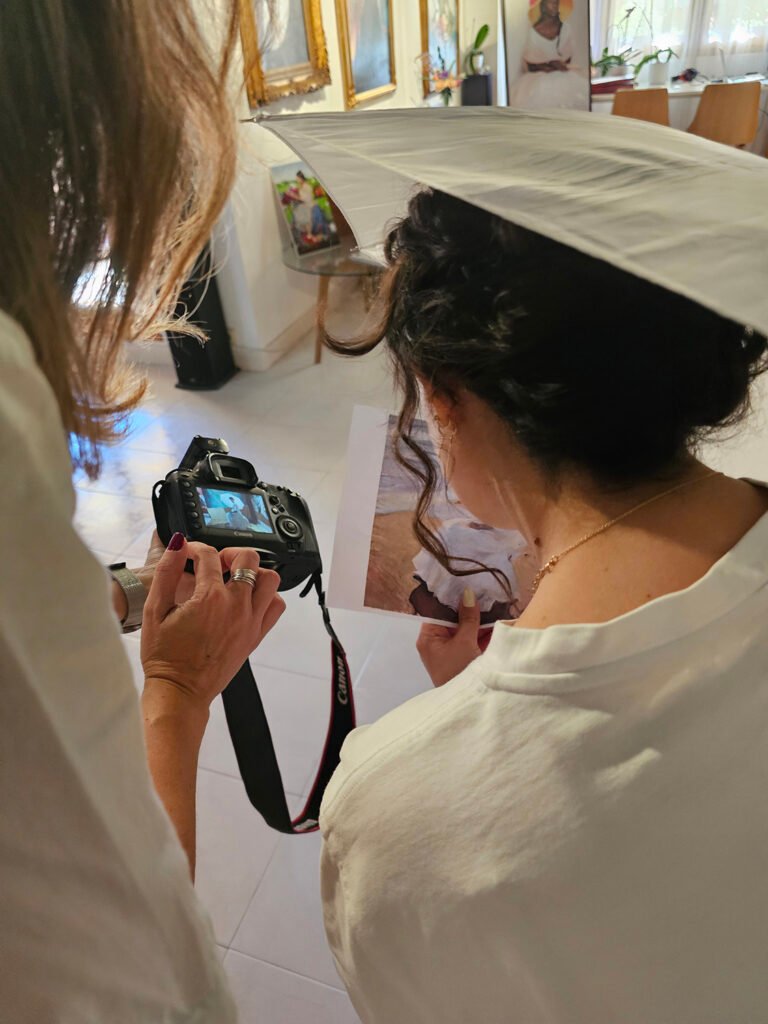
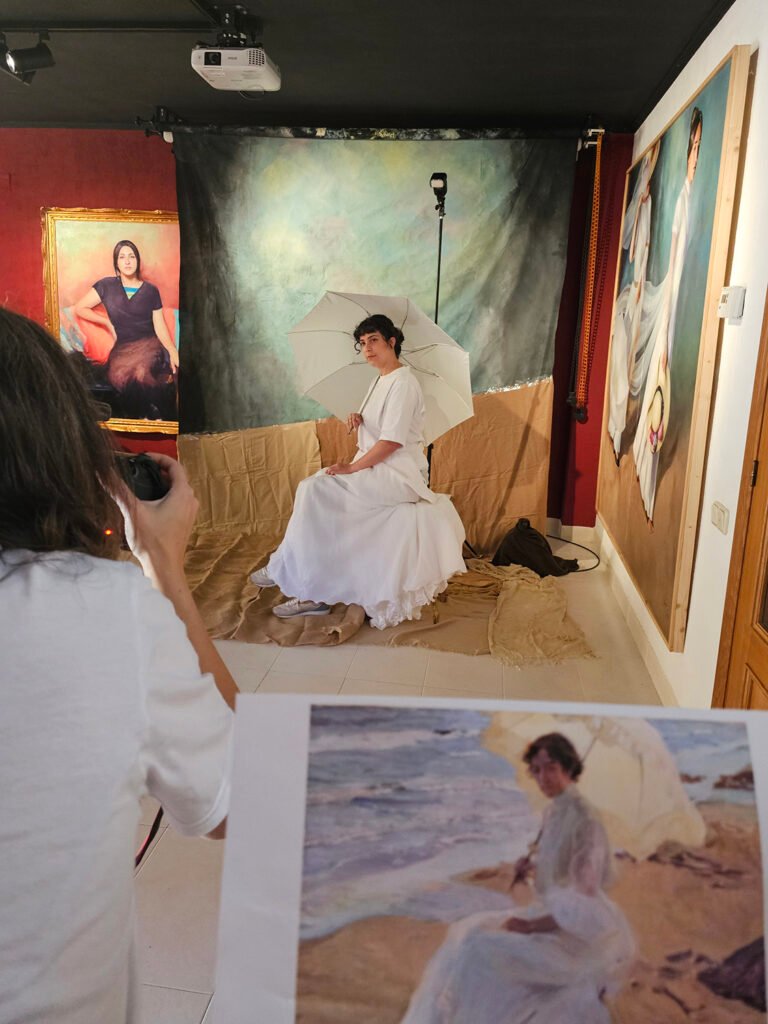
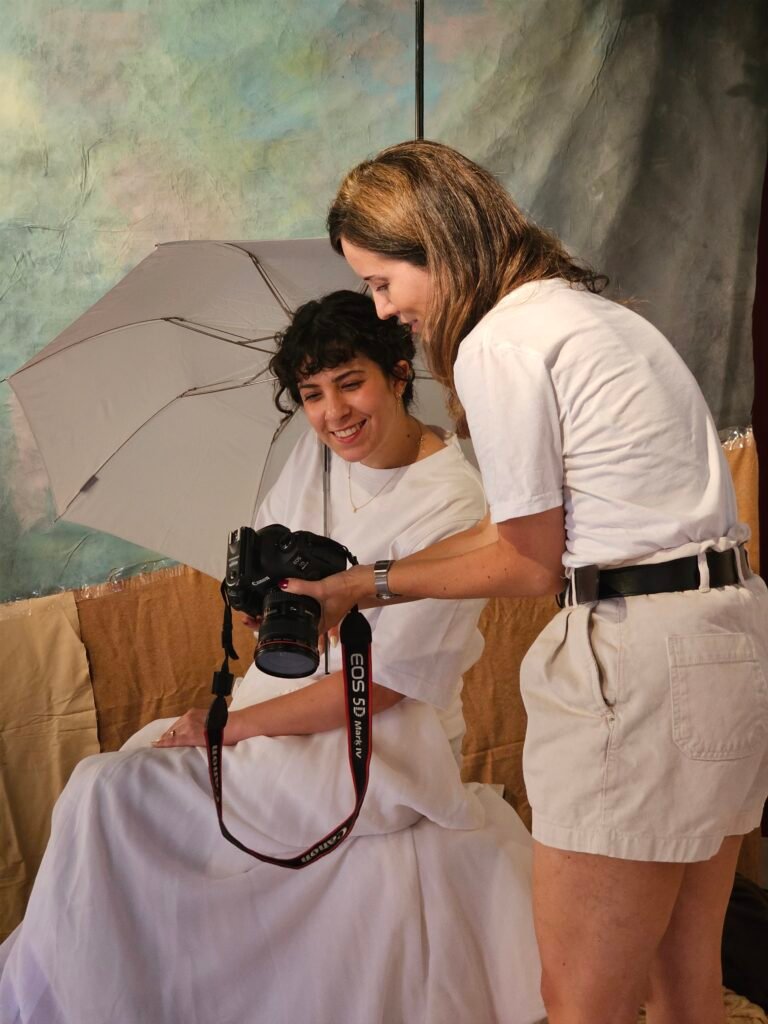

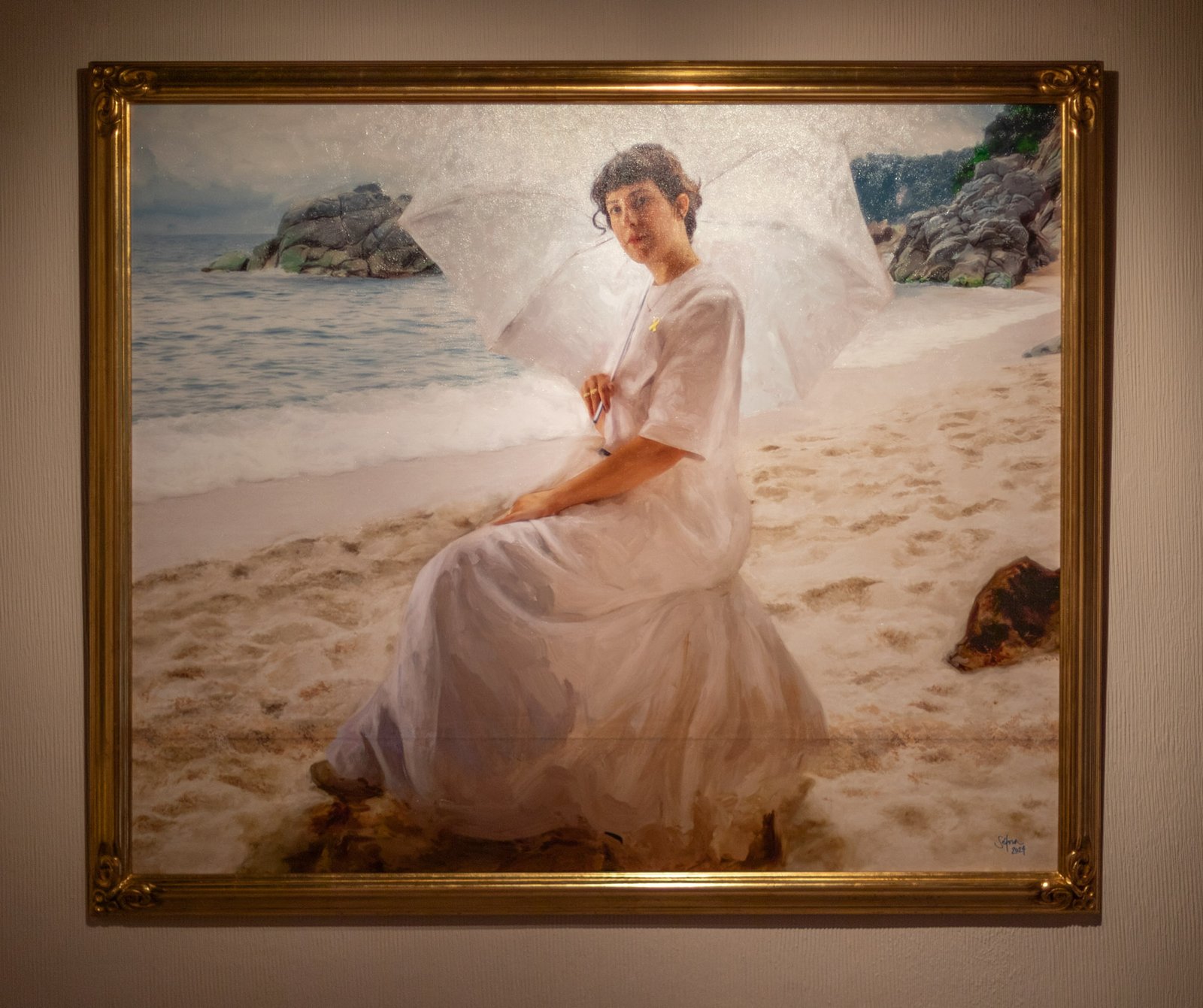
Diáspora in the artist's studio · Valencia, 2024
Exhibition views
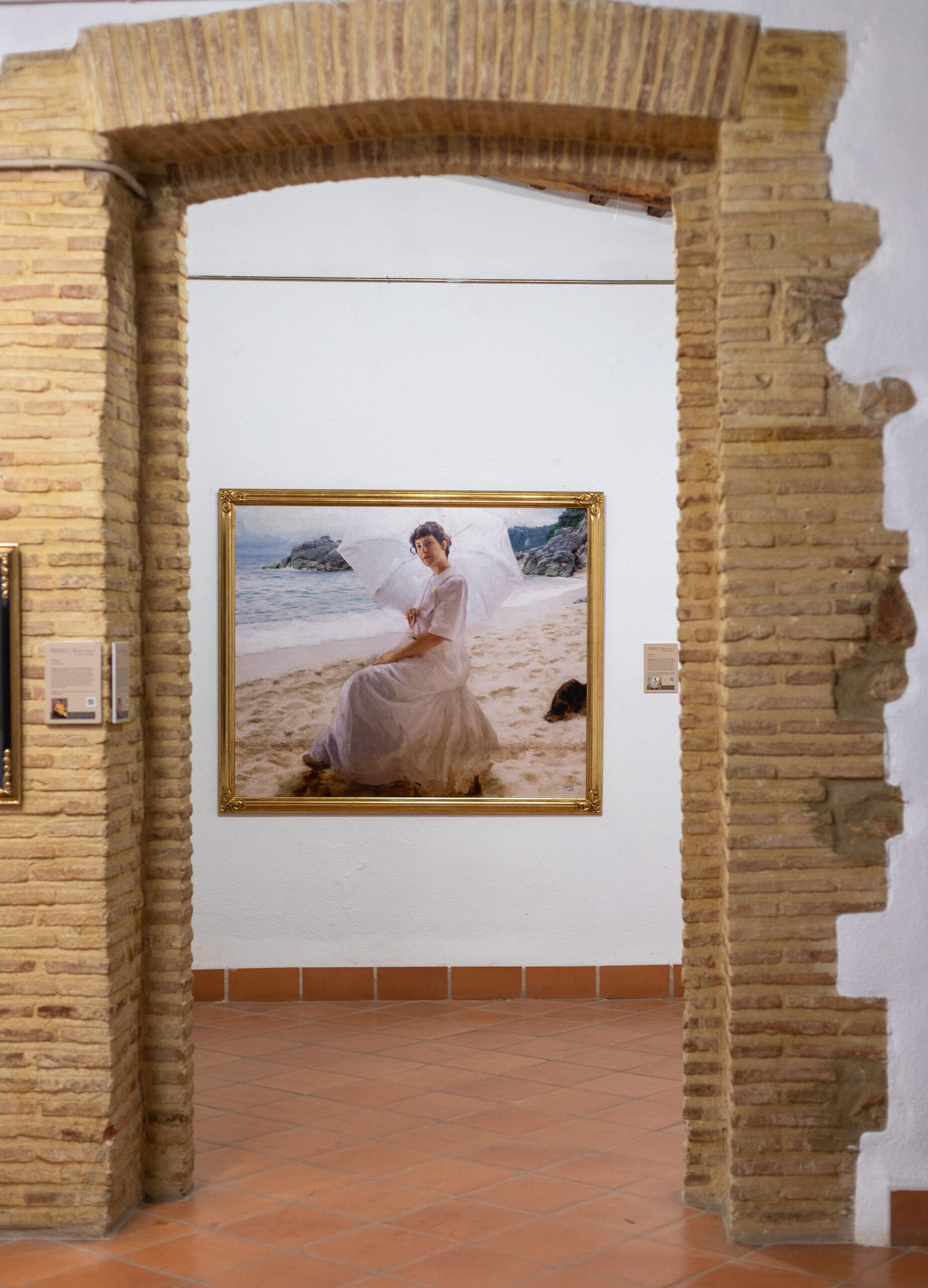
Former Bétera Town Hall · Bétera, Spain · 2024
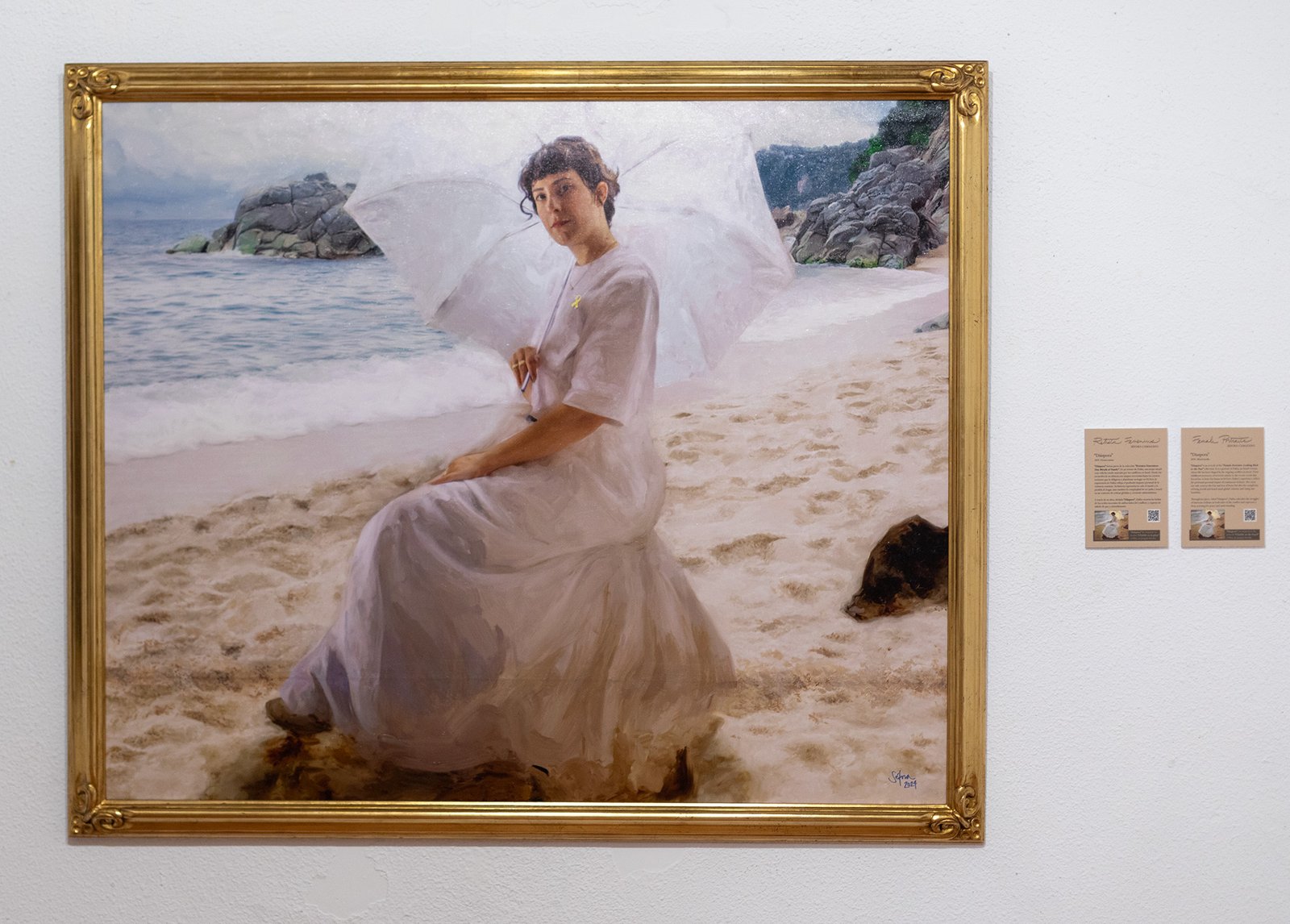
Former Bétera Town Hall · Bétera, Spain · 2024
Galerie Portraits
Interested in this artwork?
I respond personally within 48 hours
Request informationEach artwork includes