01 · The family
A shared hope
Tamar appears alongside her two children. Hope therefore ceases to be an individual experience: the decision to seek a different future transforms the destiny of the entire family.
Female Portraits: Looking Back to the Past
2023
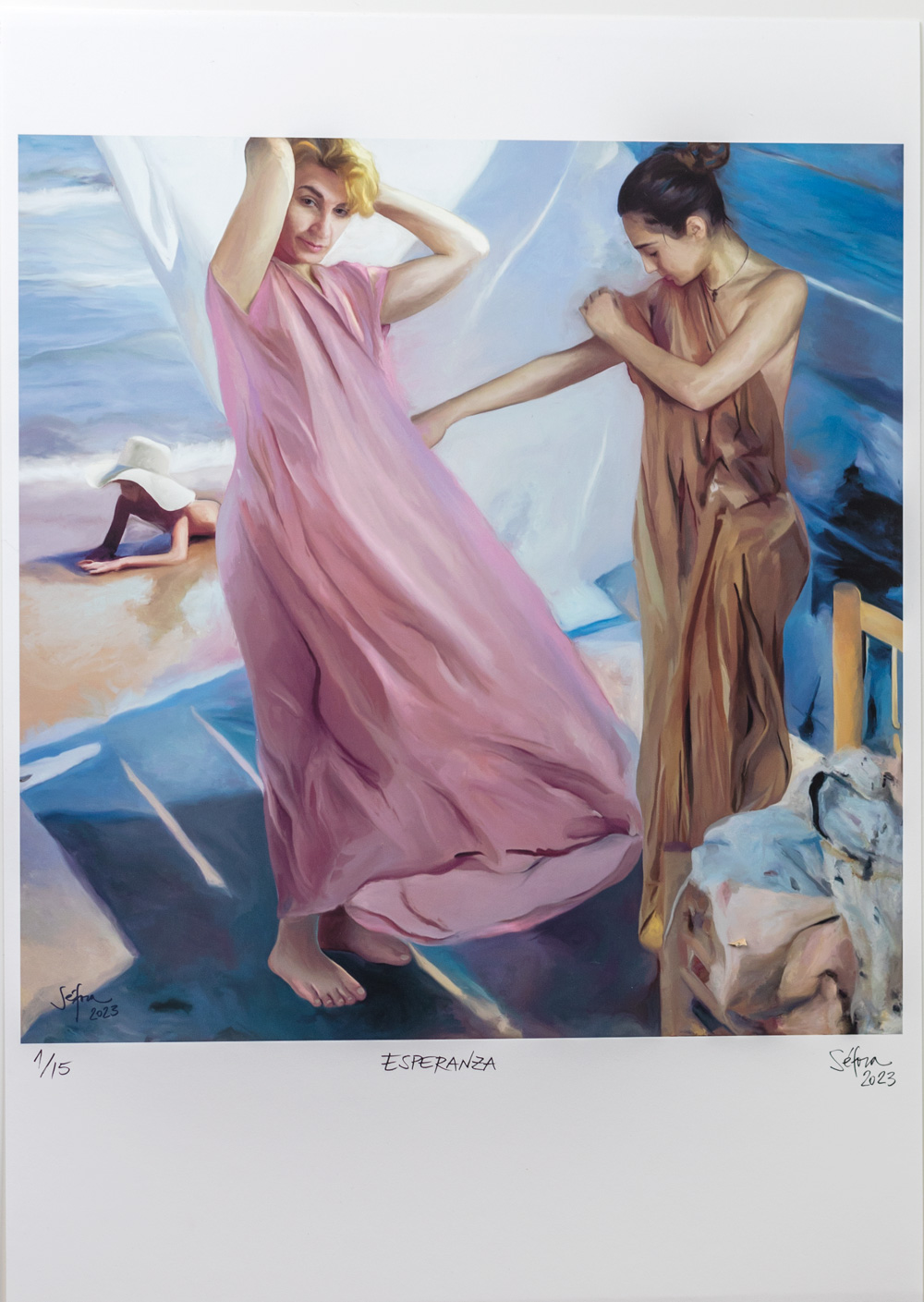
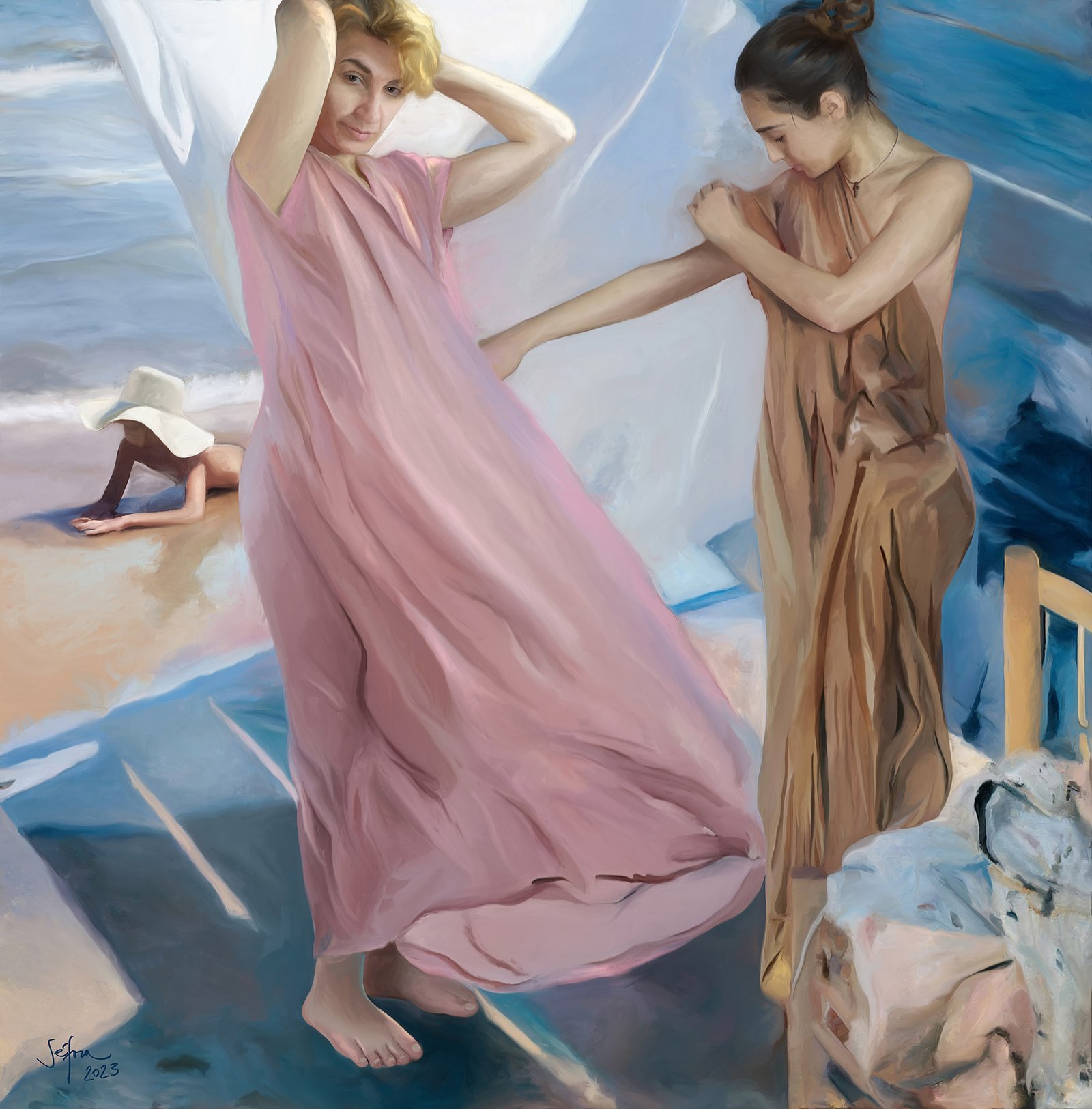
Hope (2023) is a contemporary artwork by Séfora Camazano from the series Female Portraits: Looking Back to the Past. The portrait emerges from Tamar's story, a woman who left Georgia driven by the conviction that another possibility had to exist for her son. Faced with rejection and prejudice, she chose to keep searching for a place where he could receive help and where they could build a different future.
Technique
Mixed media — photography, digital painting, and hand-painted intervention. Giclée Fine Art print on canvas with conservation finish.
Dimensions
149.5 × 151 cm
Year
2023
Series
Female Portraits: Looking Back to the Past
The protagonist
Tamar left Georgia with her family after years of facing two difficult realities: her son's serious health condition and the rejection caused by her marriage to a Muslim man.
There came a point when doctors told her there was no hope for her son. Tamar refused to accept that answer as final and left behind a stable life to seek in another country a possibility she could no longer find there.
“They told me there was no hope.”
Tamar
In Spain, her son's health began to improve, and the family also found a different way of being received: with greater acceptance, respect, and integration.
Hope emerges from that journey. It does not portray what Tamar left behind, but the woman who continued searching for a possibility when others had already stopped seeing one.
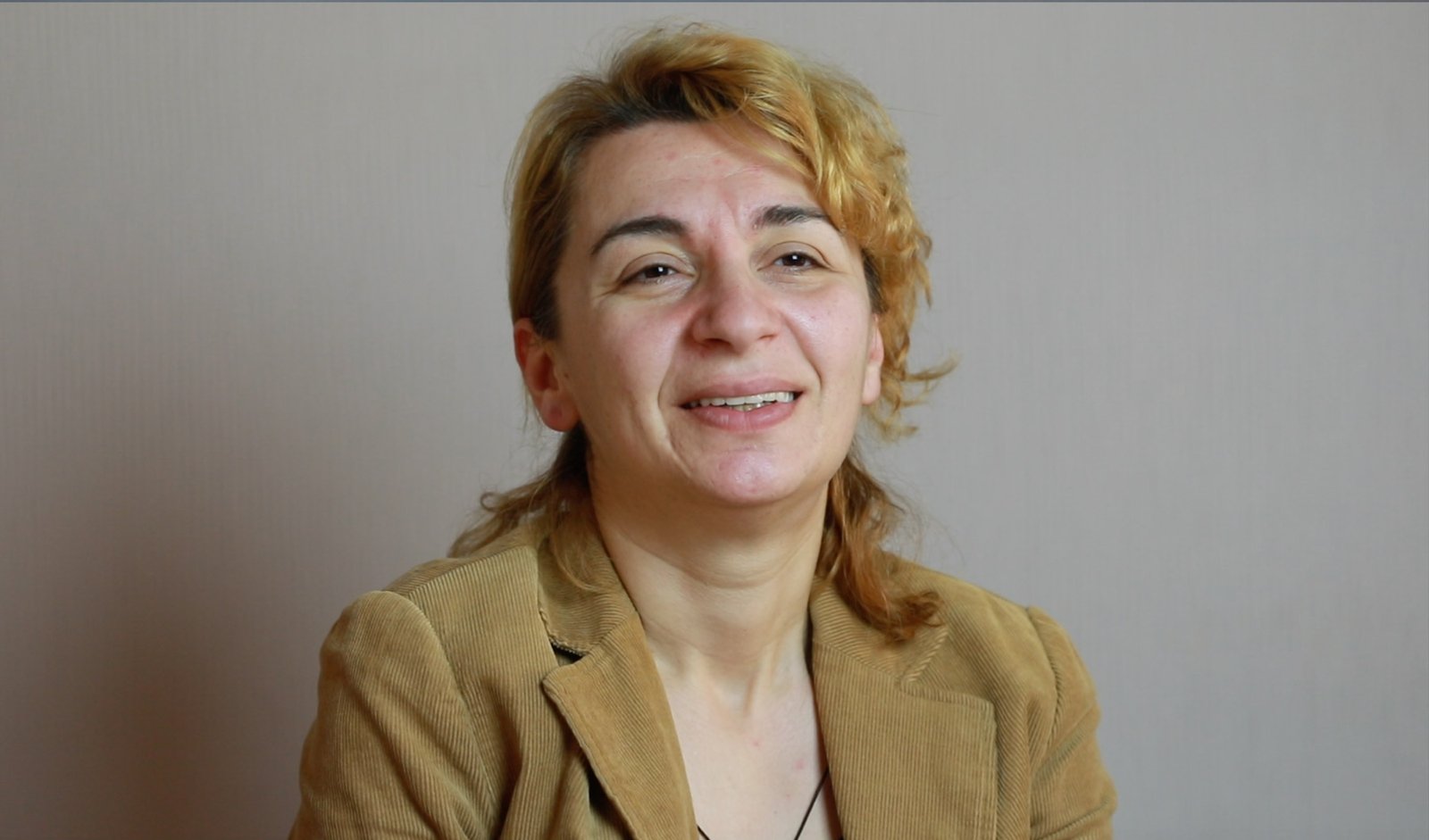
Tamar during the creation of Hope · Valencia, 2023
The meaning of the title
The title arises from an essential contradiction: Tamar was told there was no hope for her son, and she chose to act as though another possibility might still exist.
Here, hope is neither optimism nor passive waiting. It is what makes it possible to move forward when there are no certainties and to make a decision without yet knowing what its outcome will be.
Tamar's individual experience thus takes on a universal dimension: Hope speaks of the human capacity to imagine a way forward even when reality seems to deny it.
“Hope begins when we refuse to believe that no other possibility exists.”
Keys to reading the work
01 · The family
Tamar appears alongside her two children. Hope therefore ceases to be an individual experience: the decision to seek a different future transforms the destiny of the entire family.
02 · The chair
The chair remains partially visible, almost displaced by the figures and fabrics. It introduces an everyday presence that subtly points to the physical reality accompanying David's story.
03 · The dress
Tamar's dress rises and expands in the wind. Its movement introduces lightness and a sense of forward motion: something in the scene seems to be pushing ahead.
04 · The sea
The sea surrounds the scene and opens the composition toward the distance. It evokes the journey, separation, and also the possibility of finding a different life beyond what is known.
05 · The hat
Beneath the large white hat, David appears protected and partially concealed. His discreet presence contrasts with his importance: much of Tamar's journey originates in the search for his future.
06 · The gaze
While her children remain absorbed in the scene, Tamar directs her gaze beyond it. Her expression conveys awareness and determination: she is the one who carries the decision that has set the family in motion.
Curatorial reading
In Hope, nothing appears completely still. The wind moves through the dresses, the sea opens the composition, and the three figures form a scene in which movement takes on both a physical and symbolic dimension.
The work thus transforms hope into a force for action. It does not represent the certainty that something better will happen, but the capacity to move toward what cannot yet be seen.
Although Tamar occupies the visual centre, the composition includes her two children and expands the meaning of the portrait. Her decision no longer belongs solely to an individual biography, but becomes the movement of an entire family toward another possibility for life.
Hope is built precisely on this tension between fragility and determination, uncertainty and forward movement. It offers no promise about the future; it represents the strength required to move toward it.
Artistic reference
Hope takes as its point of departure After the Bath, Valencia (1909), by Joaquín Sorolla. From the original work, it retains the relationship between the figures, the Mediterranean, and the large expanses of fabric stirred by the wind.
Séfora Camazano brings this structure into a contemporary story and incorporates Tamar and her two children. The scene is no longer simply a moment by the sea: the presence of a family that has experienced displacement changes the reading of that same open space.
The dialogue with Sorolla does not seek to reproduce the historical work, but to use its visual memory to construct another narrative. More than a century later, light, wind, and the Mediterranean frame a different story: that of a woman who chose to keep believing in the possibility of another future.
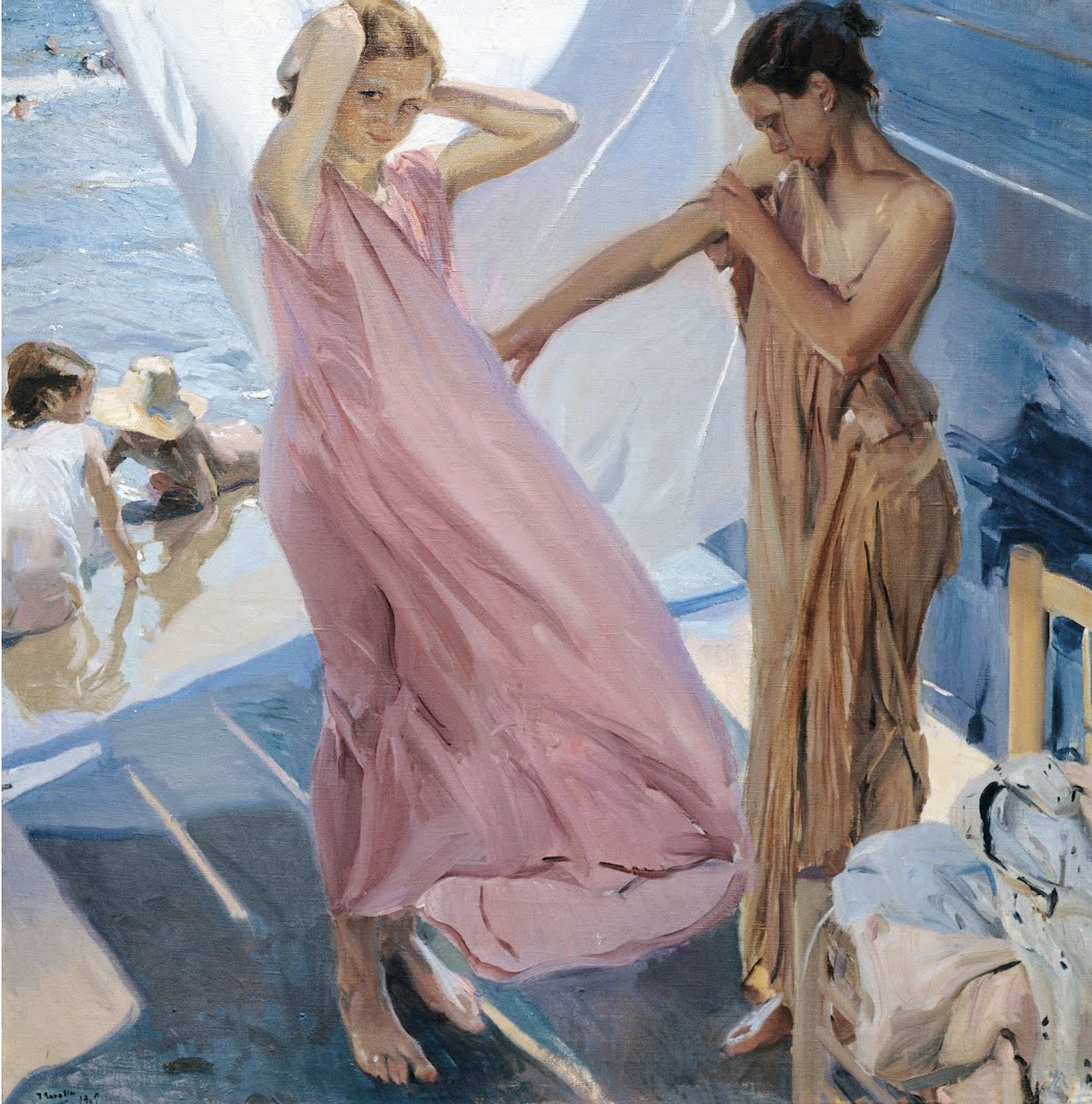
After the Bath, Valencia
Joaquín Sorolla · 1909
Creative process
Hope began with listening to Tamar's story. From there, Séfora Camazano searched Sorolla's work for a composition capable of establishing a dialogue between that contemporary experience and the memory of painting.
After the Bath, Valencia became the starting point for constructing a new scene. During the photo session, Tamar and her children occupied that structure through their own presence, introducing gestures, relationships, and a story that belongs to them alone.
Photography, composition, and digital painting were then integrated into a process of transforming the image, completed with pictorial intervention on the printed work. The result preserves the portrait's photographic origin while moving it toward a language situated between photography and painting.
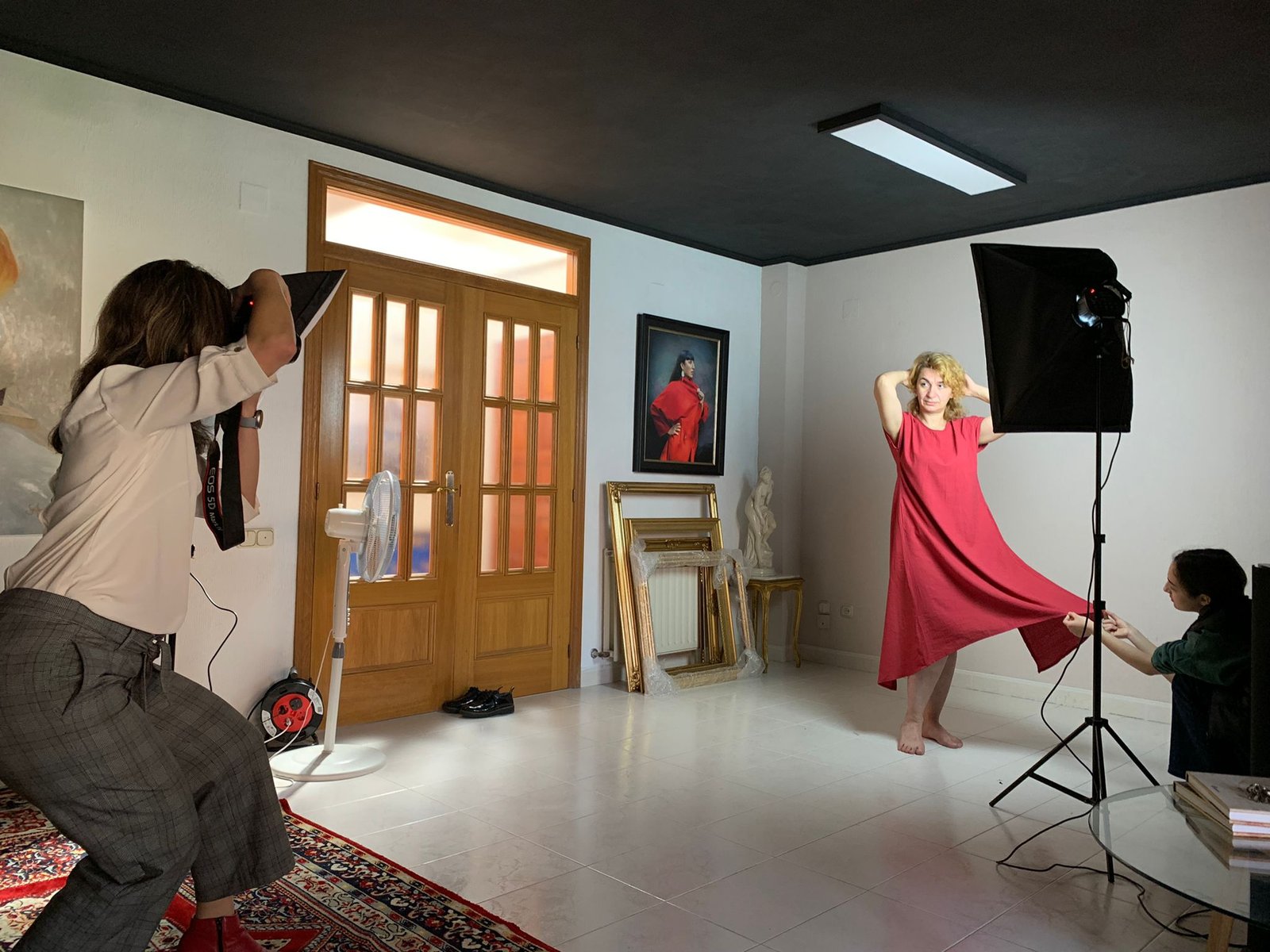
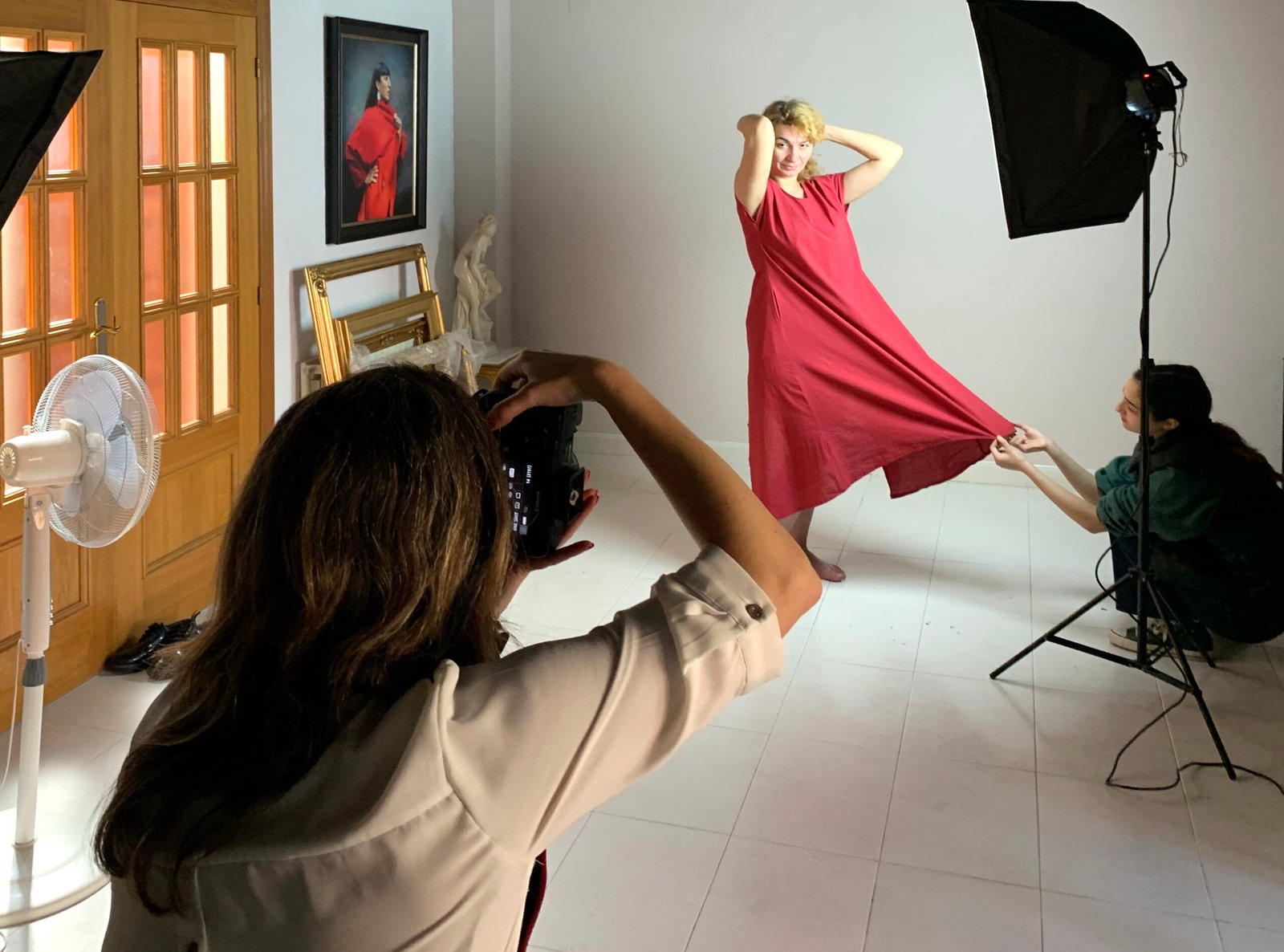
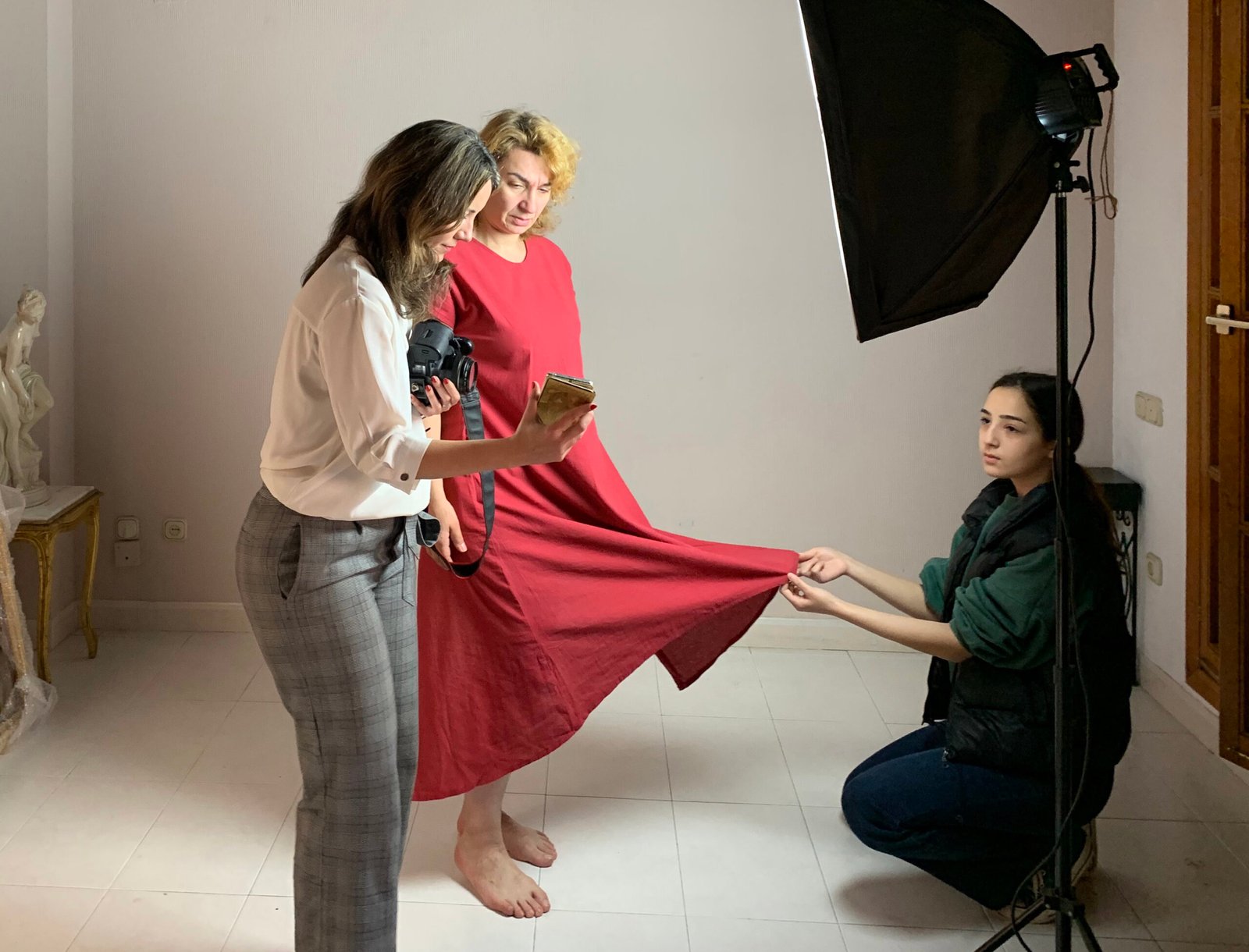
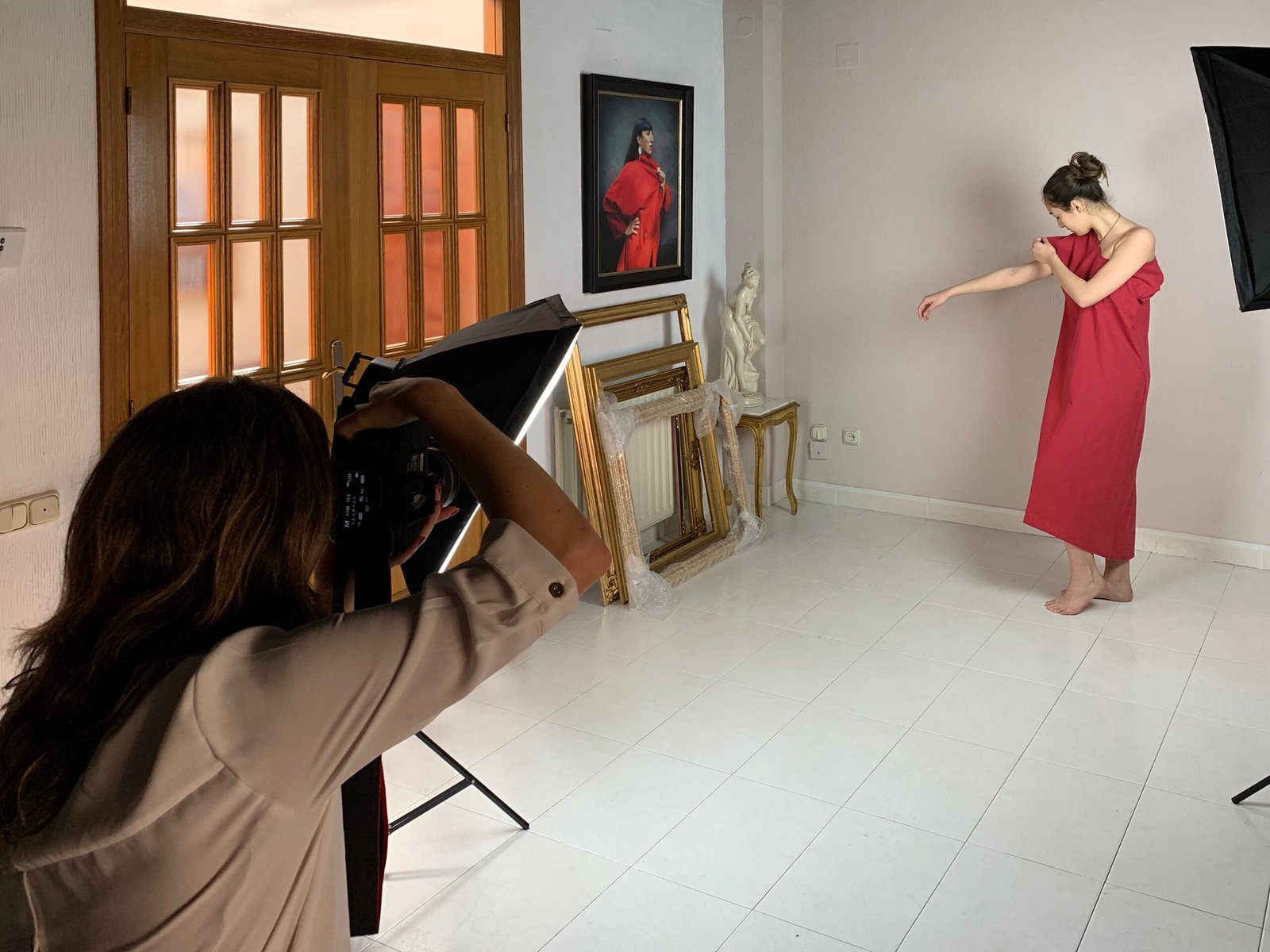
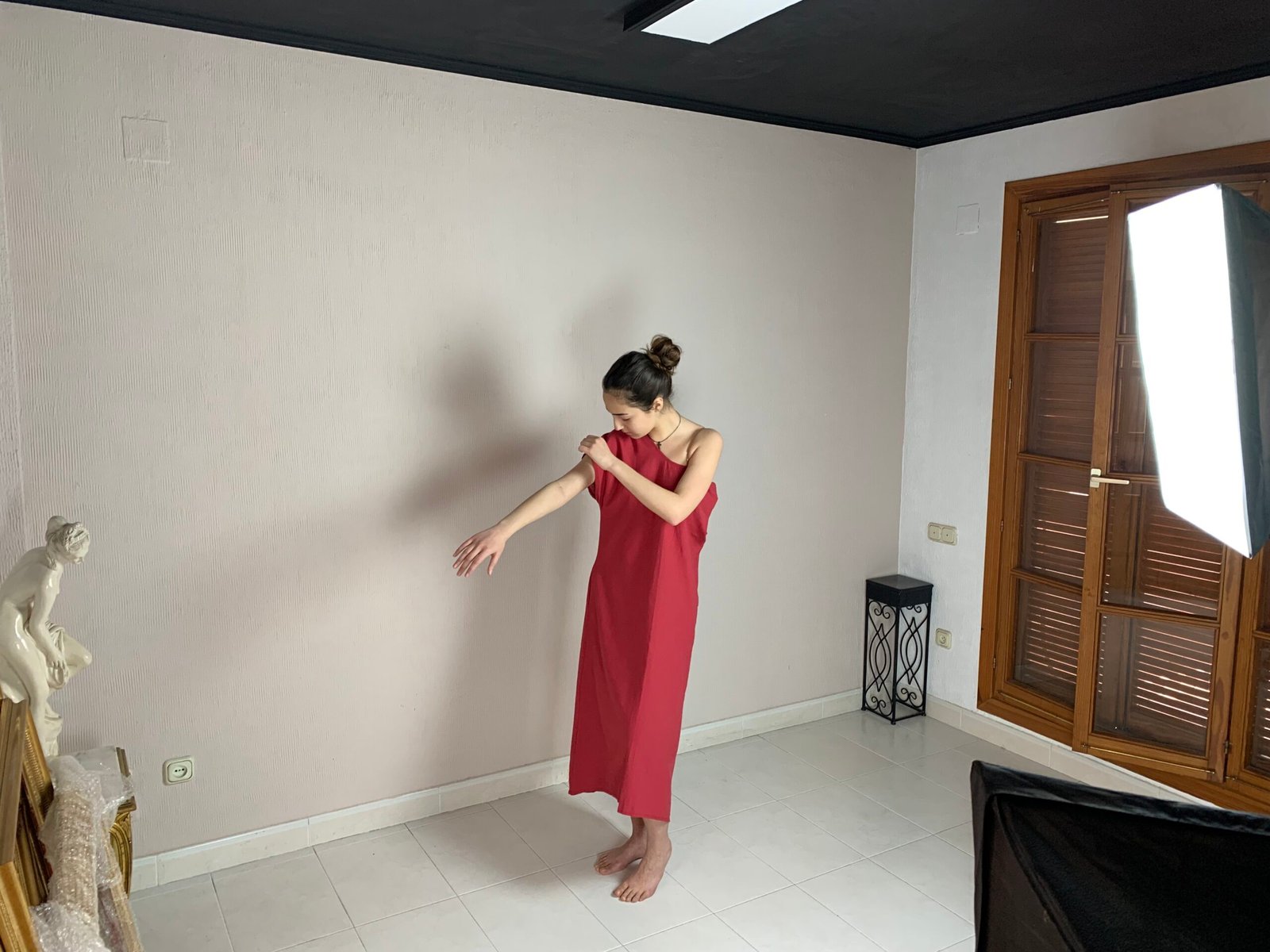
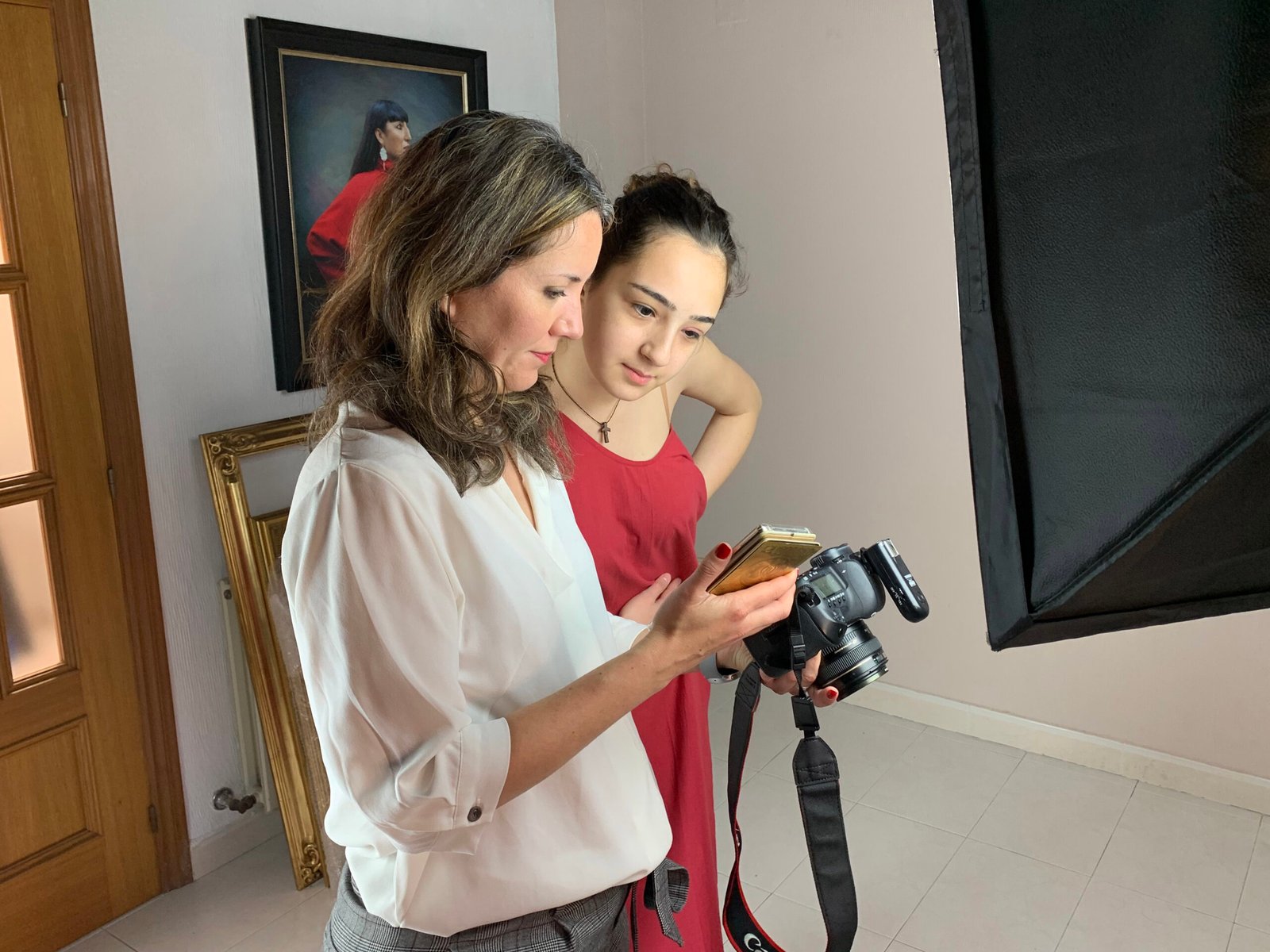
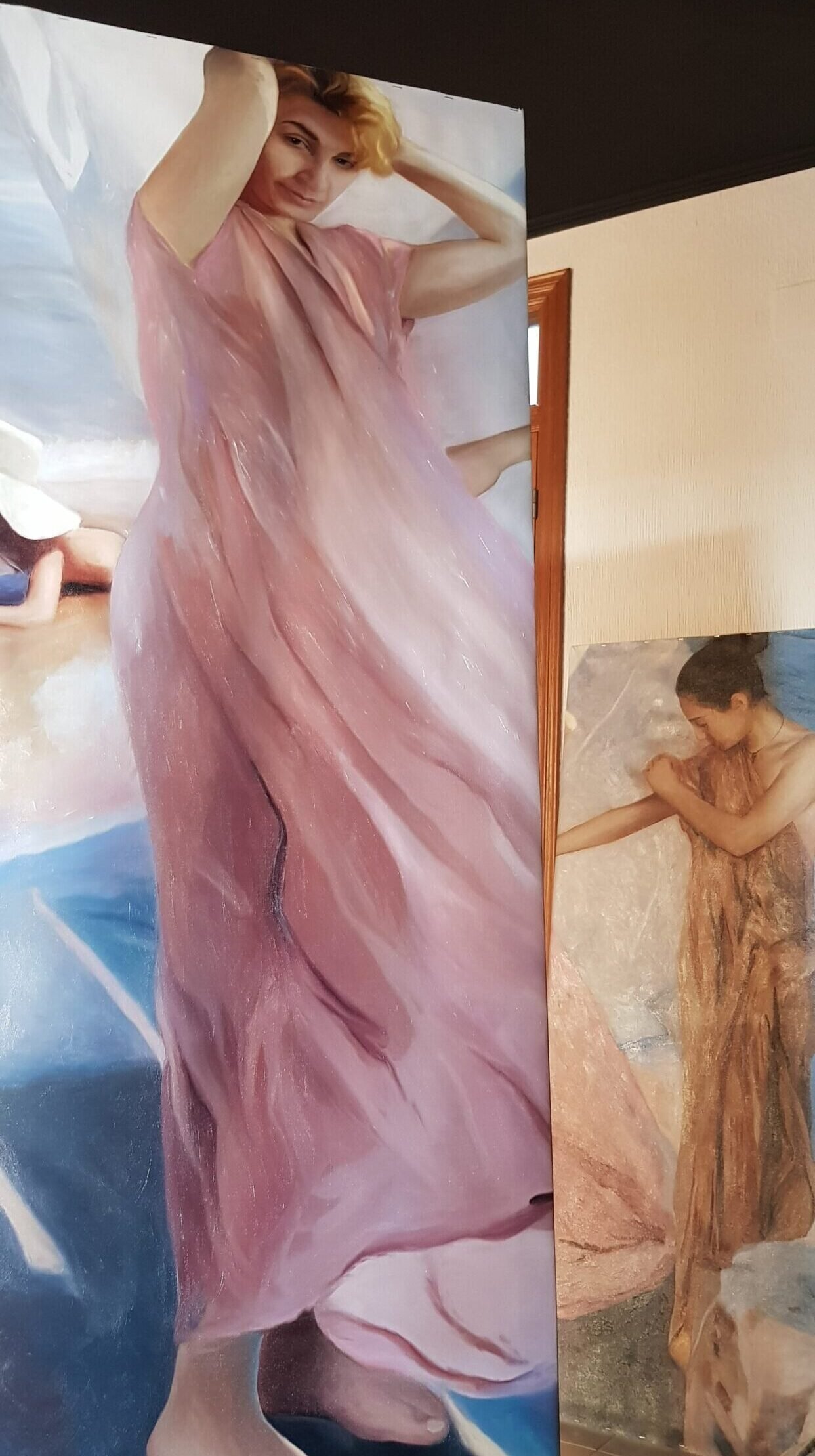
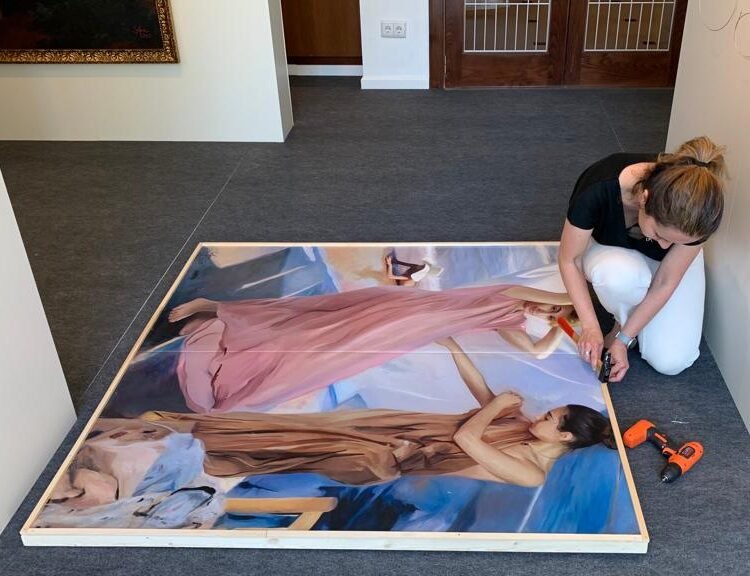
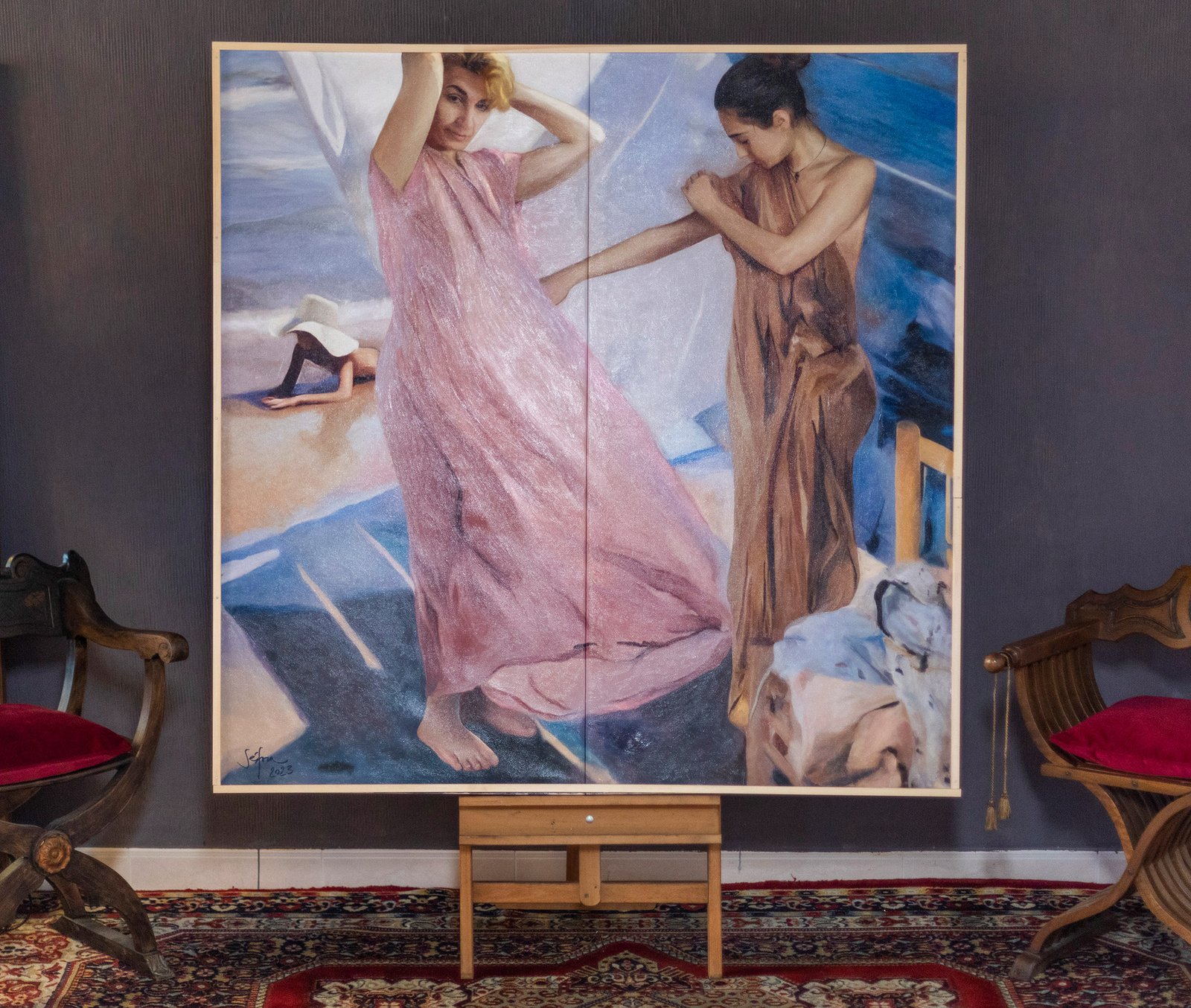
Hope in the artist's studio · Valencia
Exhibition history
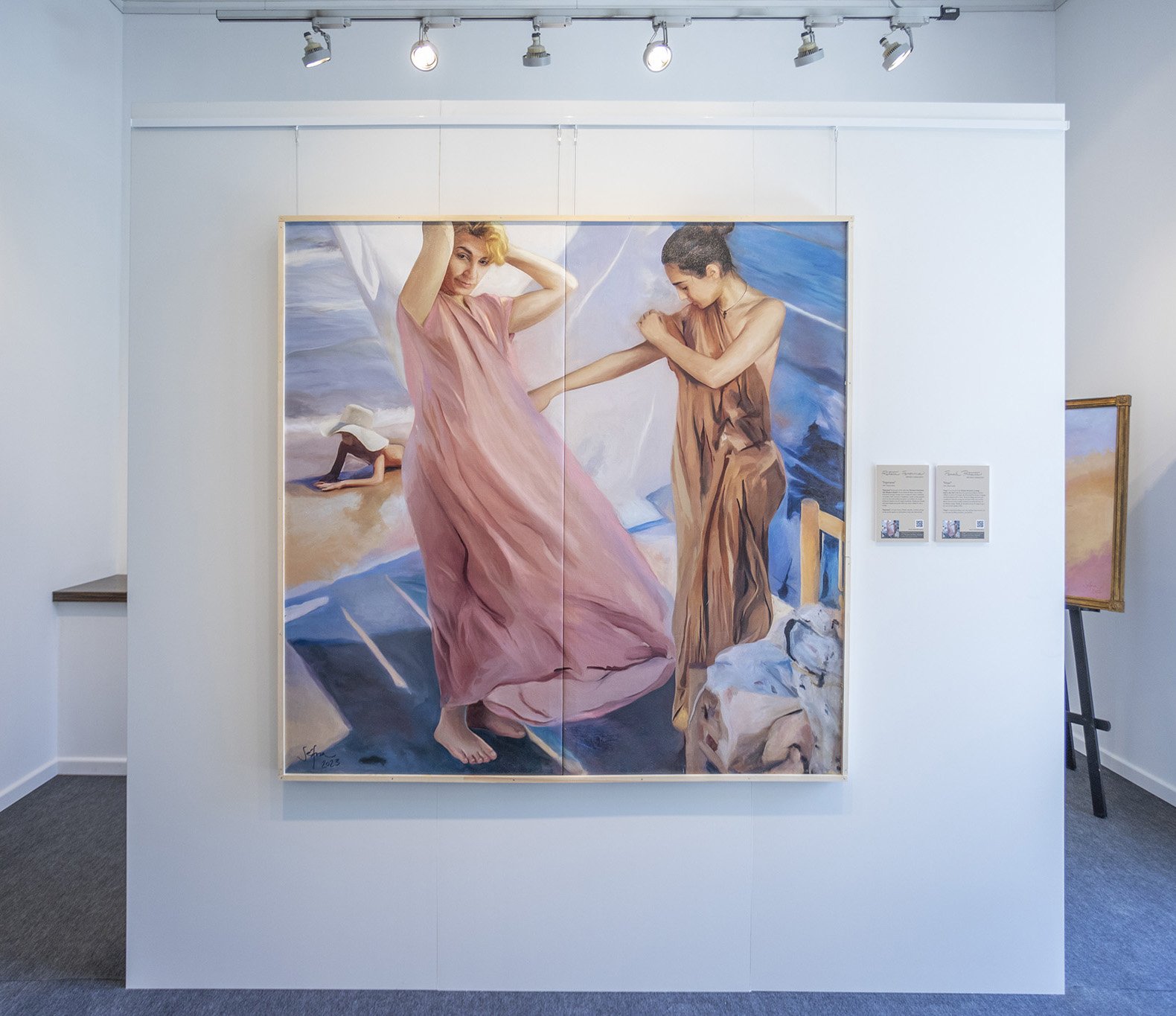
The Westin Valencia
Valencia, Spain · 2023
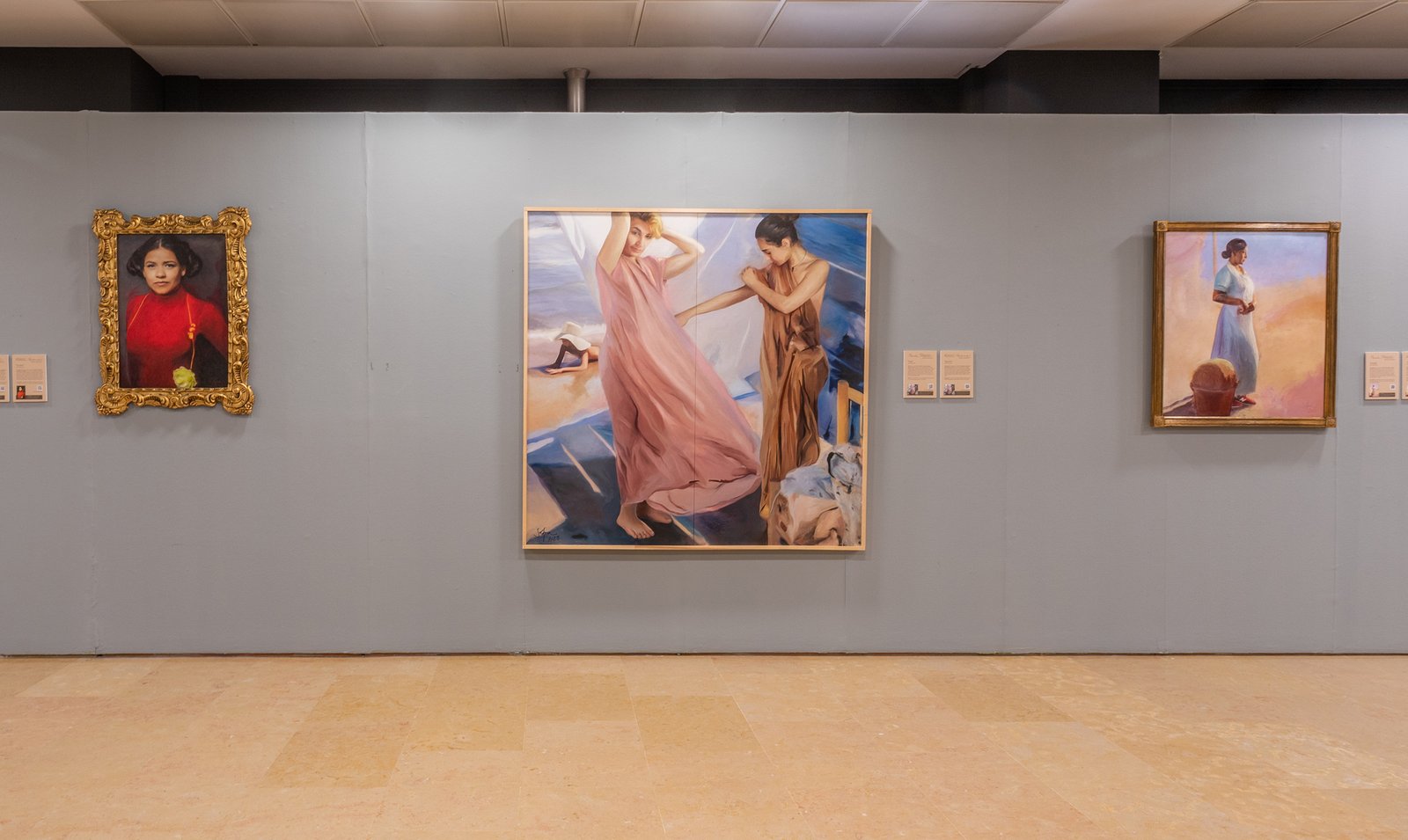
Botanical Garden of the University of Valencia
Valencia, Spain · 2024
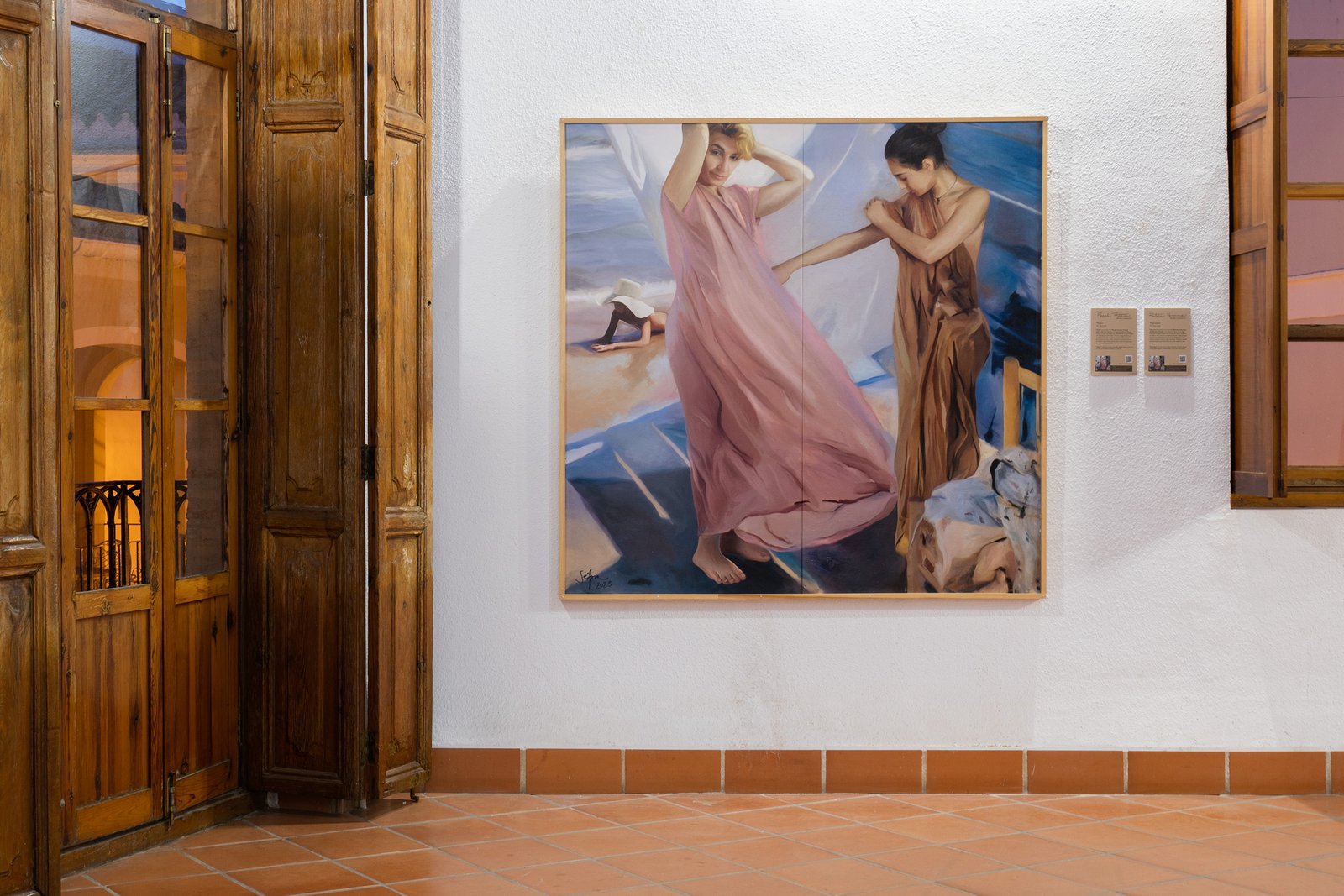
Former Bétera Town Hall
Bétera, Spain · 2024
Galerie Portraits
Interested in this artwork?
I personally respond within 48 hours
Enquire about the original artworkThe original artwork includes