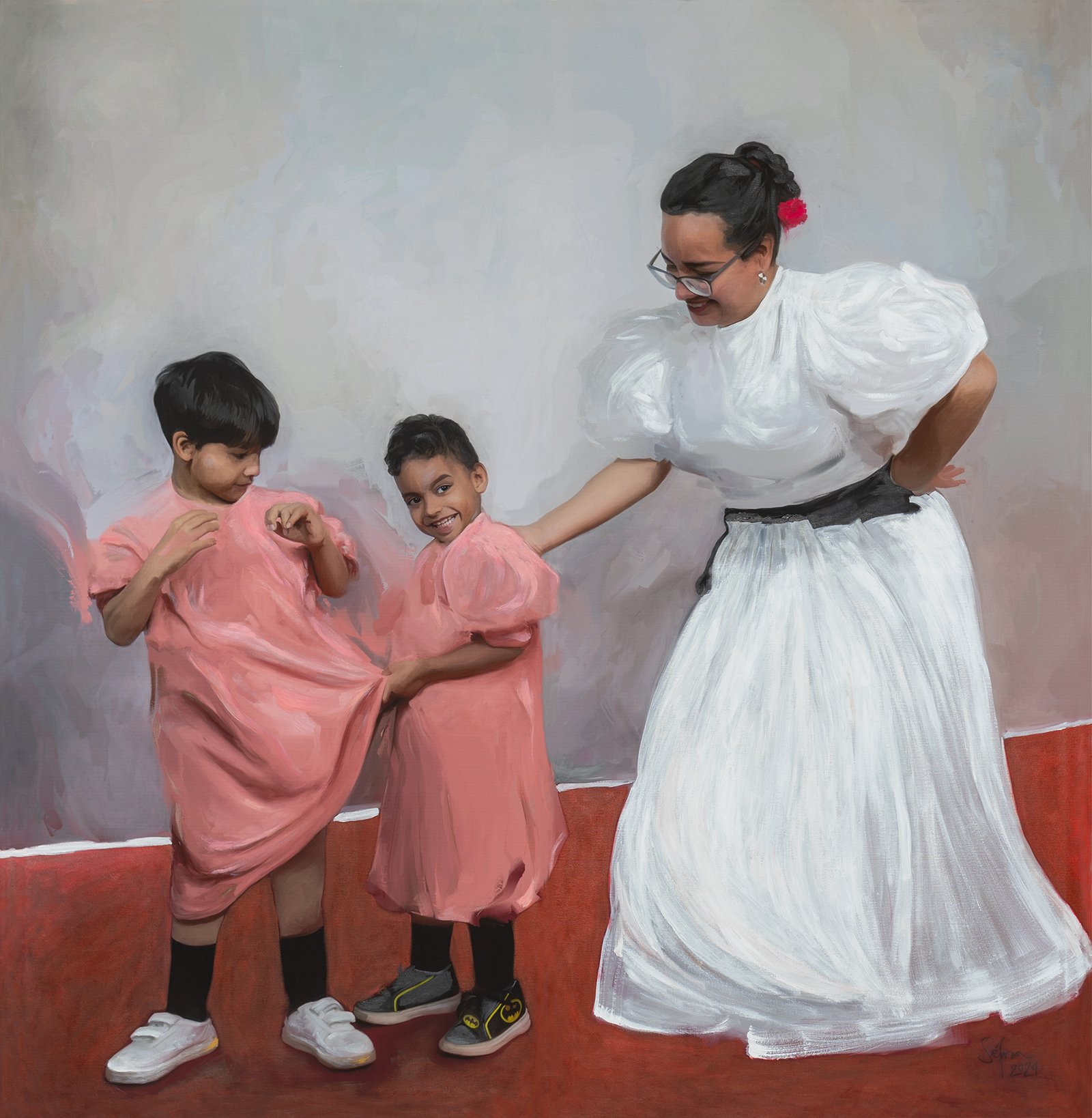
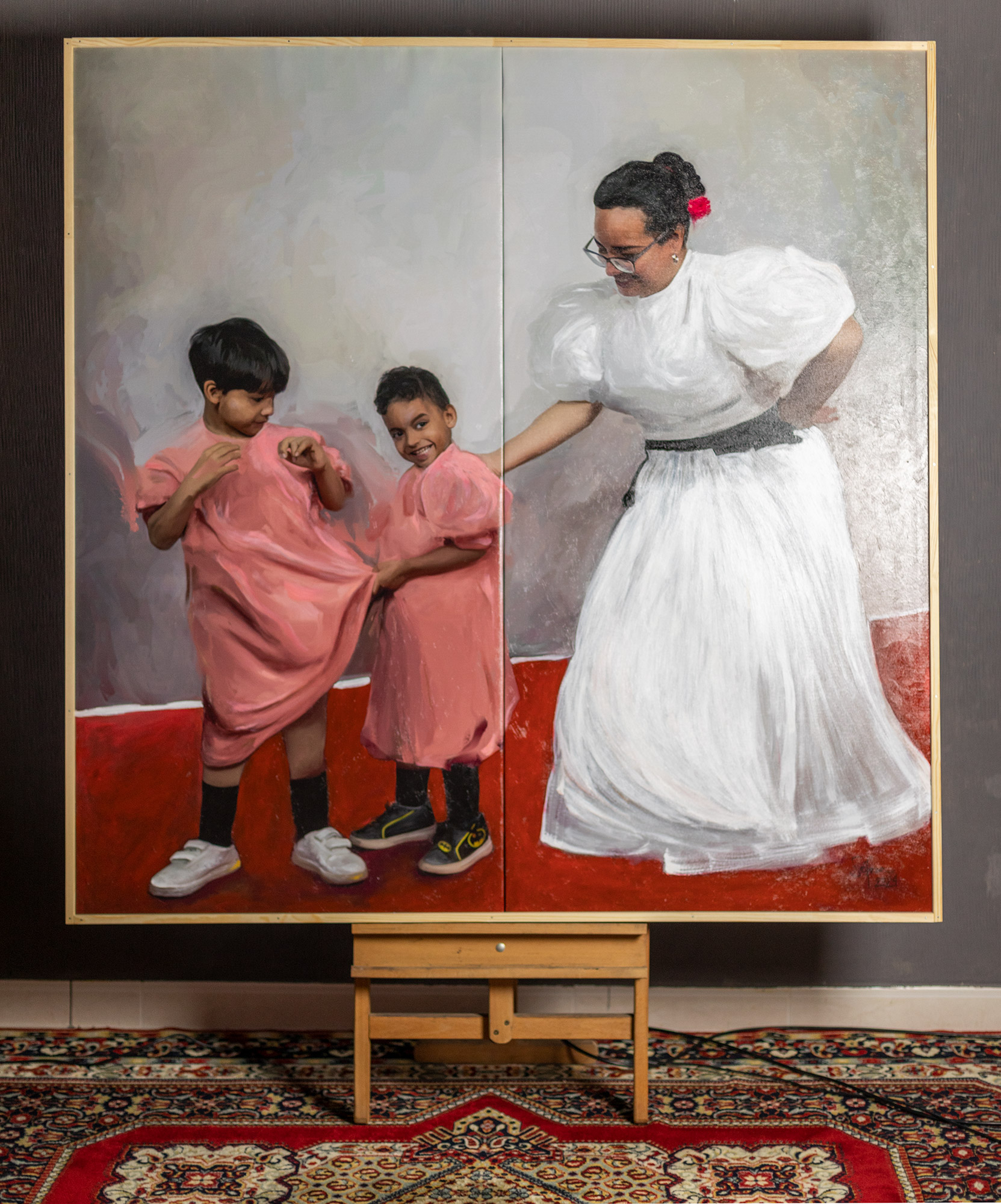
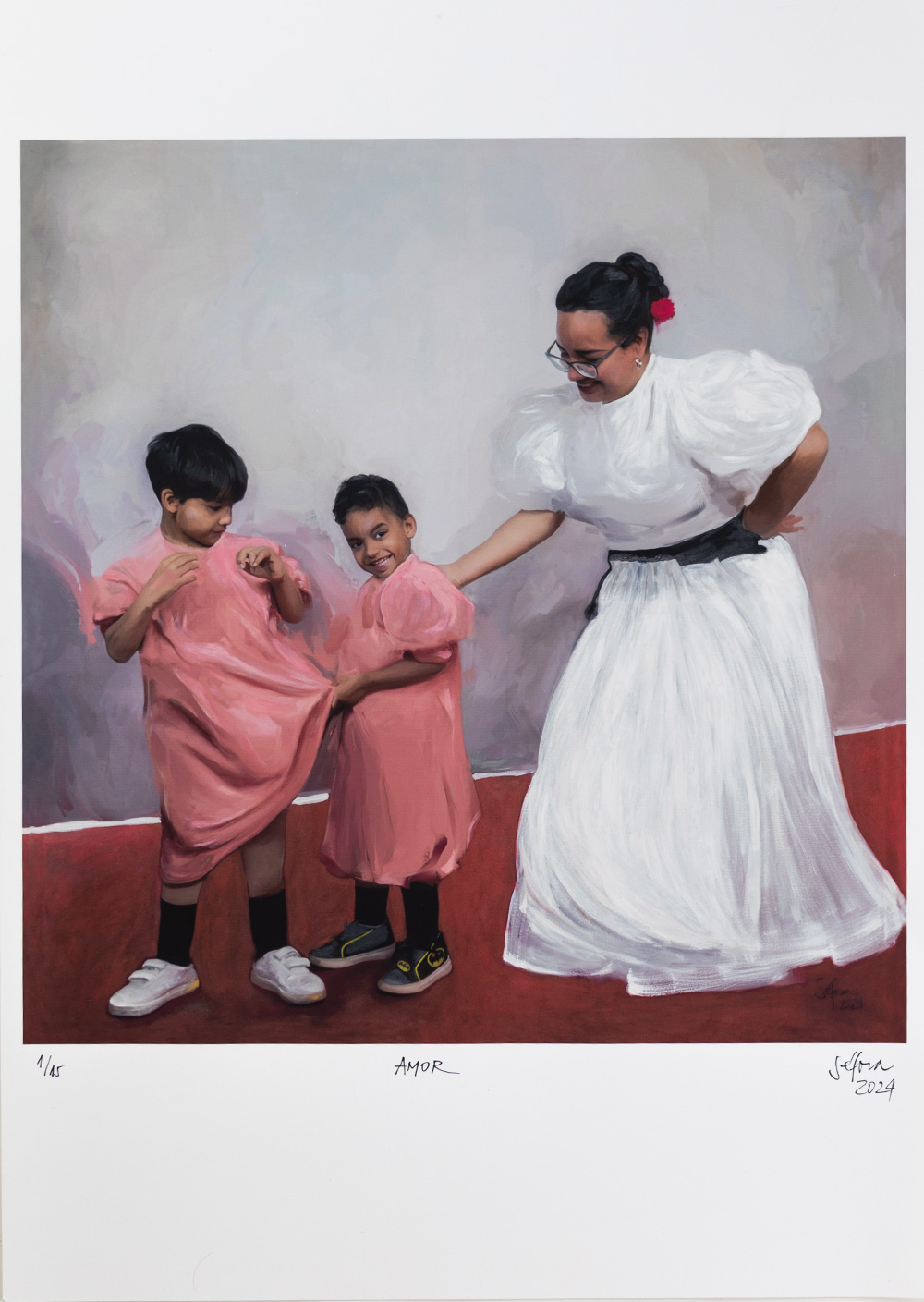
Love (2024) is a contemporary artwork by Séfora Camazano from the series
Female Portraits: Looking Back to the Past.
The work explores love not as an idealized emotion, but as a bond built through presence, care, and the decision to remain beside another even when life transforms what we once knew.
Available
Technique
Mixed media — photography, digital painting, and hand-painted intervention.
Giclée Fine Art print on canvas with conservation finish.
Love portrays Grace, a Colombian woman who had to leave her country to protect herself and her two children. For eight years, she lived in a relationship marked by control, physical and psychological violence, and fear.
She tried to escape within Colombia, moving from one city to another, but she was found again and again. When she realized that staying could endanger both her life and her children's, she made the decision to leave for Spain.
“Sometimes, loving means having the courage to break away from everything we know in order to protect what we are not willing to lose.”
Grace
Arriving in Spain did not mean that the difficulties were over. Without regularized immigration status and without a stable place to live, she had to face a new form of uncertainty.
And yet, something had changed radically: she was far from the person who threatened her. Even amid instability, that distance meant safety.
Love does not portray her through the violence she endured, but through the strength that made her departure possible. At the heart of that decision were her children: the desire to protect them and offer them a different life.
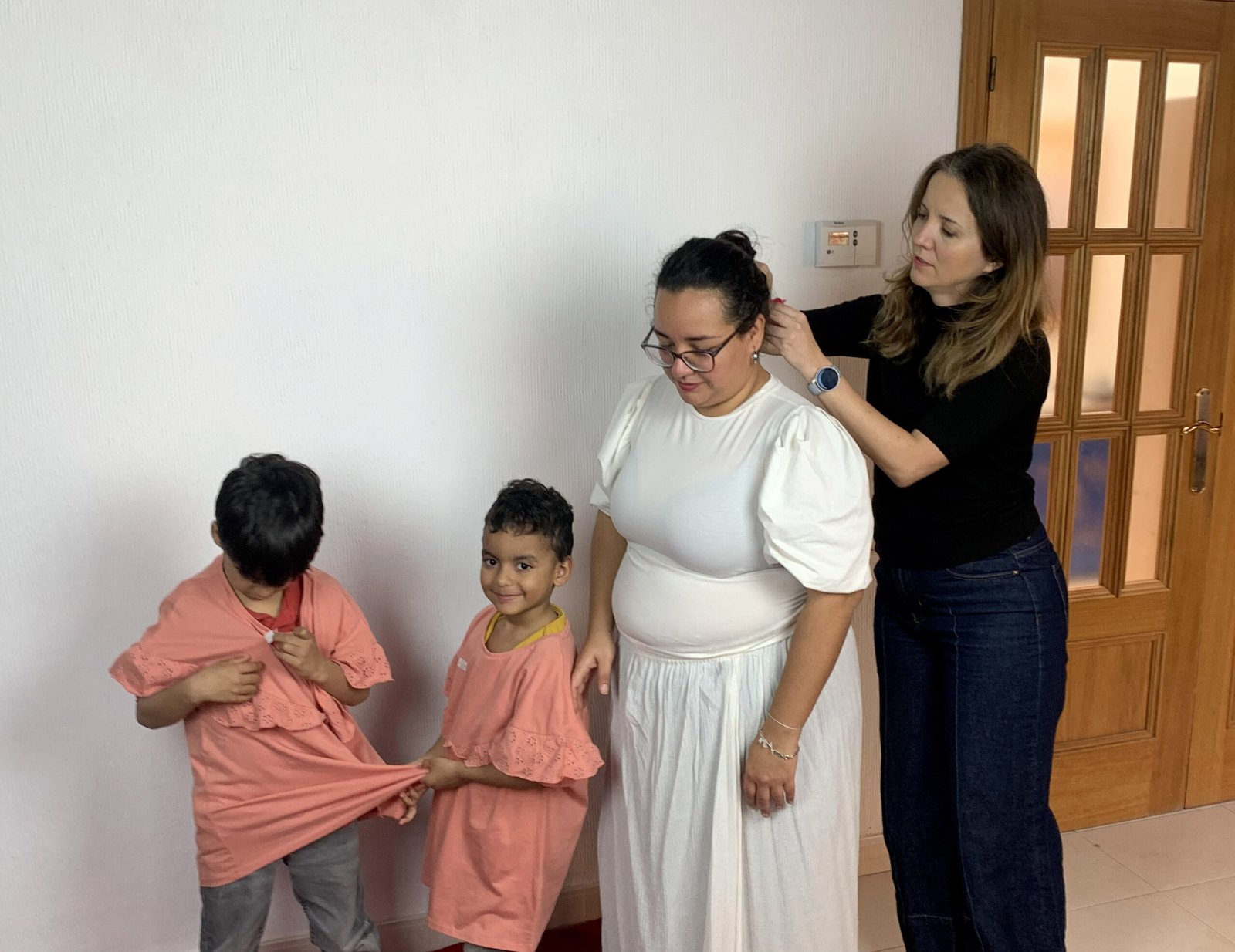
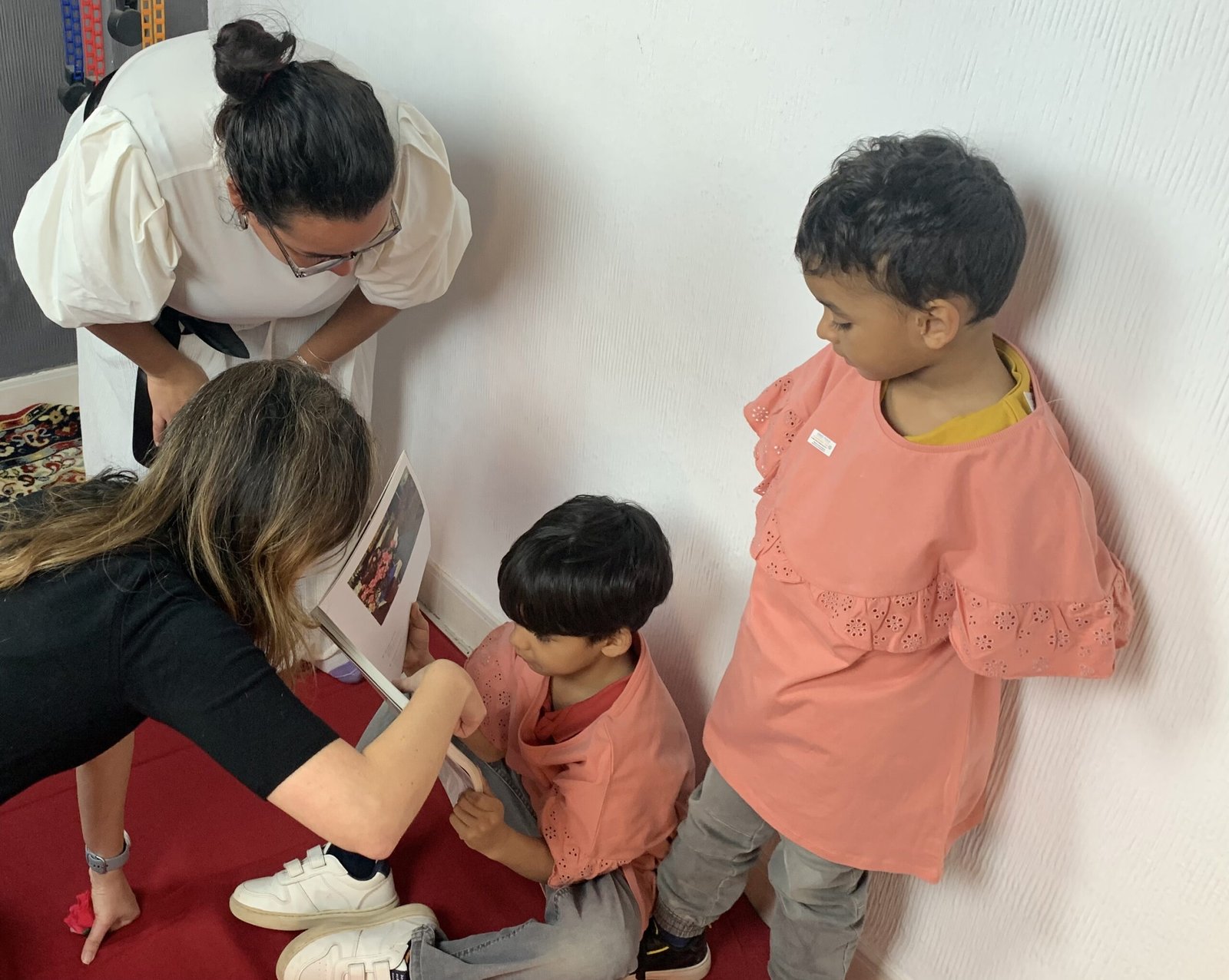
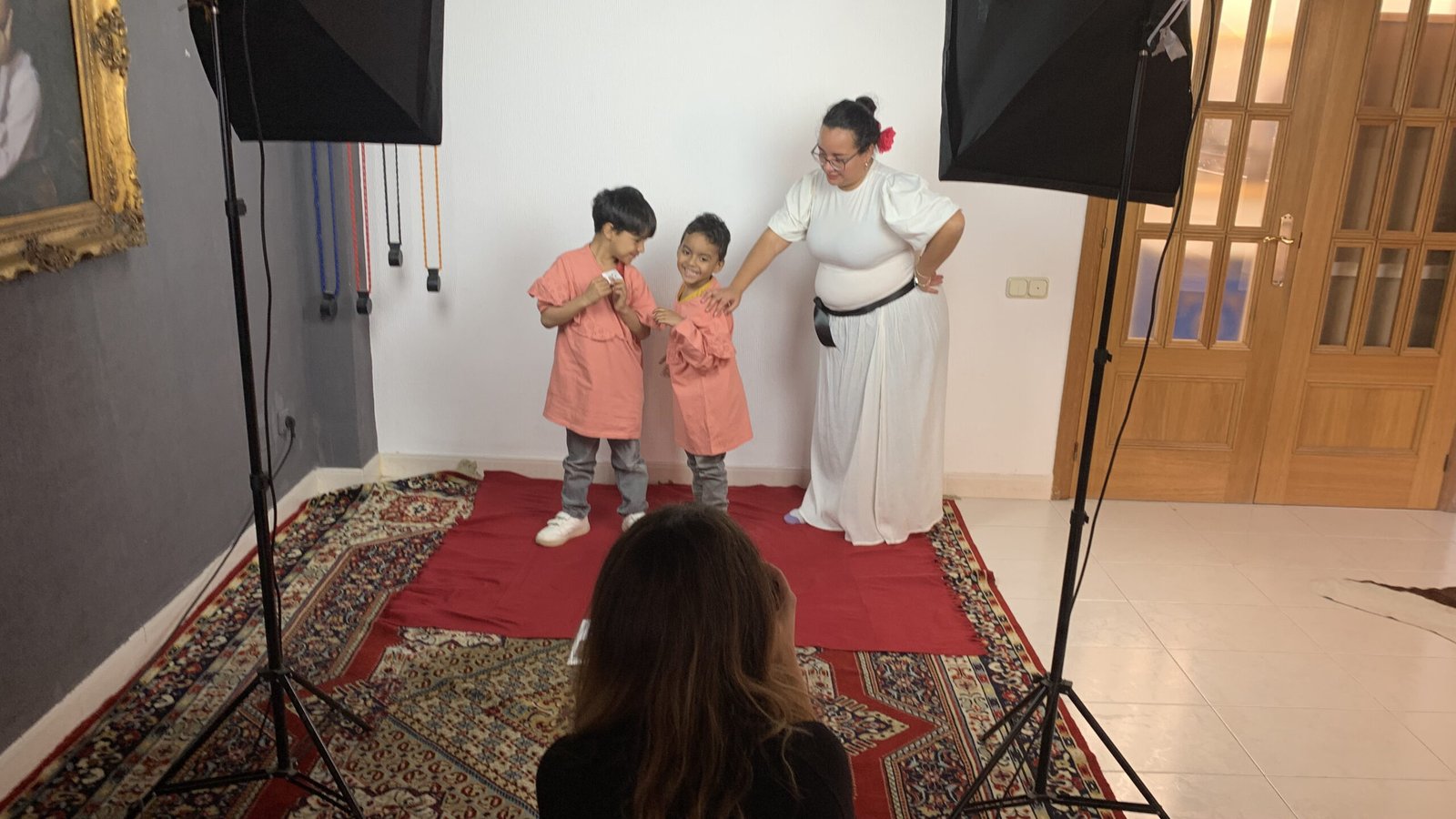
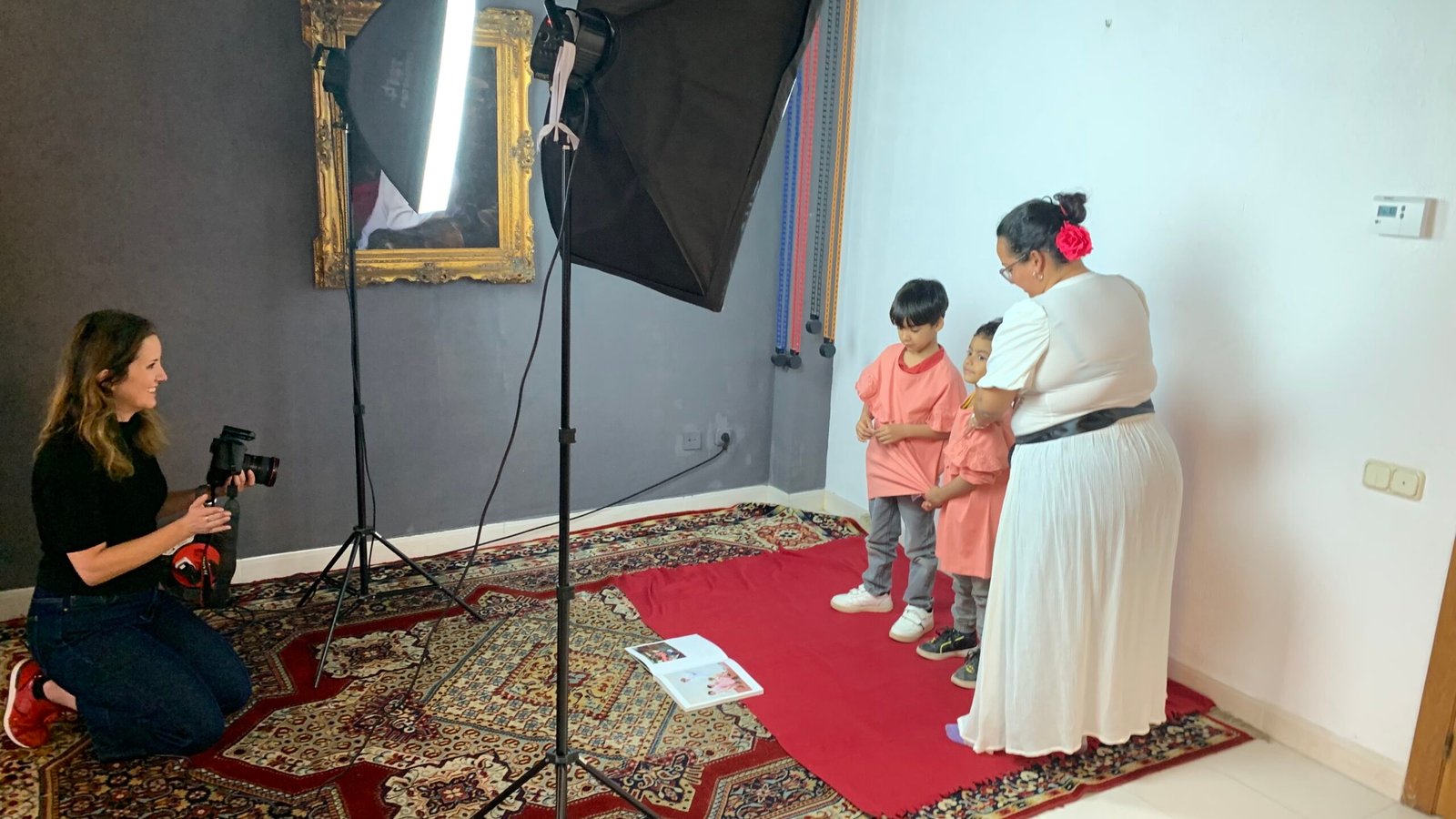
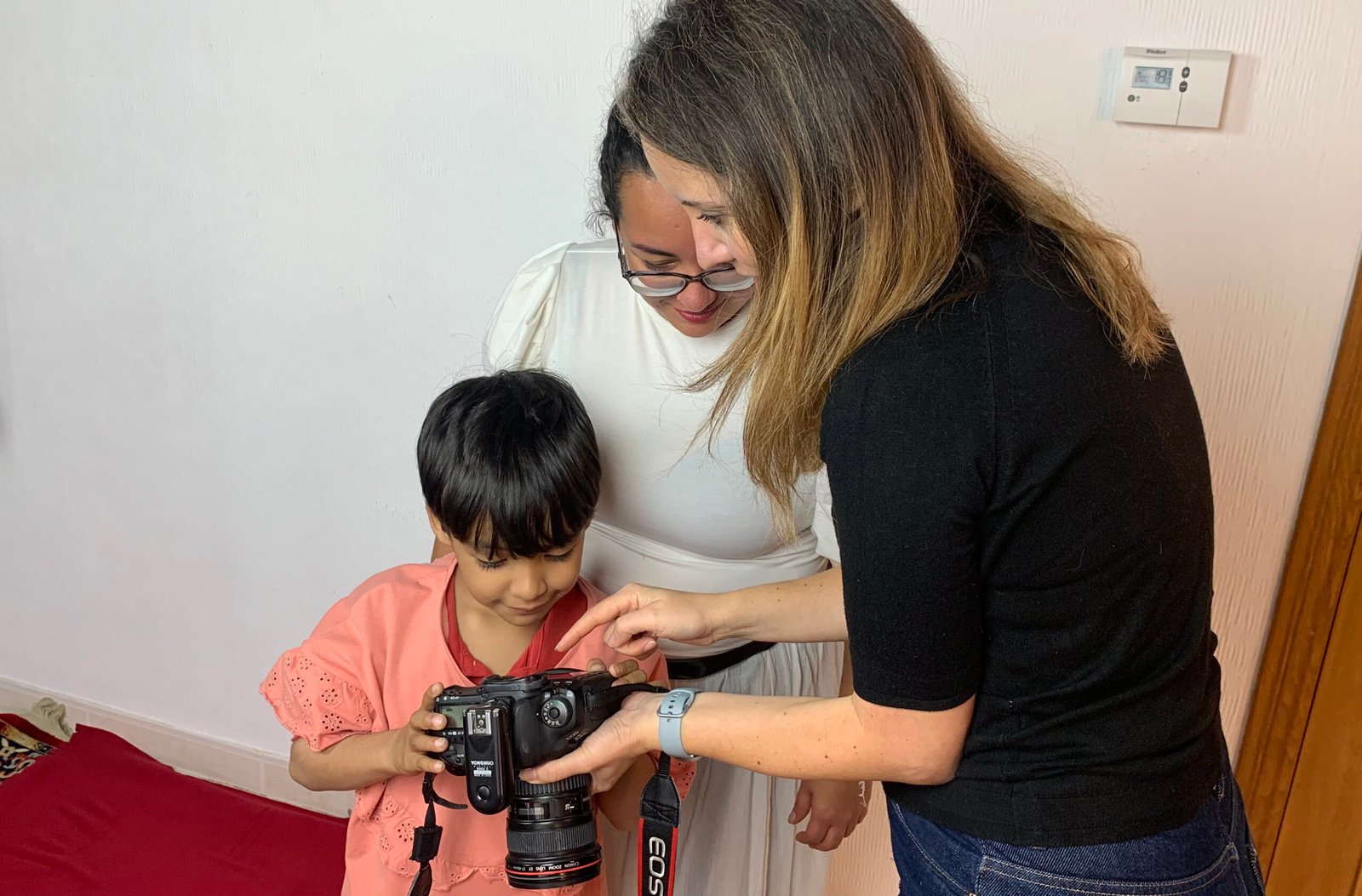
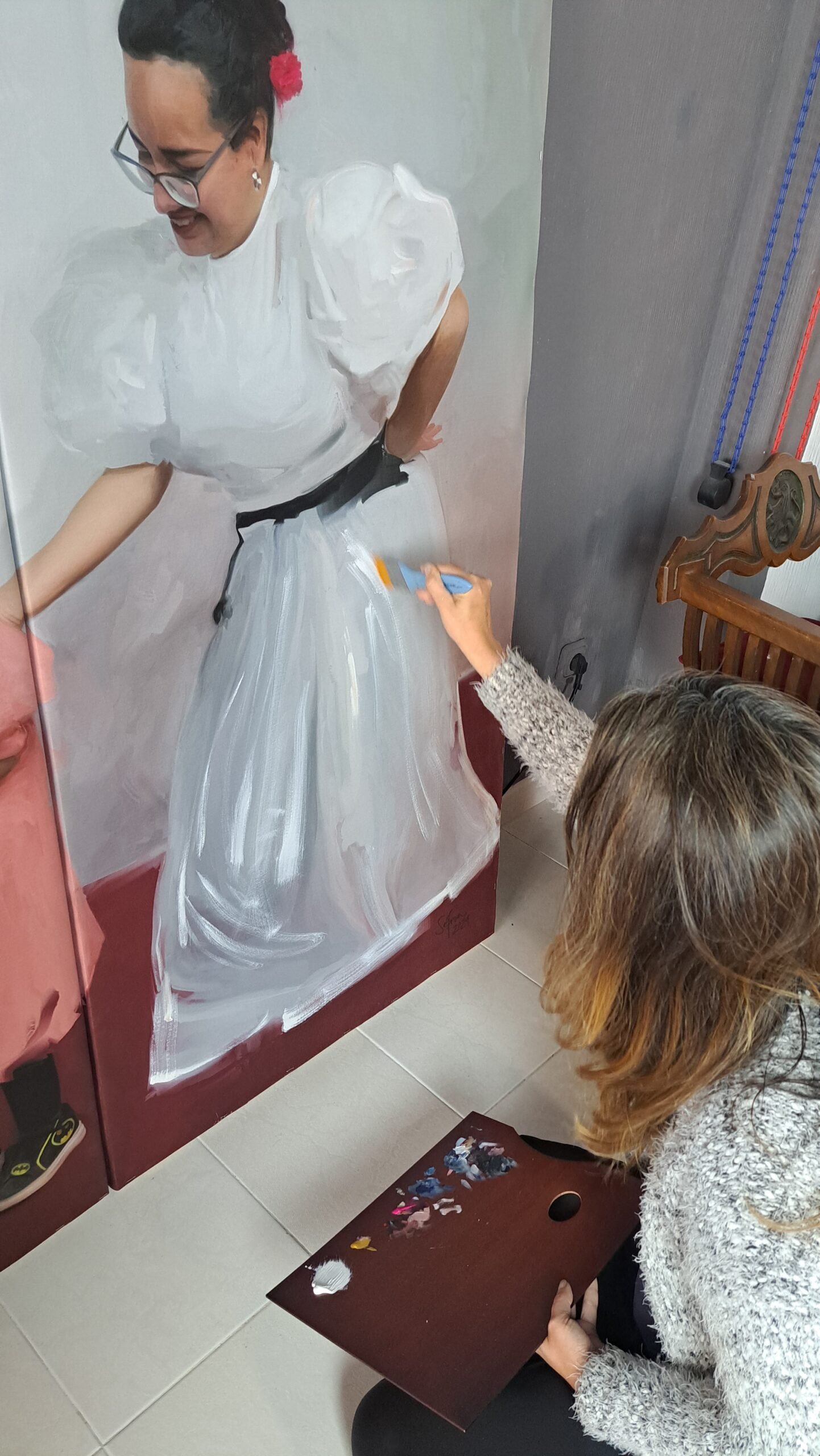
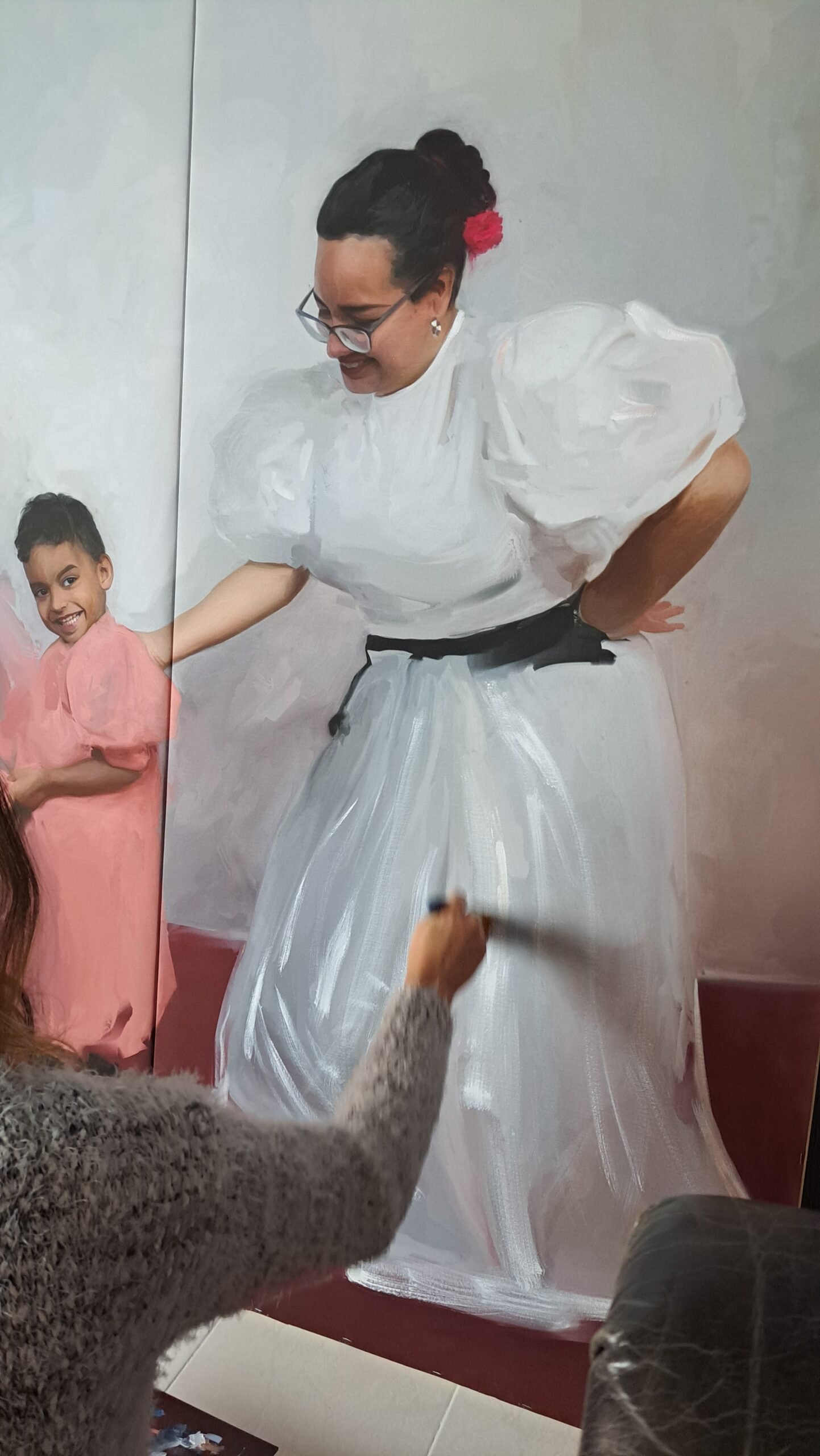
Grace during the creation of Love · Bétera, 2024
The meaning of the title
Why this work is called Love
In Love, the maternal bond is presented as a force of transformation. Grace's story is not represented through the violence she endured, but through the decision she made when she understood that she had to change the course of her life in order to offer her children a different future.
The work thus moves the concept of love beyond the sentimental realm. Love appears as a capacity for action: moving through fear, accepting uncertainty, and drawing on inner resources when circumstances seem to have exhausted them.
The portrait brings mother and children together after their escape and makes their closeness the core of the composition. What we see is not the conflict, but what managed to survive it: the bond that made it possible to keep moving forward.
“In Love, strength does not precede the decision. It is born from what Grace chooses to protect.”
Keys to reading the work
Six keys to reading the work
01 · The sneakers
Traces of a real life
The sneakers belong to Grace's children and were worn by them during the photo session. Séfora chooses to preserve these everyday objects within a profoundly transformed image, introducing a biographical trace that connects the pictorial construction with the real lives of its protagonists.
02 · The glasses and earring
Preserving identity
The glasses and earring also belong to Grace. Amid the transformation of clothing, space, and pictorial language, these details remain recognizable. They act as anchors of identity: the woman portrayed does not disappear behind the figure constructed by the artwork.
03 · The expression
Happiness as an achievement
Grace appears smiling beside her children. Knowing her story completely changes the reading of that gesture: joy ceases to be an incidental expression and takes on the weight of an achievement. The work avoids depicting trauma and directs the viewer's gaze toward what exists after having lived through it.
04 · The bodies
Safety regained
Physical closeness creates a scene free from vigilance. The bodies lean into one another, draw close, and can remain together without visible tension. After a story marked by fear, this natural ease takes on a specific meaning: being able to lower one's guard also becomes a form of freedom.
05 · White, pink, and red
Refusing to depict trauma
The chromatic choice deliberately contrasts with the harshness of the biography. Whites and pinks bring luminosity and delicacy, while red introduces intensity and vital energy. The artist does not assign Grace the colors of what she endured; she constructs the image from what remains alive.
06 · The composition
The bond as protagonist
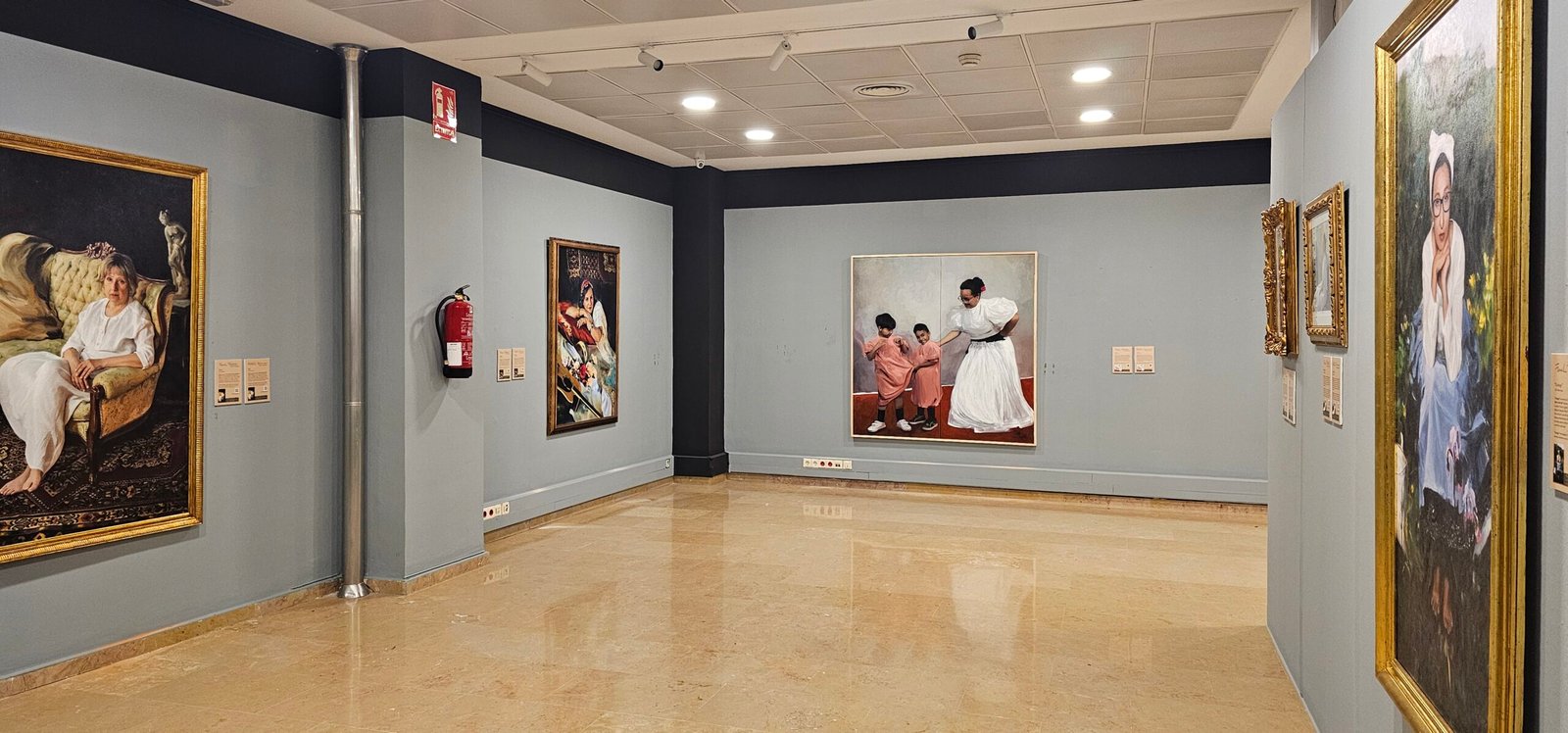
Although Grace occupies a central position, the composition does not construct an individual portrait. Gestures, gazes, and physical closeness visually articulate the three as a single unit. The true subject of Love is neither the mother nor the children separately, but the strength of the bond that holds them together.
Curatorial reading
Beyond the biographical narrative
Love begins with an individual experience, but it is not confined to it. Grace's story becomes the starting point for addressing a universal experience: the emergence of a strength that responds not only to one's own instinct for survival, but also to responsibility toward another.
Through this shift, the portrait ceases to function solely as the representation of a specific person and becomes a reflection on the human capacity to act beyond one's own limits. Motherhood introduces a paradox here: vulnerability does not exclude strength; it may be precisely what activates it.
«Hay fuerzas que no descubrimos
hasta que alguien depende de ellas.»
The work also raises an essential question within Séfora Camazano's practice: how to represent a difficult experience without turning the person who lived through it into an image of what she suffered. Grace retains control over her representation. Her past gives the work depth, but it does not determine her visual identity.
Love thus occupies a space between biographical portraiture and symbolic construction. An intimate story becomes a broader question about what we are capable of doing when our own life is no longer the only one at stake.
Artistic reference
In dialogue with Joaquín Sorolla
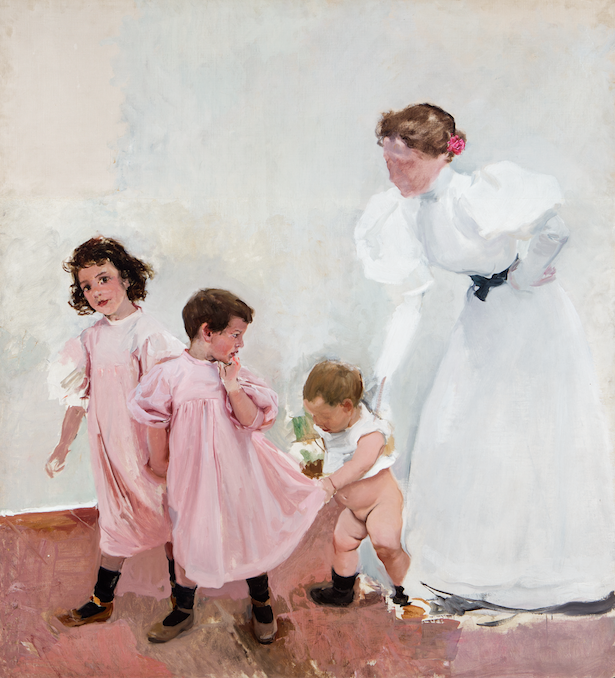
Love emerges from a dialogue with
My Wife and Children (1897–1898),
a work in which Joaquín Sorolla portrays his wife,
Clotilde, together with their children.
More than a century later, Grace and her two children occupy that space.
The reference then takes on another meaning: the image of a
mother with her children becomes the portrait of a woman who
had to cross borders to keep her family safe.
There is a particularly powerful connection between the two works.
In Sorolla's painting, Clotilde appears accompanying and protecting
her children. In Love, that gesture of protection ceases to be
merely compositional: it is precisely what defines
Grace's story.
My Wife and Children
Joaquín Sorolla · 1897–1898
Creative process
From a real story to the finished artwork
Love began long before the painting. The starting point was
learning Grace's story and understanding that, behind her arrival in Spain,
there was a decision that had changed the destiny of an entire family.
From that encounter, the composition took as its reference
My Wife and Children by Joaquín Sorolla. Grace and her children were
photographed together, bringing a family scene from the late nineteenth century
into a contemporary story of protection, displacement, and rebuilding.
Some elements from the session remained unchanged in the artwork:
the children's sneakers, Grace's glasses, and her earring.
Small fragments of reality within an image transformed through
photography, digital painting, and pictorial intervention.
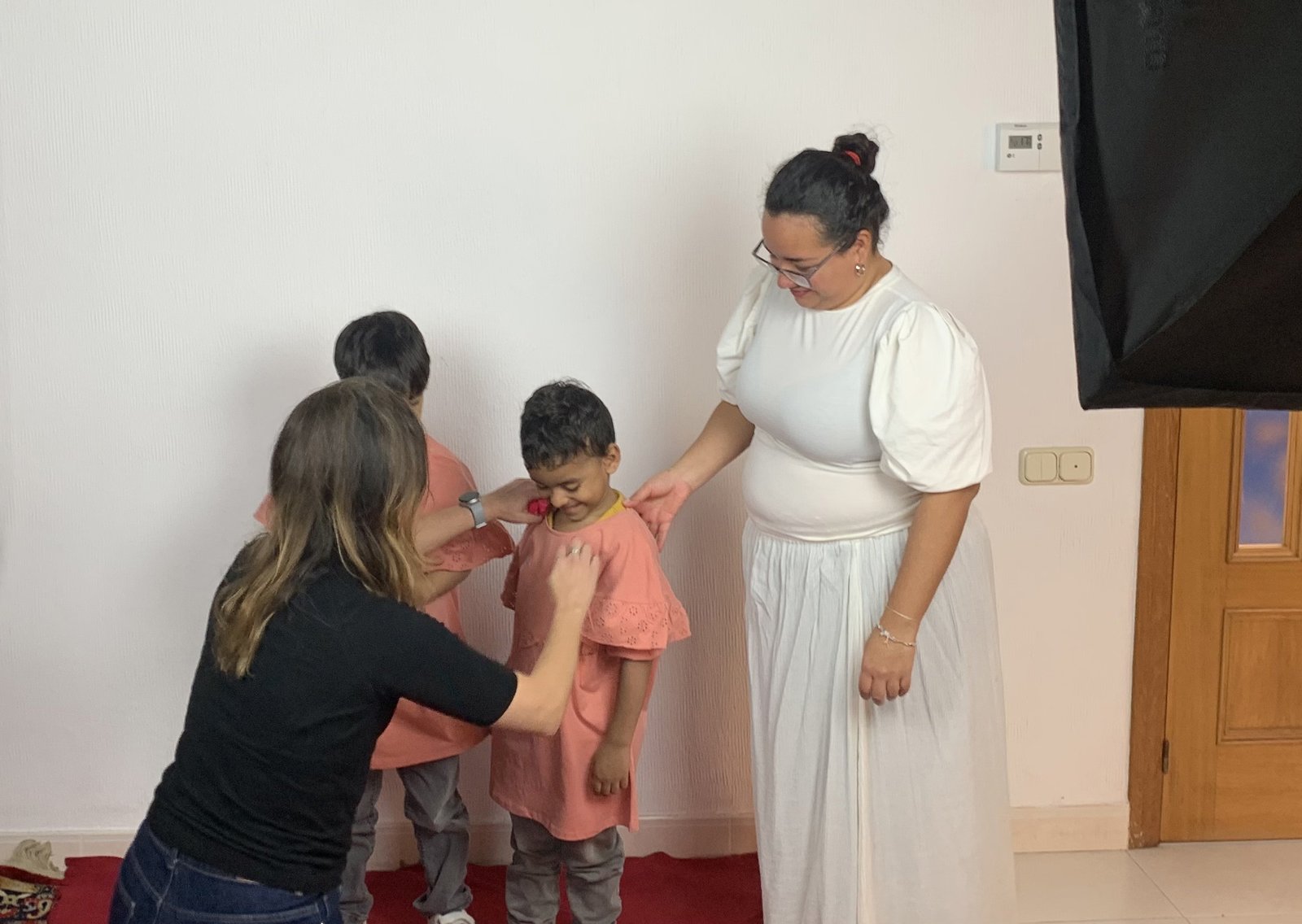
Love in the artist's studio · Valencia, 2024
Exhibition history
Love on exhibition
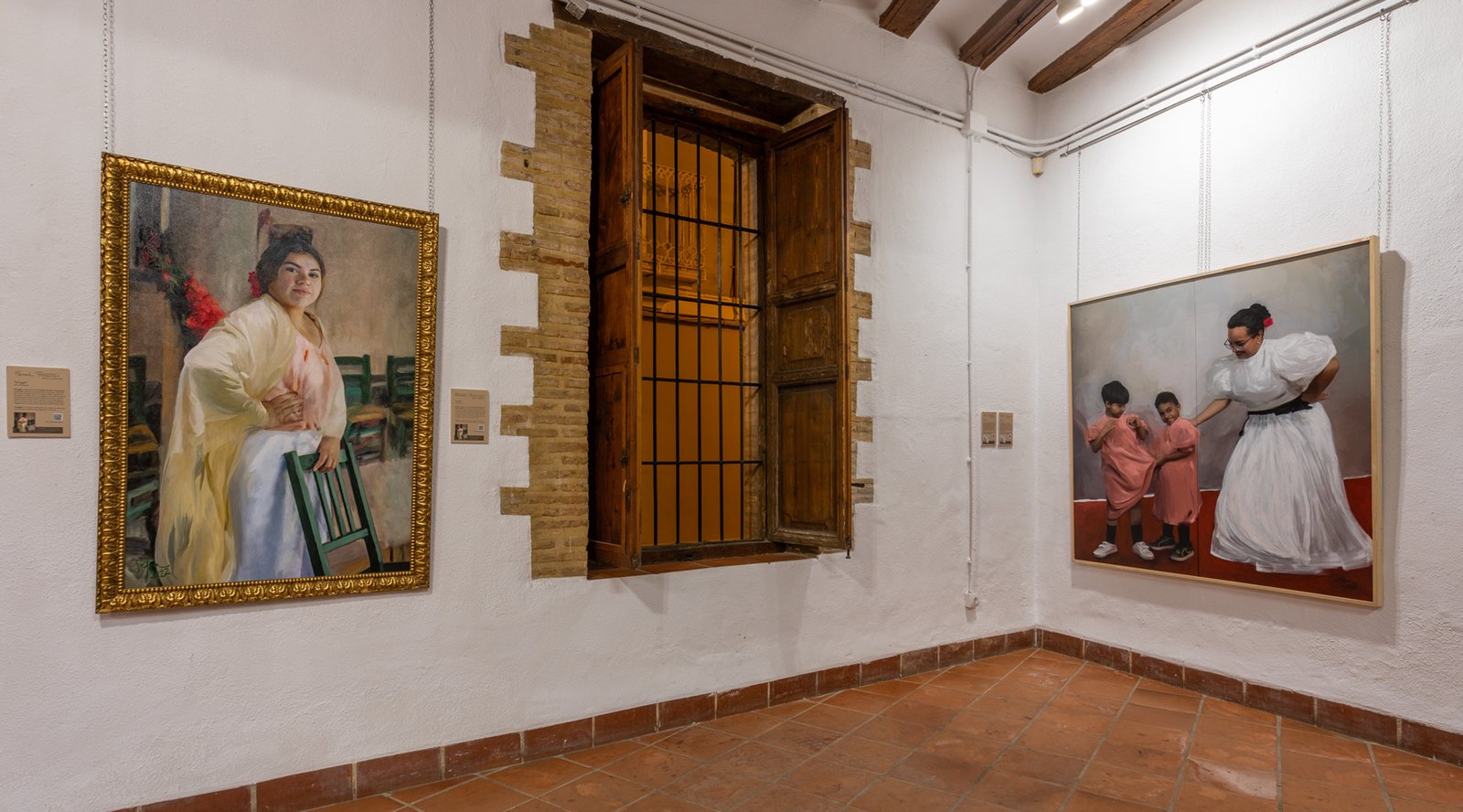
Former Bétera Town Hall
Bétera, Spain · 2024
Botanical Garden of the University of Valencia
Valencia, Spain · 2024