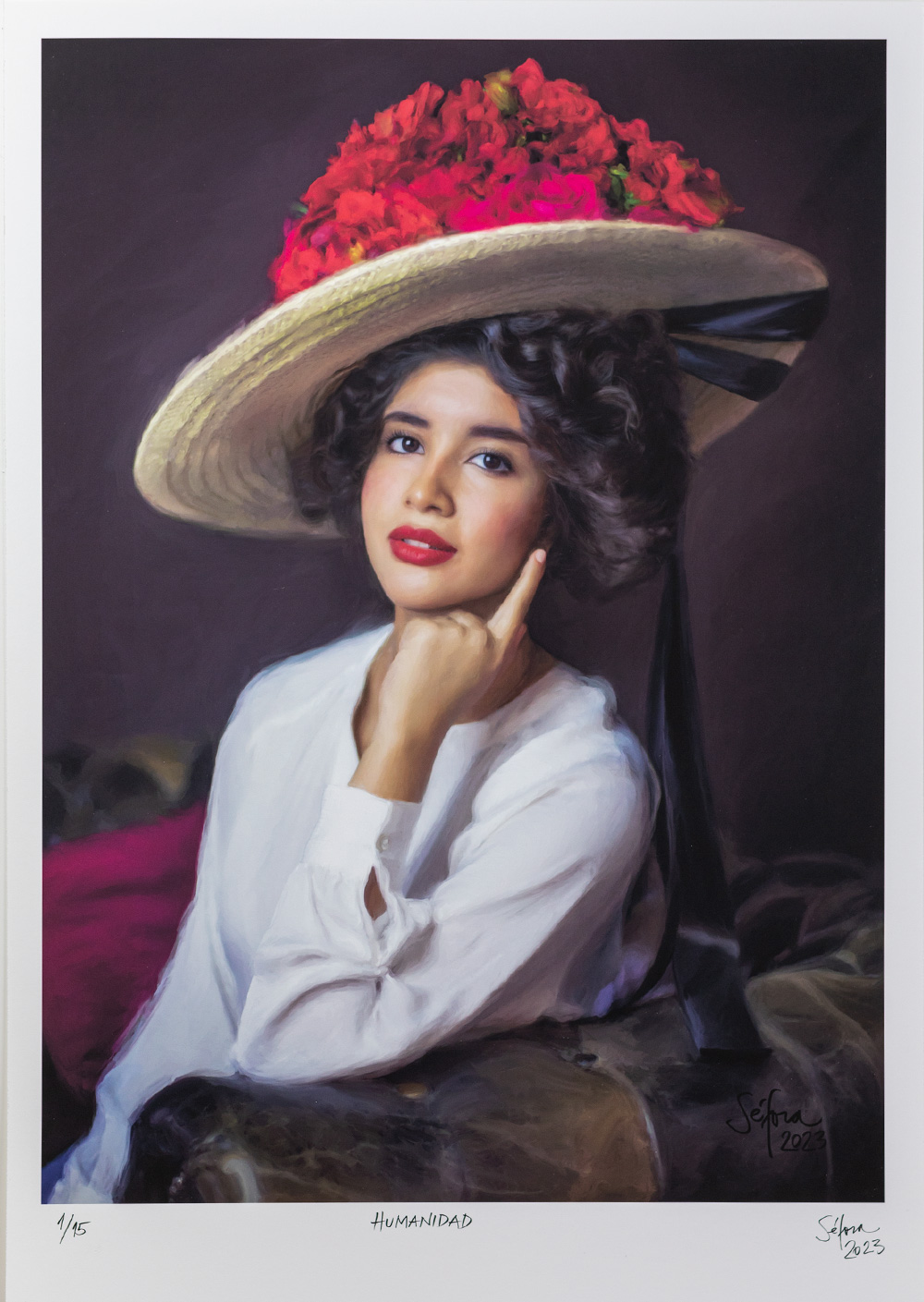
01 · The gaze
To remain present
Embarcalina looks directly at the viewer. Her expression is calm, but not distant. It suggests a person who has learned to carry the reality of others without turning away from it.
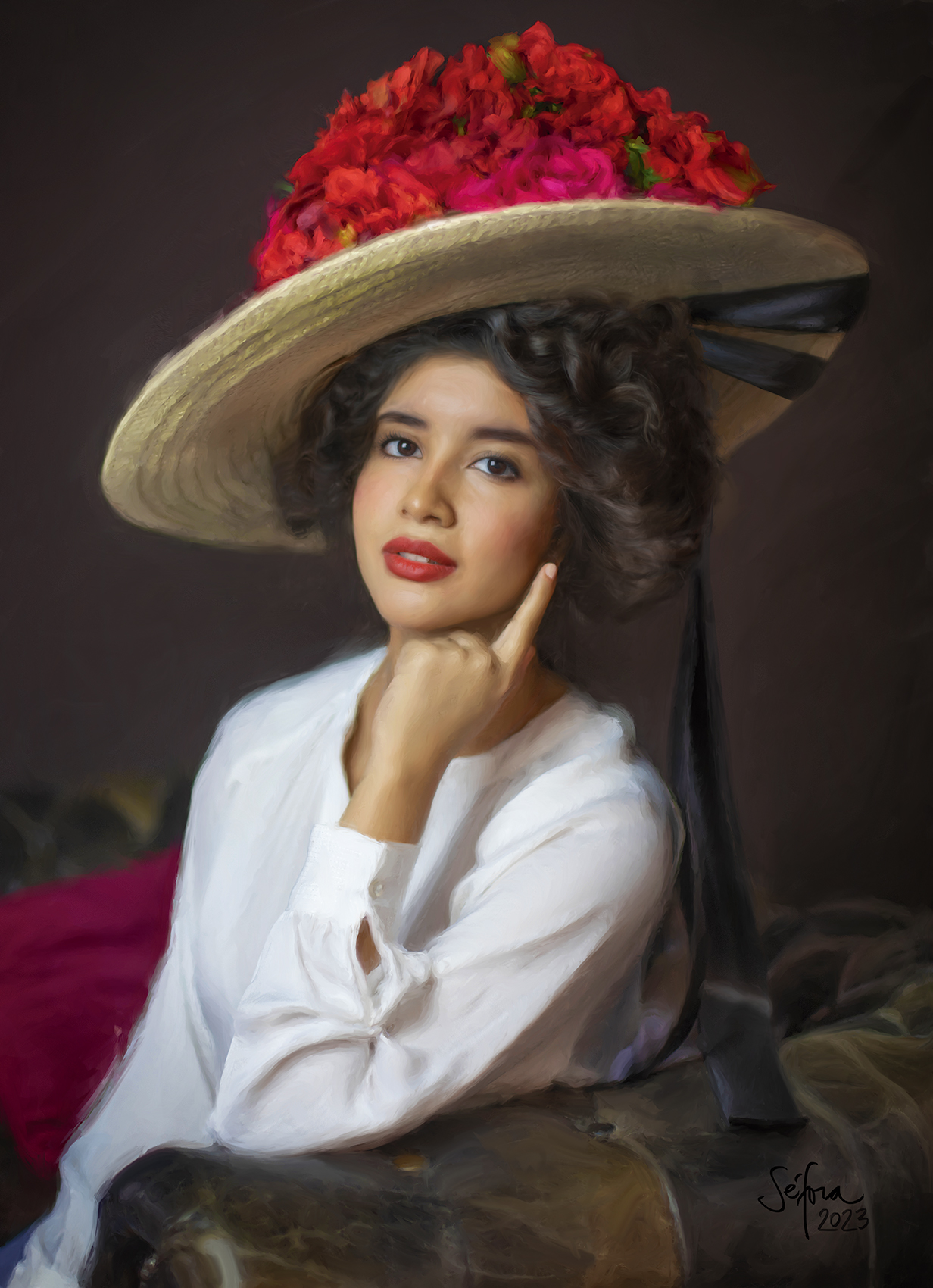
Female Portraits: Looking Back to the Past
2023
Humanity (2023) is a contemporary artwork by Séfora Camazano from the series Female Portraits: Looking Back to the Past. The portrait tells the story of Embarcalina, a Spanish-born Sahrawi woman whose connection to her family and her people has transformed memory and belonging into an active commitment to others.
Technique
Mixed media — photography, digital painting and hand intervention. Fine Art Giclée print on museum-grade cotton canvas with UV conservation varnish.
Dimensions
73 × 54 cm
Year
2023
Series
Female Portraits: Looking Back to the Past
The protagonist
Embarcalina was born in Spain after her mother arrived in the country pregnant and ill, fleeing an unbearable situation in the Sahara. While Embarcalina was able to grow up in Spain, part of her family remained behind in the Sahrawi refugee camps.
Distance did not erase that connection. The reality of those who remained became part of her own identity — not simply as a memory inherited from her family, but as a responsibility she chose to carry.
“Sometimes belonging is not defined by where we live, but by the people we refuse to leave behind.”
Embarcalina
After studying Nursing, Embarcalina found a way to turn that connection into action. She travels to the refugee camps to bring medicines and provide medical assistance to relatives, friends and members of the Sahrawi community.
From Spain, she also works to keep their story visible, speaking about a reality that remains largely unknown to those who have never encountered it.
Humanity portrays her far from the refugee camps and far from the circumstances that shaped her family history. She appears composed, elegant and self-possessed. What connects her to that history cannot be seen immediately. It is revealed through what she chooses to do for others.
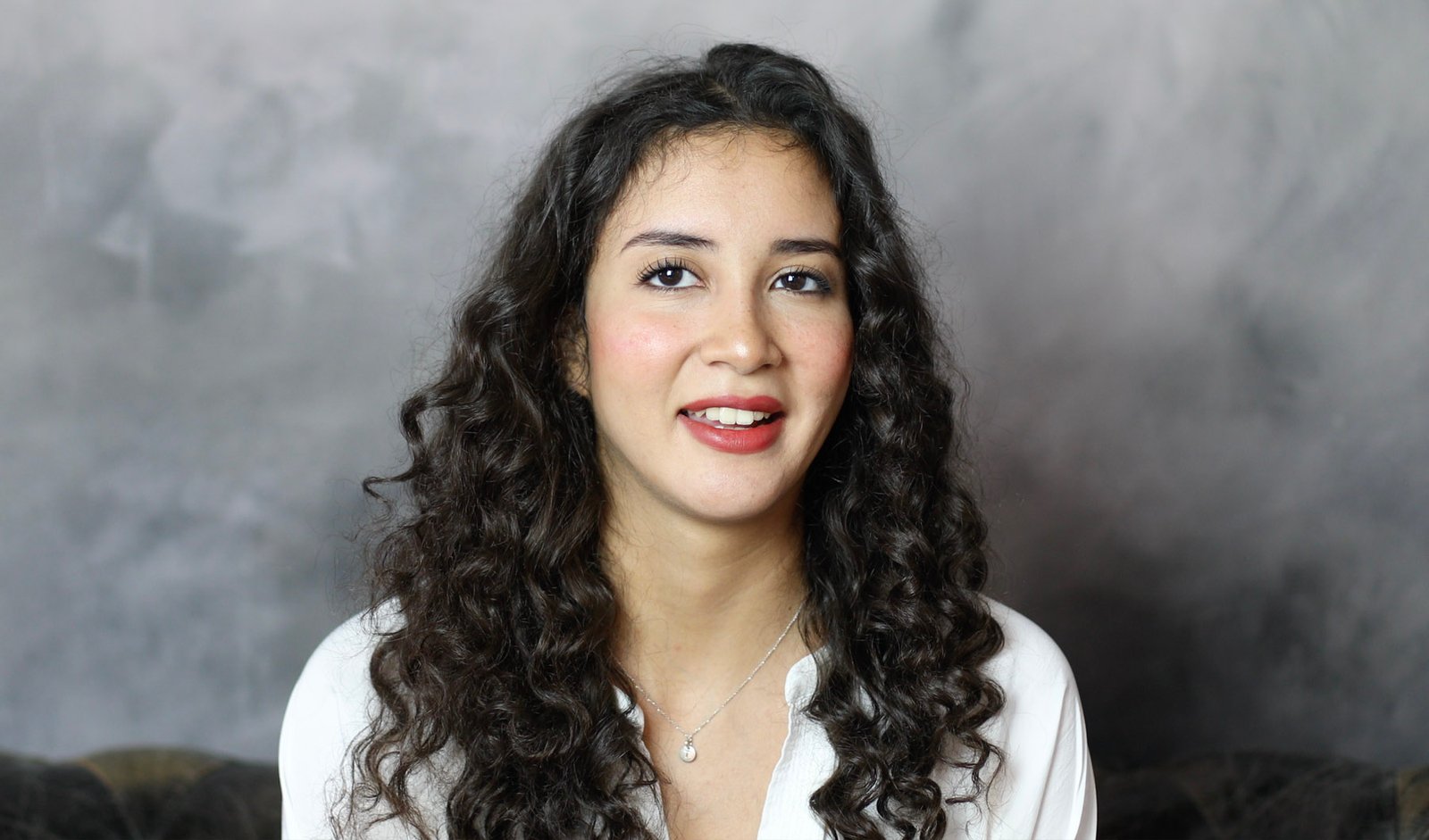
Embarcalina during the creation of Humanity · Valencia, 2023
The meaning of the title
Humanity is often understood as something universal and abstract. In Embarcalina’s story, however, it becomes something tangible: remembering another person’s reality and choosing not to remain indifferent to it.
She could have allowed distance to separate her from the circumstances her family left behind. Instead, she repeatedly returns, bringing her knowledge, her time and her care to those who remain there.
The title therefore does not describe what Embarcalina has endured. It describes what she chooses to give. Humanity exists in the movement from empathy to action — in recognising another person's vulnerability and deciding that it matters to us.
“Humanity begins when another person’s reality ceases to feel distant from our own.”
Keys to the work
01 · The gaze
Embarcalina looks directly at the viewer. Her expression is calm, but not distant. It suggests a person who has learned to carry the reality of others without turning away from it.
02 · The white blouse
The white blouse introduces light into the portrait. It subtly evokes her vocation as a nurse and the role care has come to play in the way she remains connected to her people.
03 · The red flowers
The red flowers interrupt the restraint of the composition with a vivid pulse of colour. They suggest vitality: something that continues to emerge even within stories marked by hardship.
04 · The black ribbons
The dark ribbons fall beside the flowers like a quiet counterpoint. Beauty and memory coexist in the same detail: what has been gained does not erase what has been left behind.
05 · The hand
Her face rests lightly on her hand. The gesture slows the image down and introduces an intimate pause — a space between observation, memory and the decision to act.
06 · The Chesterfield
The dark leather sofa places Embarcalina in a contemporary European setting. Its comfort quietly contrasts with the conditions endured by members of her family in the refugee camps — two realities that remain part of the same life.
Curatorial reading
Humanity does not portray Embarcalina in the refugee camps, nor does it attempt to illustrate the suffering of the Sahrawi people directly. Instead, it places her in a composed, contemporary setting and allows the deeper meaning of the work to emerge through contrast.
She grew up in Spain, yet part of her family history remained elsewhere. The work occupies precisely that distance: between the life one is able to build and the reality of those who could not leave.
Embarcalina’s response to that distance is not guilt, but action. Her medical training, her journeys to the camps and her willingness to keep their story visible transform belonging into responsibility.
Humanity ultimately asks a simple but demanding question: what do we do once another person’s suffering becomes visible to us? The work suggests that empathy only becomes meaningful when it moves beyond feeling and begins to shape the way we act.
Artistic reference
Humanity enters into dialogue with La bella Raquel (1912), by Joaquín Sorolla. The original portrait combines elegance and intimacy: the figure leans gently on one hand while her direct gaze creates an immediate connection with the viewer.
In Humanity, Embarcalina inhabits a similar pose, but the image acquires a different meaning. Her elegance is not intended to distance her from the reality of her story. On the contrary, it creates a deliberate contrast between the life she has been able to build in Spain and the circumstances still faced by members of her family and the Sahrawi community.
More than a century separates the two portraits. By preserving echoes of Sorolla’s composition while changing its protagonist and context, the historical reference becomes a framework for a contemporary story about belonging, memory and care.
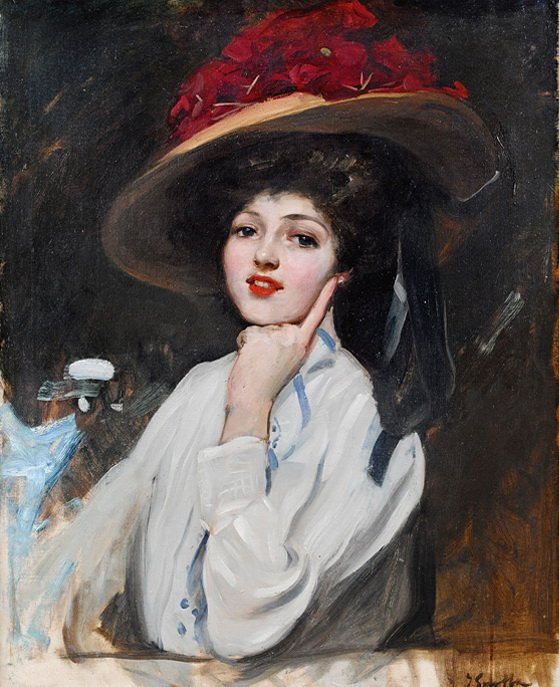
La bella Raquel
Joaquín Sorolla, 1912
Creative process
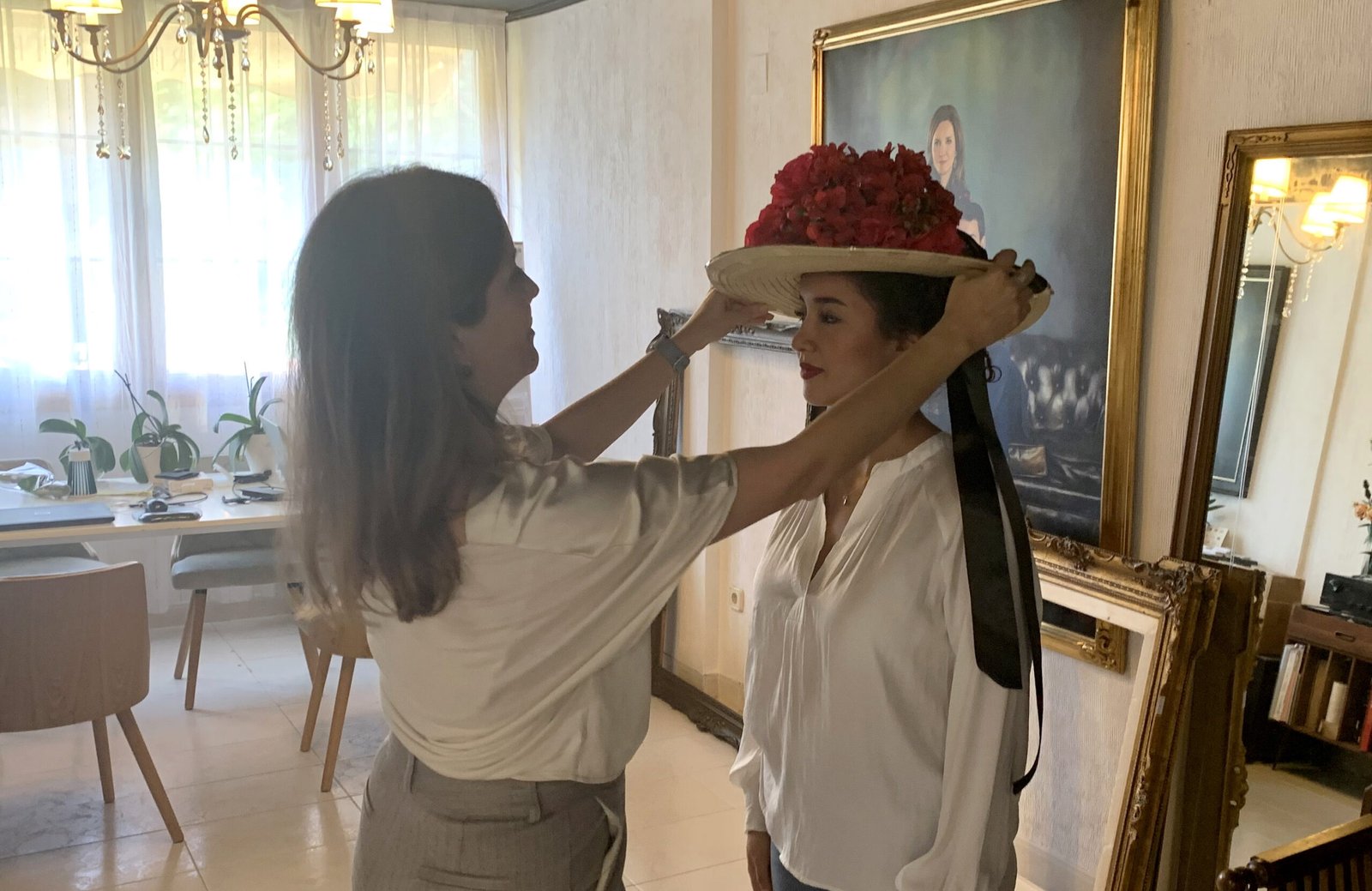
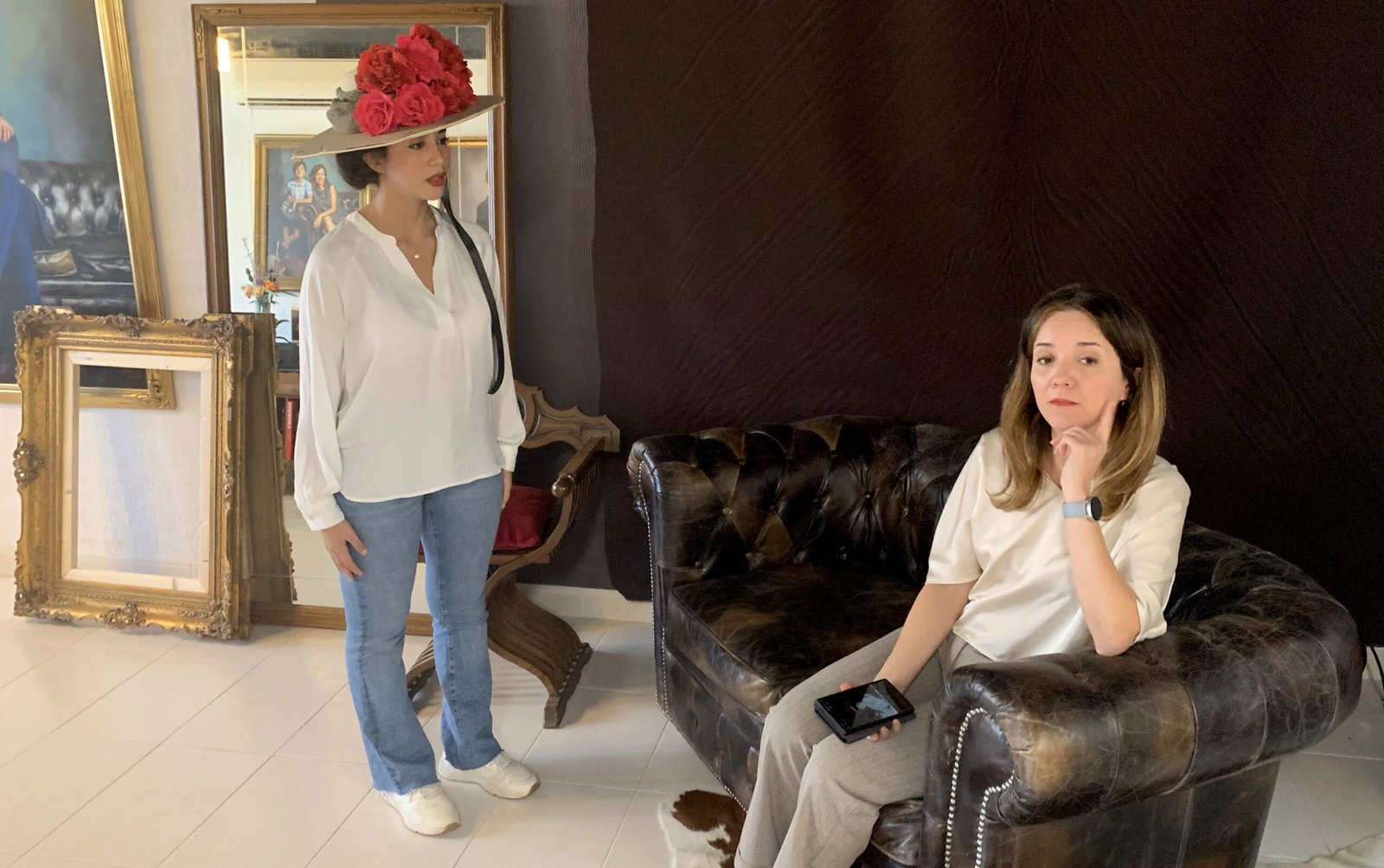
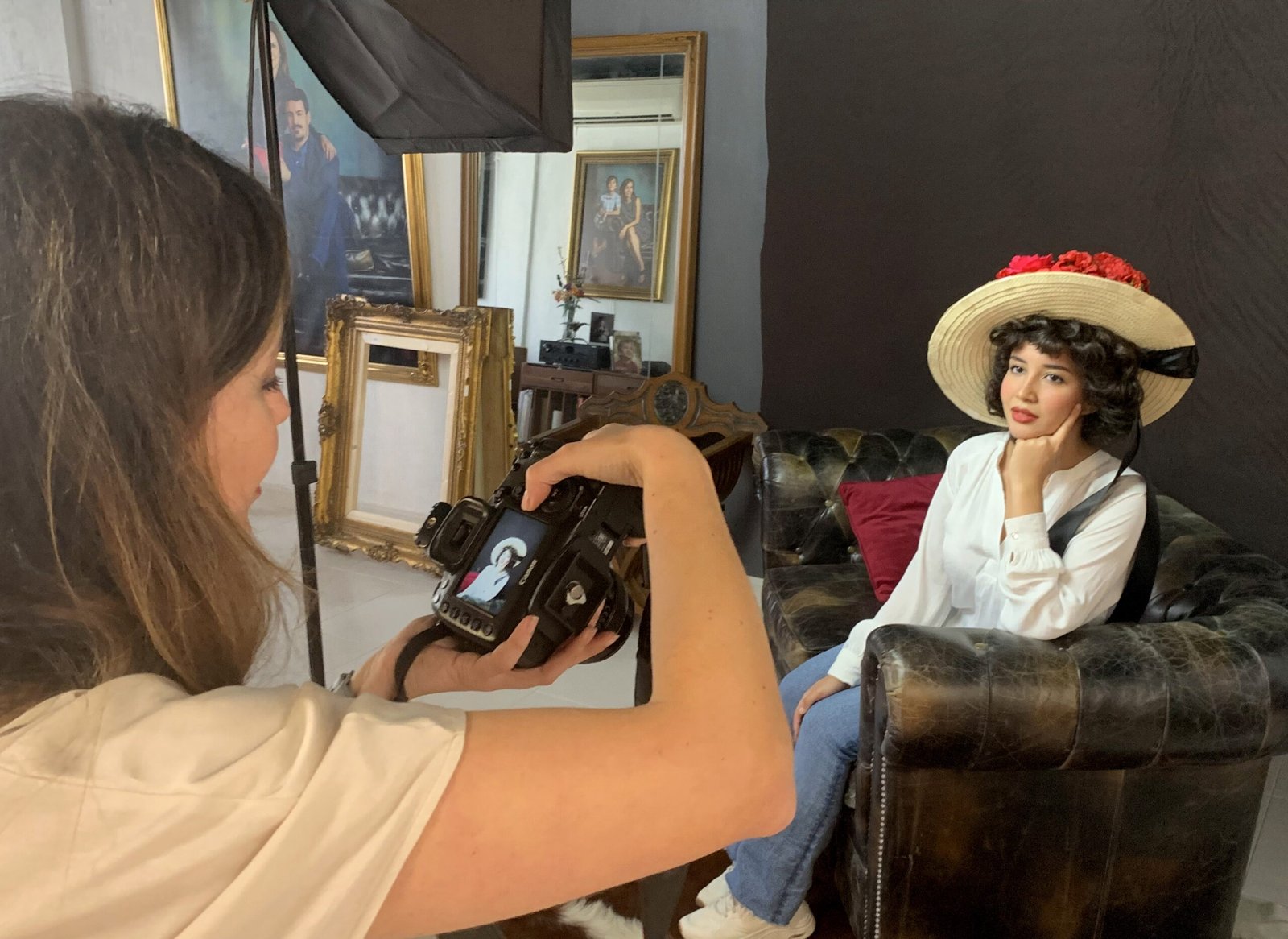
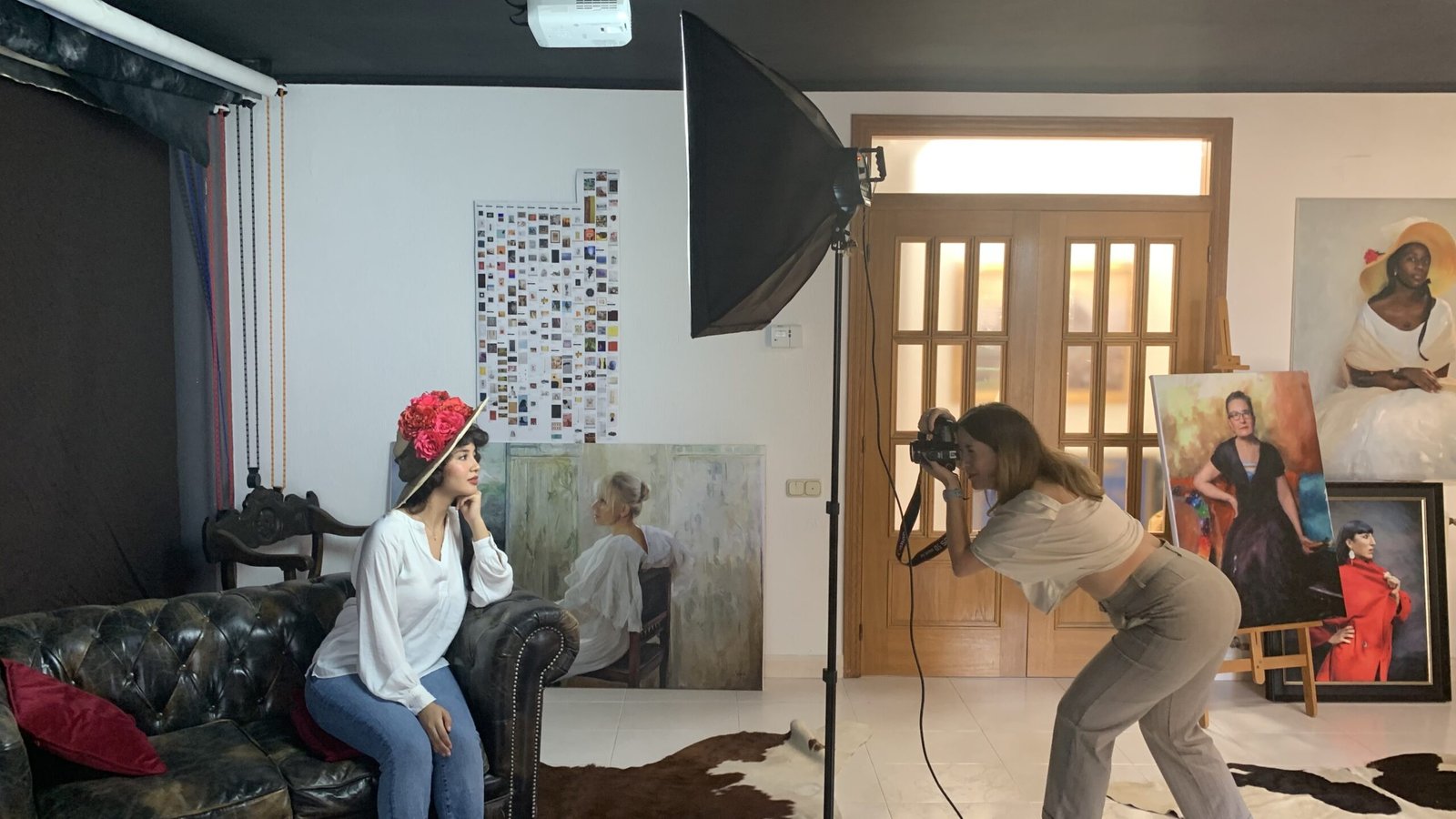
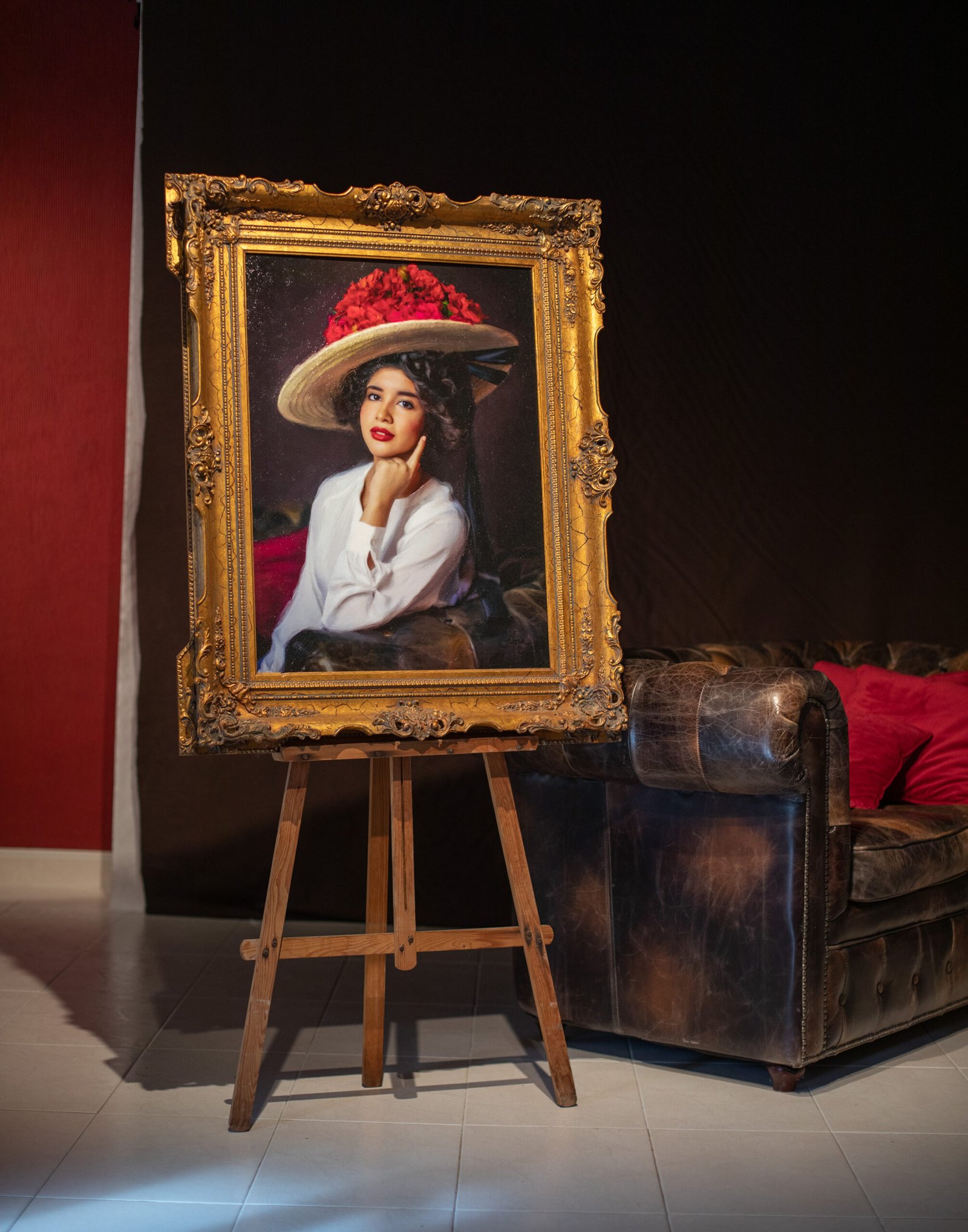
Humanity in the artist's studio
Exhibition history
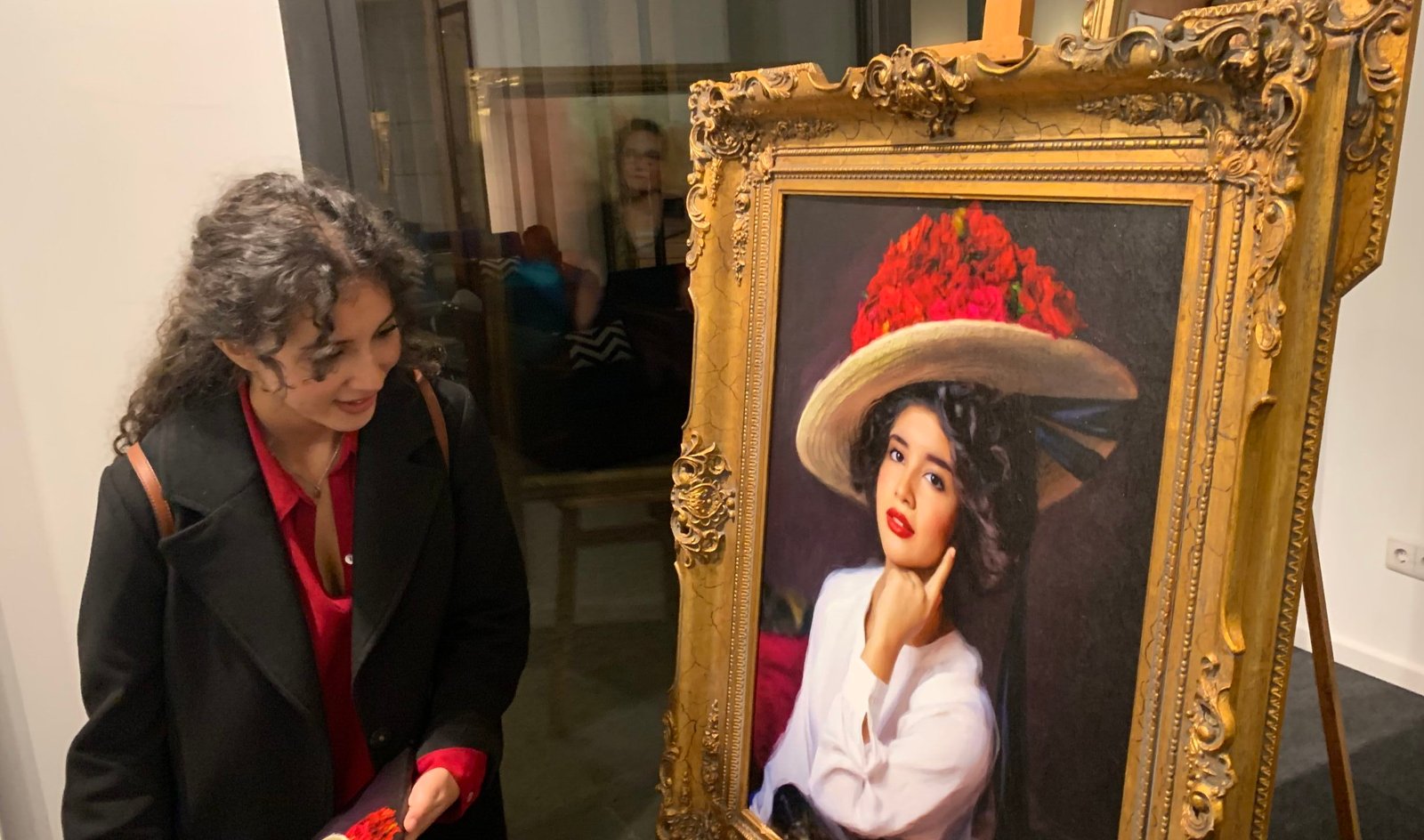
The Westin Valencia
Valencia, Spain · 2023
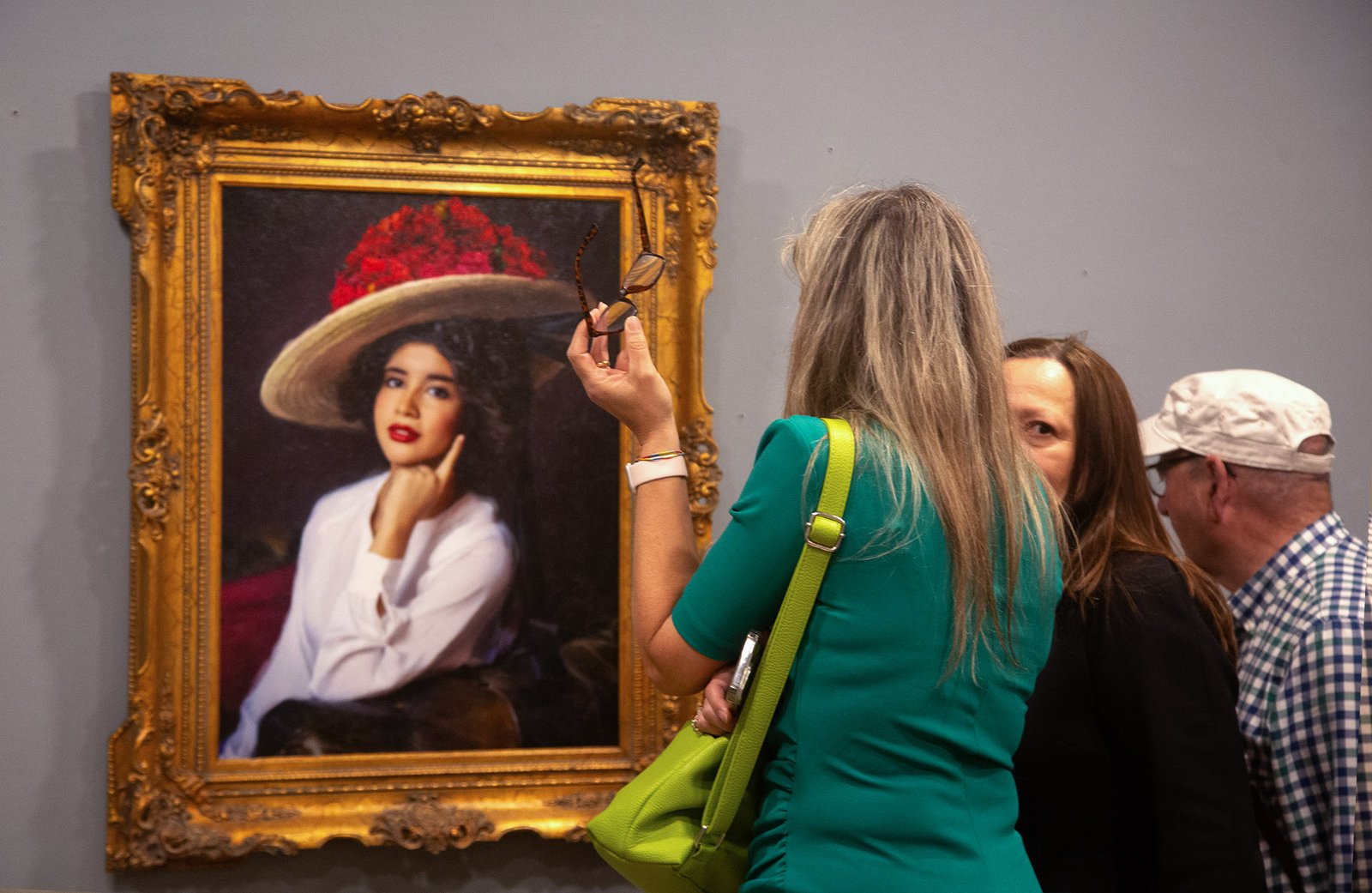
Botanical Garden of the University of Valencia
Valencia, Spain · 2024
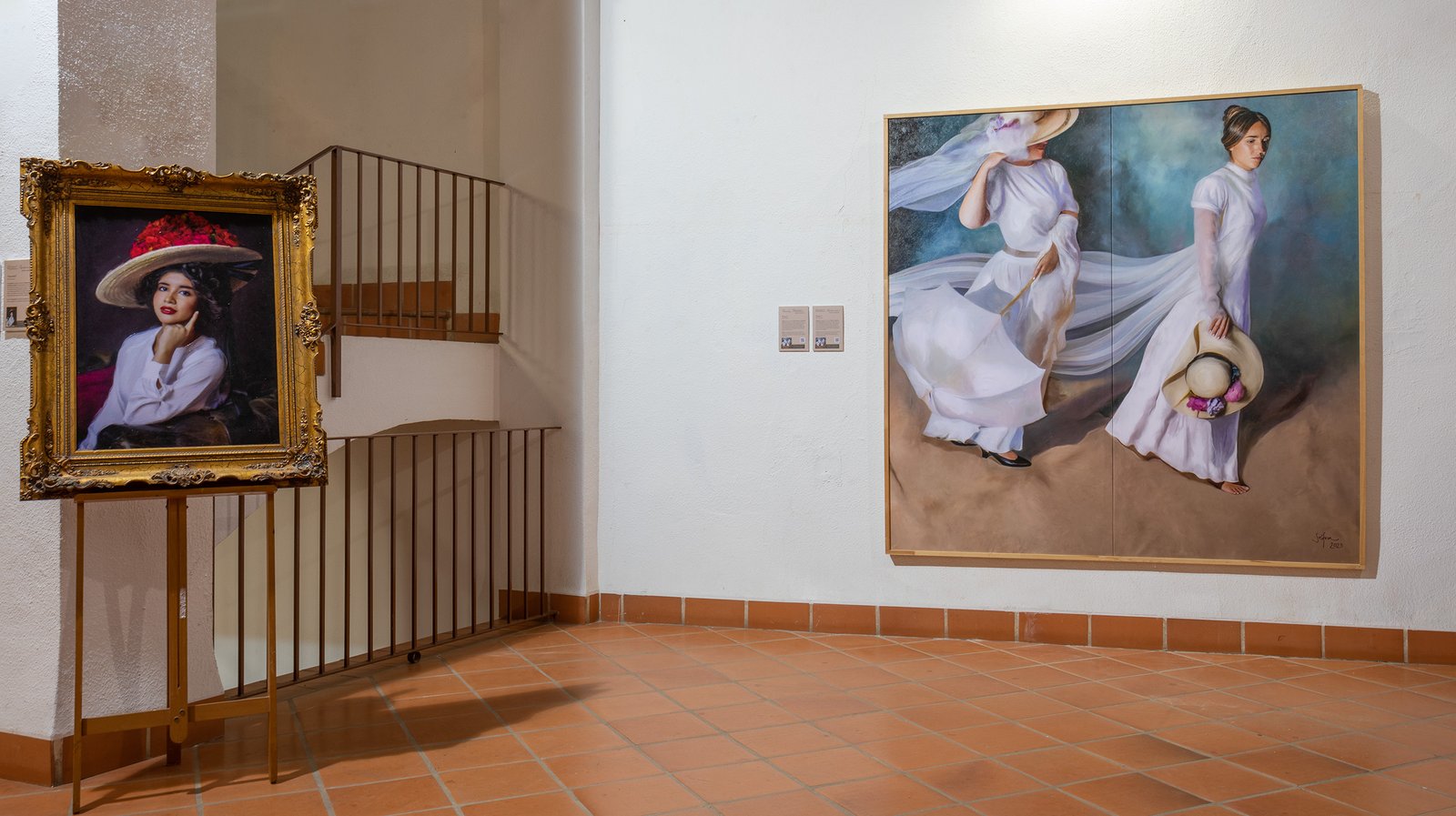
Former Town Hall of Bétera
Bétera, Spain · 2024
Galerie Portraits
Interested in this artwork?
I personally respond within 48 hours
Enquire about the original artworkThe original artwork includes