01 · The hand on the hip
Presence
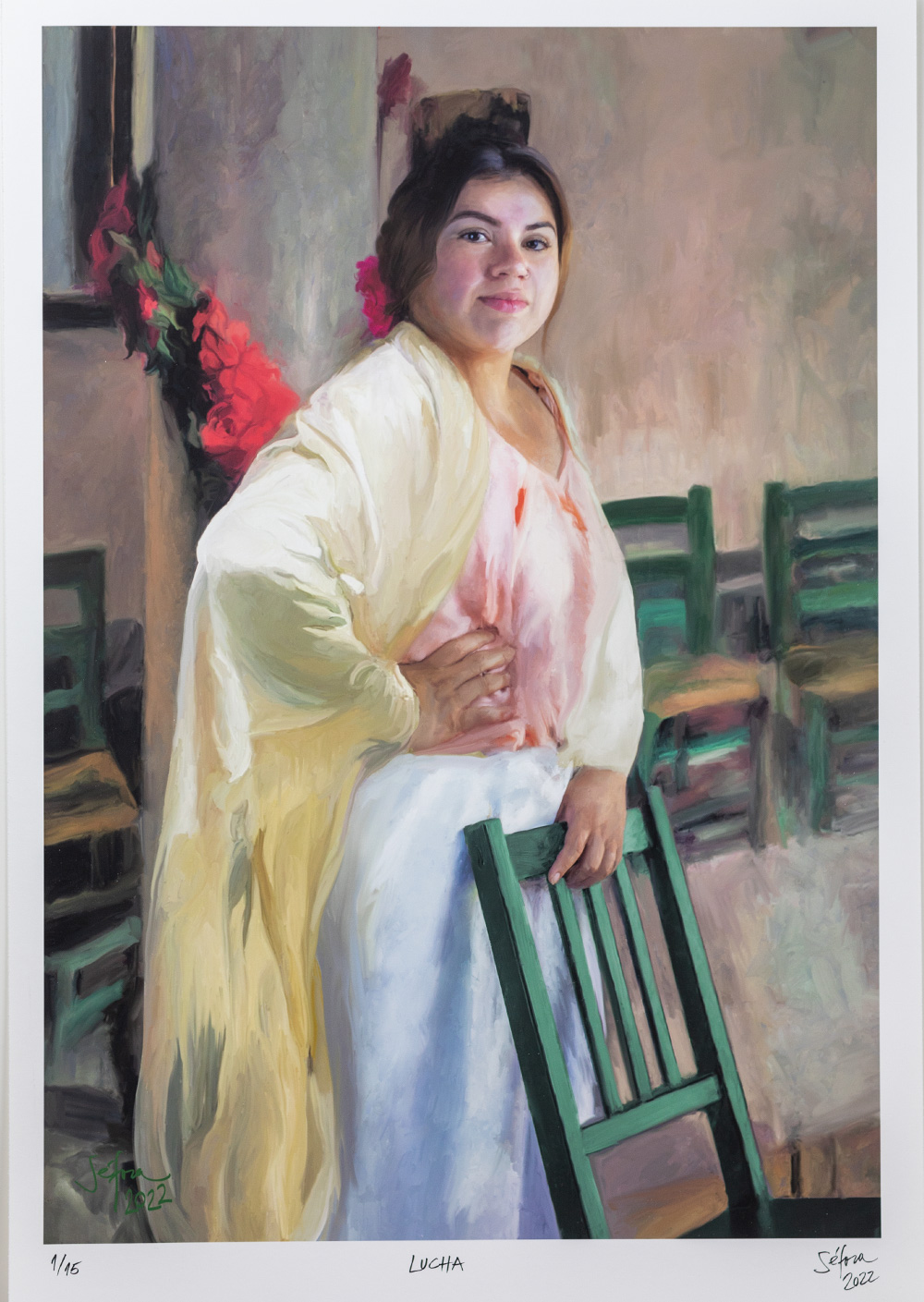
The gesture inherited from Sorolla gives Ada a firm, self-possessed presence. Her body does not retreat from its own history; it occupies the composition.
Female Portraits: Looking Back to the Past
2022
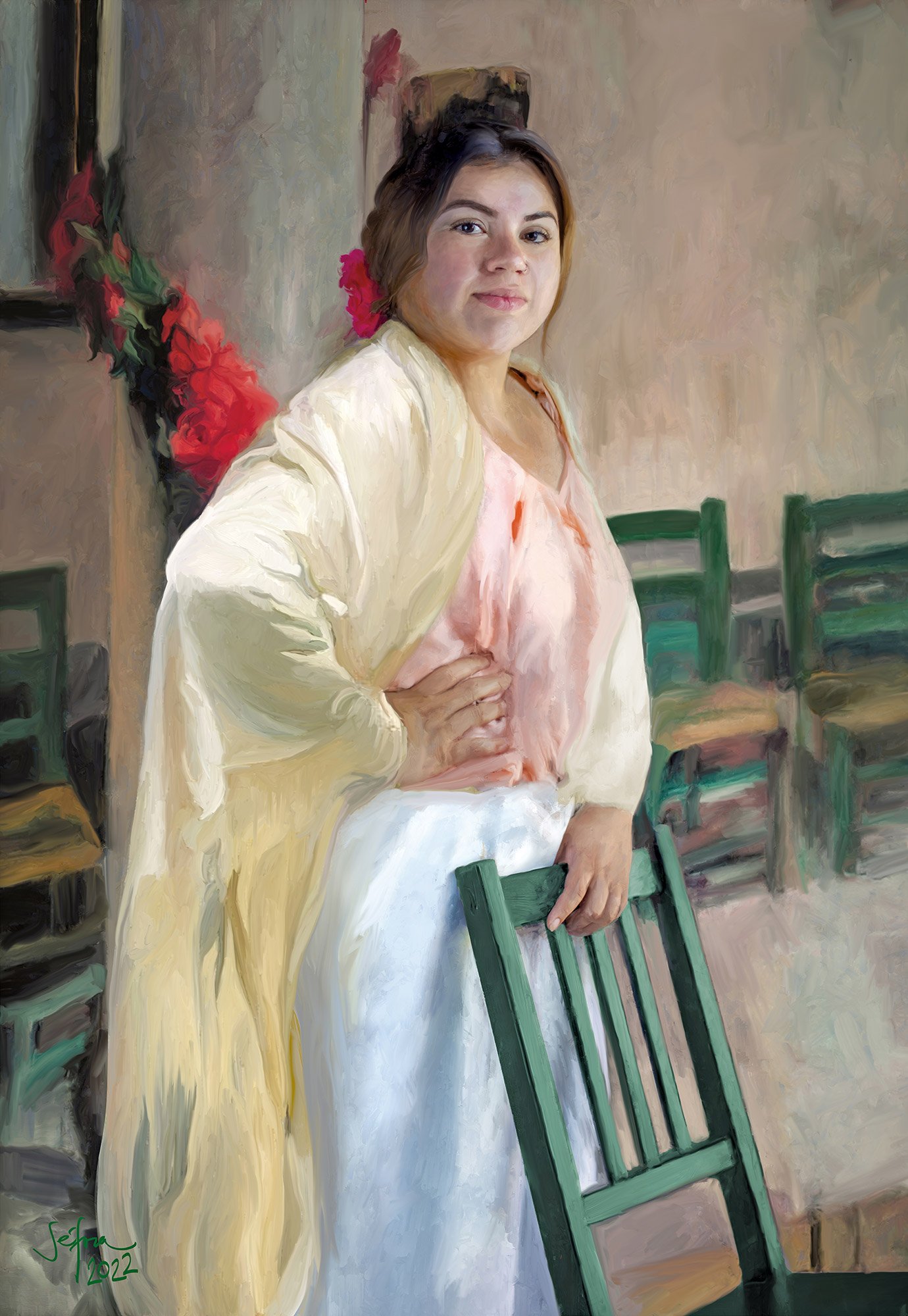
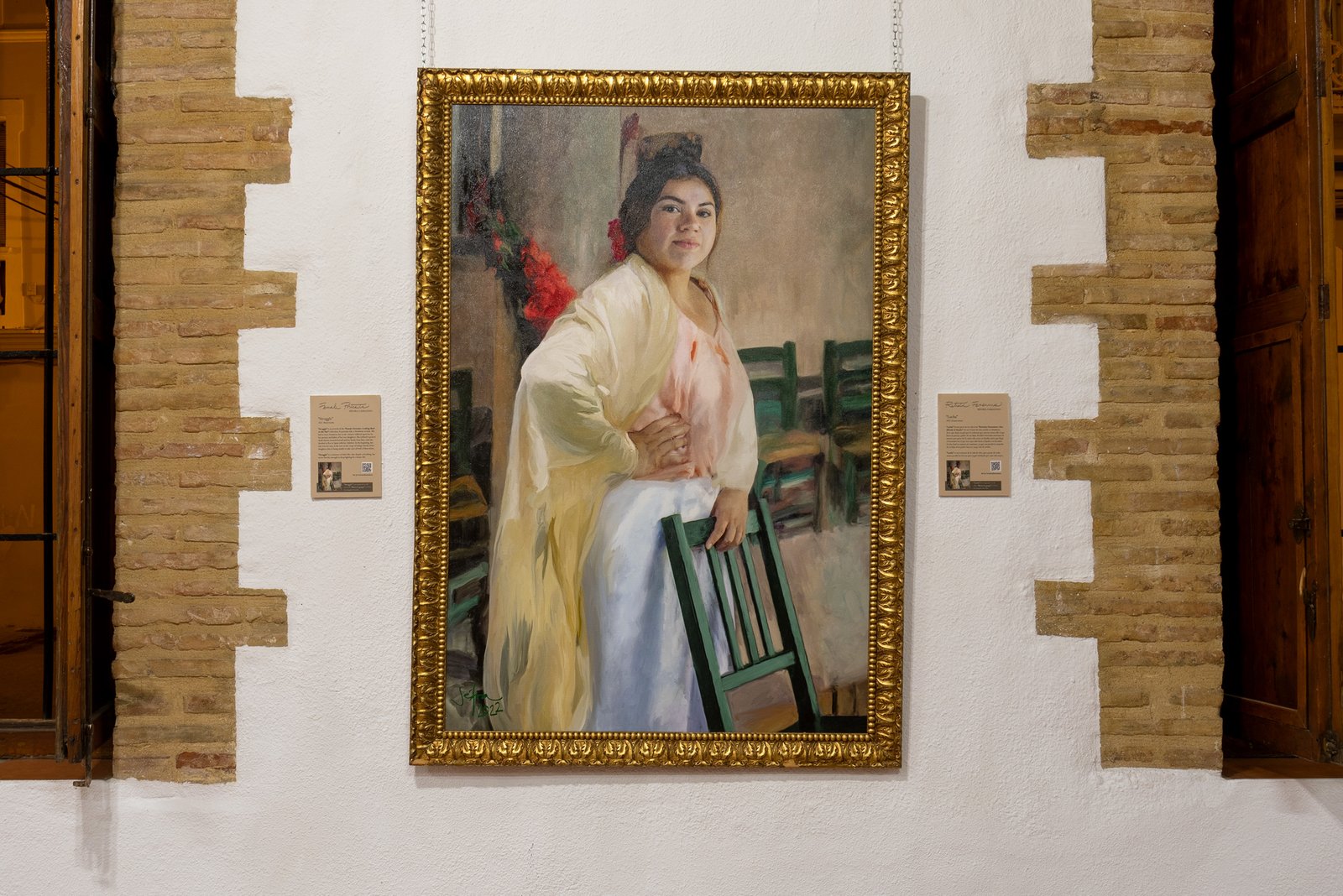
Struggle (2022) is a contemporary artwork by Séfora Camazano from the series Female Portraits: Looking Back to the Past. The portrait begins with the story of Ada, a Honduran woman who fled to Spain with her two daughters after enduring violence and repeated death threats. The work does not depict the escape itself, but the determination required to build a safer life when leaving is only the beginning.
Medium
Mixed media — photography, digital painting and hand-painted intervention.
Giclée Fine Art print on 100% acid-free cotton canvas, finished with UV varnish.
Dimensions
128 × 87.5 cm
Year
2022
Series
Female Portraits: Looking Back to the Past
The protagonist
Ada was born in Honduras. After a relationship marked by severe violence and repeated death threats against her and her family, she left the country with her two daughters and began a new life in Spain.
Leaving did not bring immediate stability. During the first years, Ada faced extreme precarity, at one point sleeping in a garage with her daughters while trying to keep the family together and build a safer future.
Leaving danger behind was not the end of the story. It was the beginning of another struggle.
Ada
Struggle does not define Ada by what she endured. It presents her through the determination with which she continued forward and the purpose behind every decision: to create a safer life for herself and her daughters.
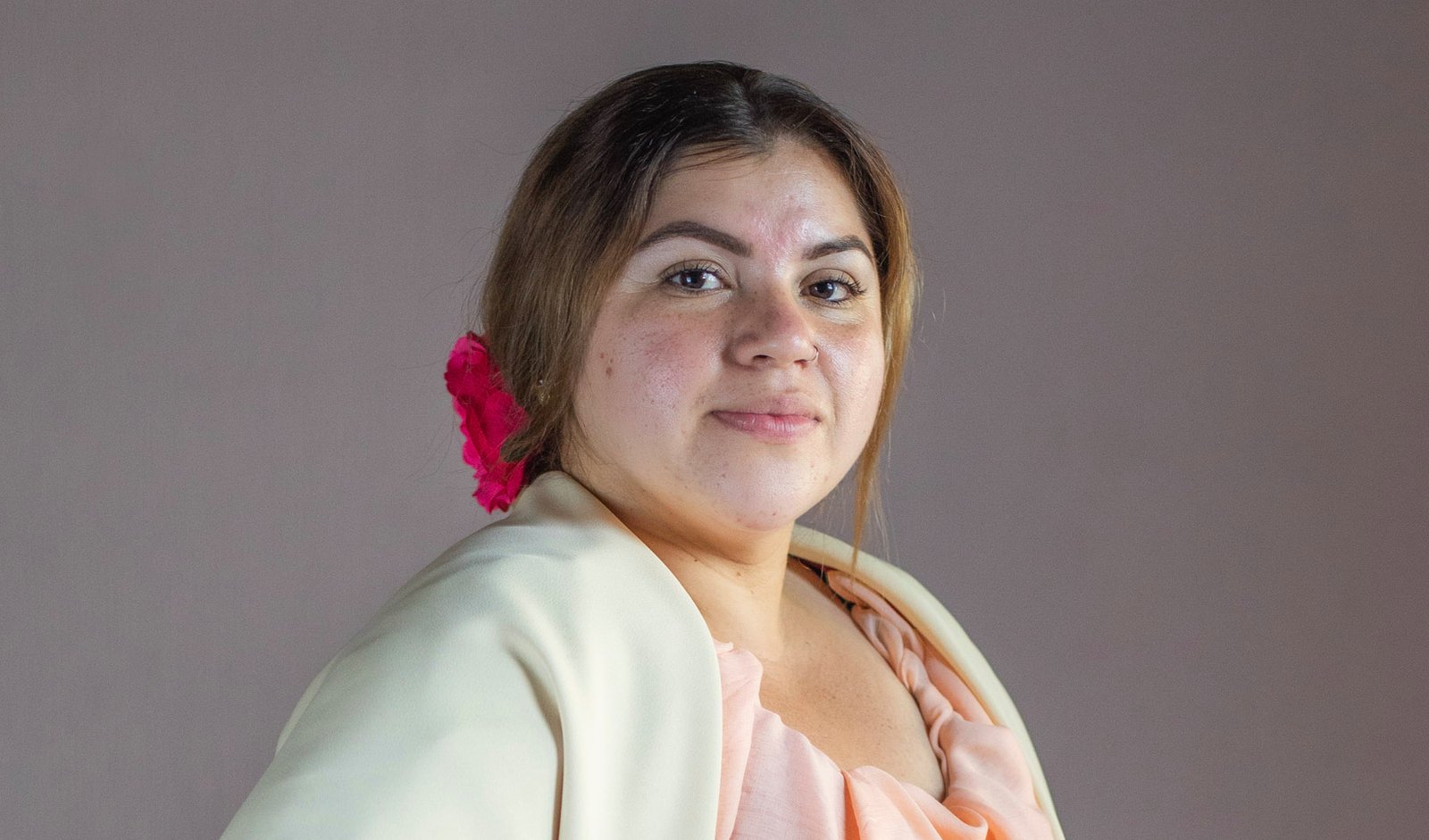
Ada during the creation of Struggle · Valencia
The meaning behind the title
In Ada’s story, struggle does not end with leaving a violent relationship. It continues in the work of creating stability, protecting her daughters and rebuilding a life that still has no guarantees.
The title therefore moves beyond confrontation. It speaks of a quieter, sustained form of resistance: the decision to keep moving towards a different life when the future remains uncertain.
Struggle is less about conflict than about the decision to continue.
Keys to reading the work
01 · The hand on the hip
The gesture inherited from Sorolla gives Ada a firm, self-possessed presence. Her body does not retreat from its own history; it occupies the composition.
02 · The green chair
The chair establishes one of the clearest visual links with María la guapa. Its verticality and colour also anchor the composition and counterbalance the figure.
03 · The yellow shawl
The pale yellow concentrates light around the upper body, creating a warm counterpoint to the green chair and the pink tones of the dress.
04 · Pink and white
The softness of the palette contrasts with the severity of the story behind the portrait. The work deliberately refuses to build its visual language around suffering.
05 · The courtyard
The courtyard and repeated chairs create depth while preserving the intimate, everyday spatial structure of Sorolla’s reference.
06 · The inherited composition
The pose, furniture and spatial construction keep the memory of María la guapa recognisable. By placing Ada within it, the same structure comes to hold a contemporary biography.
Curatorial reading
Struggle uses a recognisable composition by Joaquín Sorolla to introduce a contemporary female experience. The operation is not one of reproduction, but of displacement: the meaning of the historical image changes when another woman occupies its structure.
Ada’s biography creates a central tension within the portrait. The softness of the colour, the stability of the pose and the everyday character of the setting contrast with a life marked by violence, migration and precarity.
This contrast is central to Séfora Camazano’s practice. Difficult experience remains part of the context, but it is not allowed to become the visual identity of the woman represented. Ada occupies the image from the present, not from what was done to her.
Artistic reference
Struggle takes as its reference María la guapa (1914), by Joaquín Sorolla, in the Museo Sorolla collection. Séfora Camazano preserves key elements of its visual construction: the figure’s pose, the green chair, the pale yellow shawl and the relationship between pink and white.
More than a century later, Ada occupies that same structure. The change of protagonist turns a historical composition into the framework for a contemporary experience shaped by migration, motherhood and reconstruction.
The dialogue with Sorolla therefore operates through continuity and displacement: preserving the visual memory of the past while changing who is represented and which story enters the tradition of portraiture.
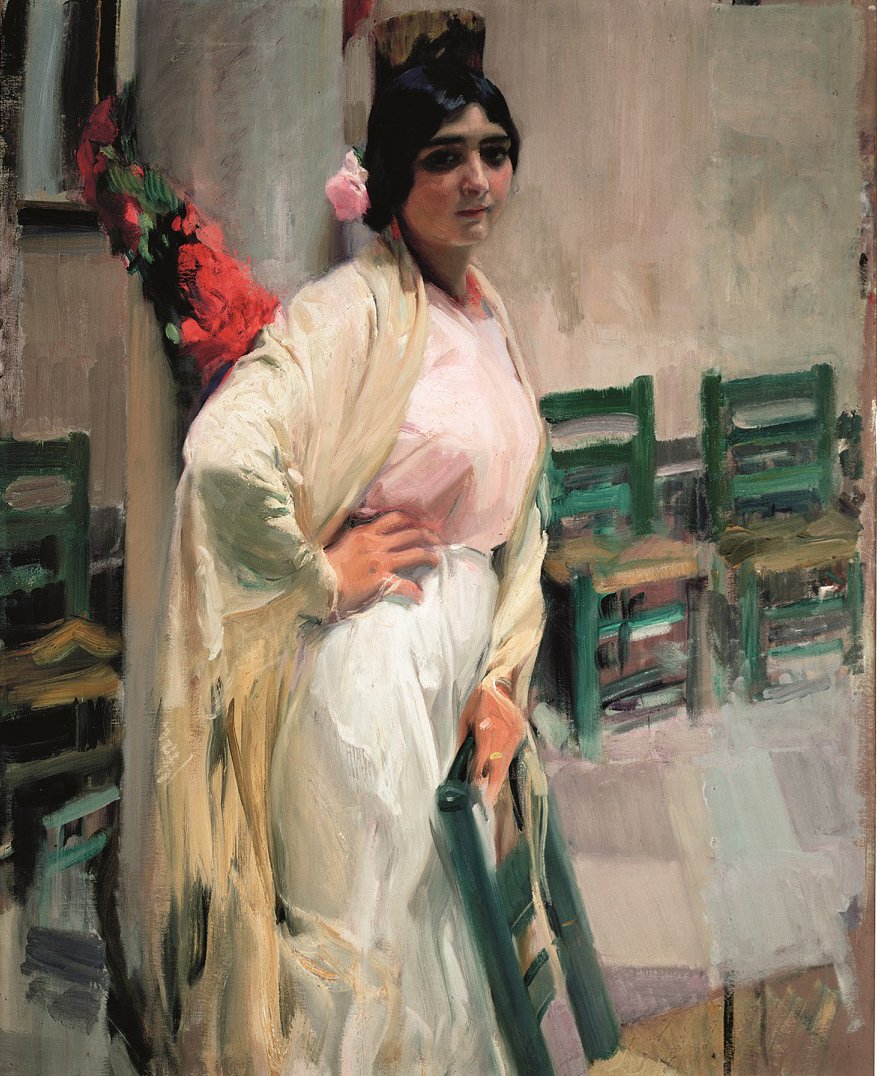
María la guapa
Joaquín Sorolla · 1914 · Museo Sorolla
Creative process
Struggle begins with Ada and a photographic session constructed around Sorolla’s historical composition. Photography, digital composition and painting gradually transform the original portrait.
The final work combines Giclée Fine Art printing on 100% acid-free cotton canvas with hand-painted intervention and UV varnish, placing the image in a deliberate territory between photography and painting.
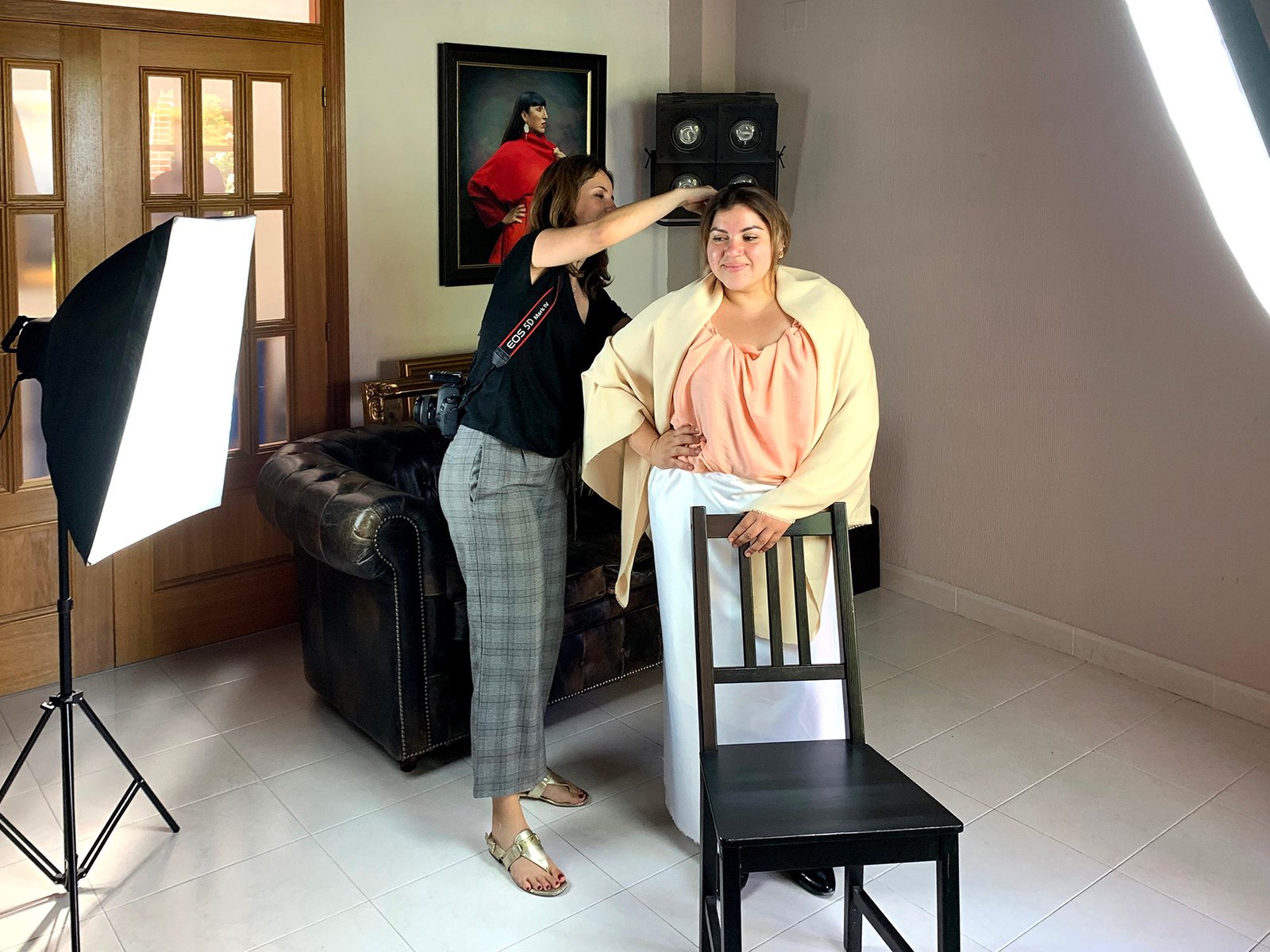
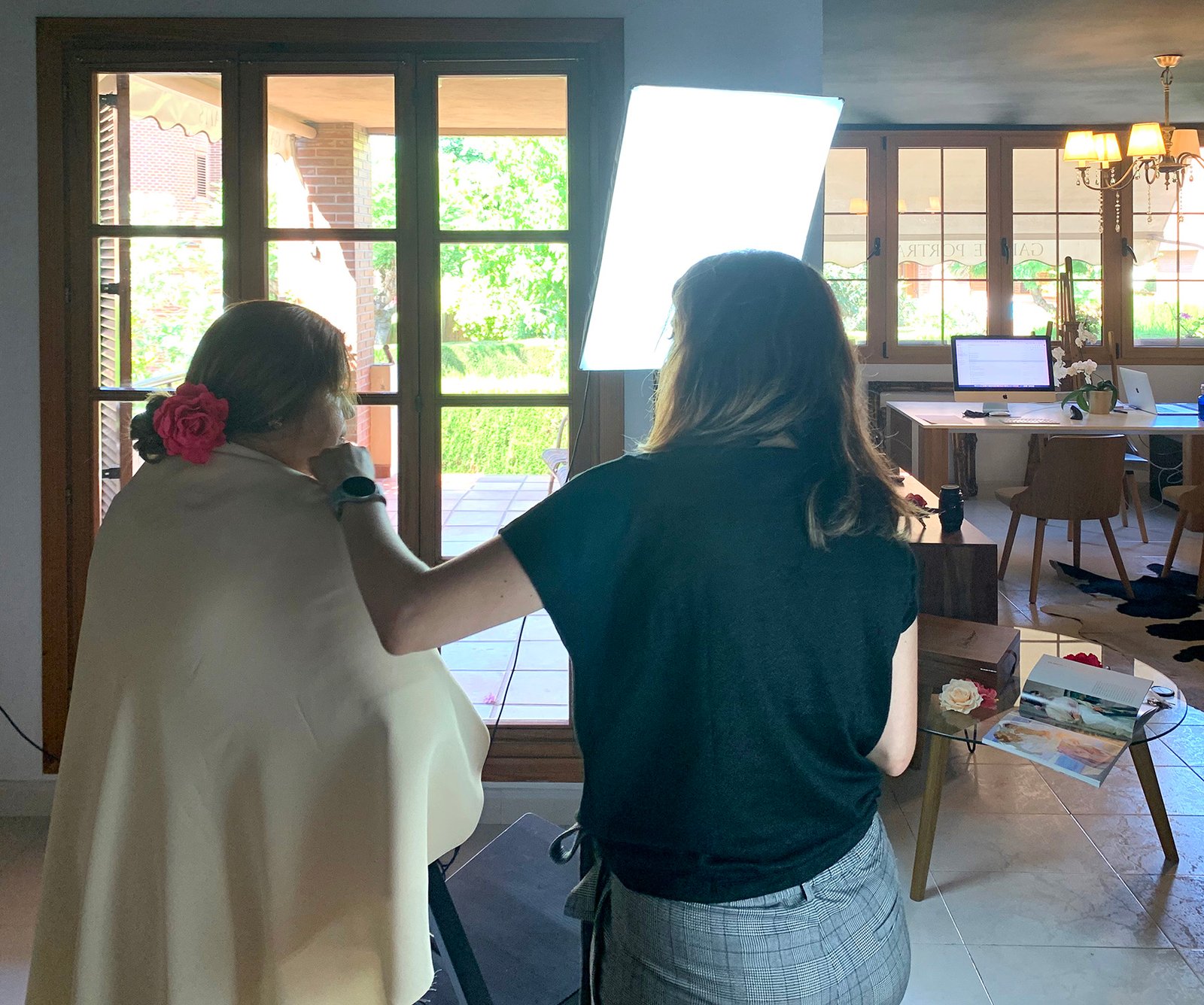
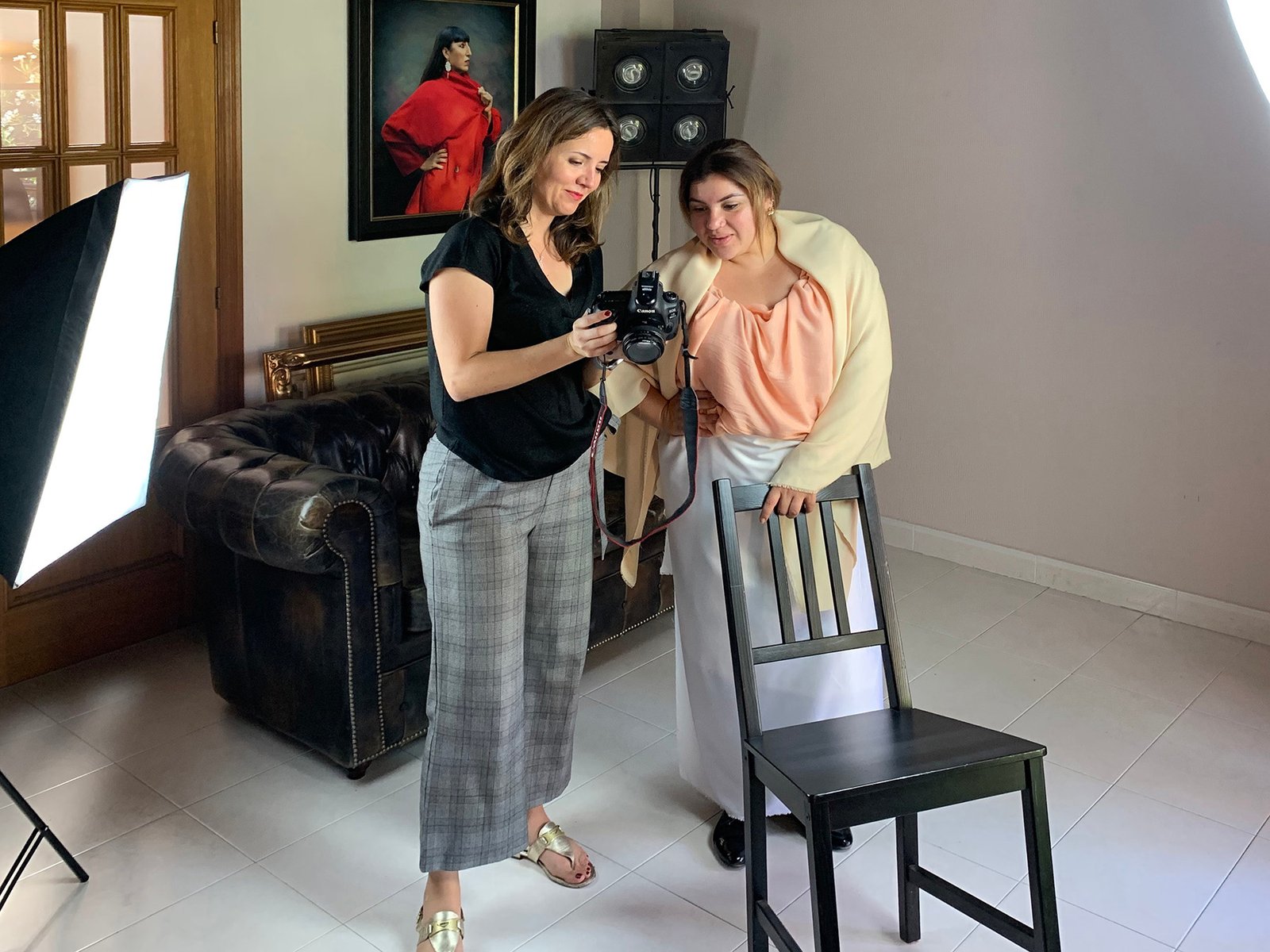
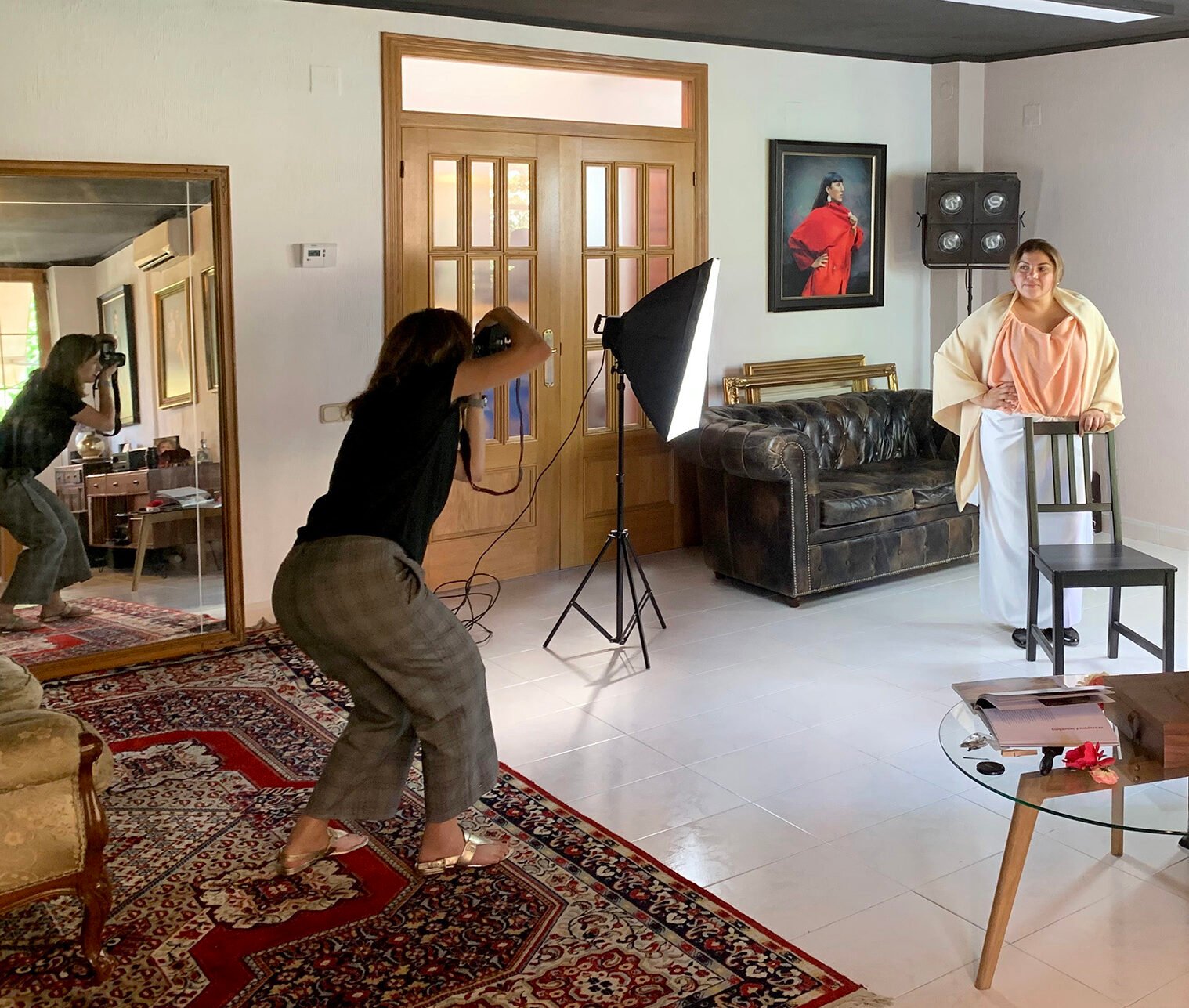
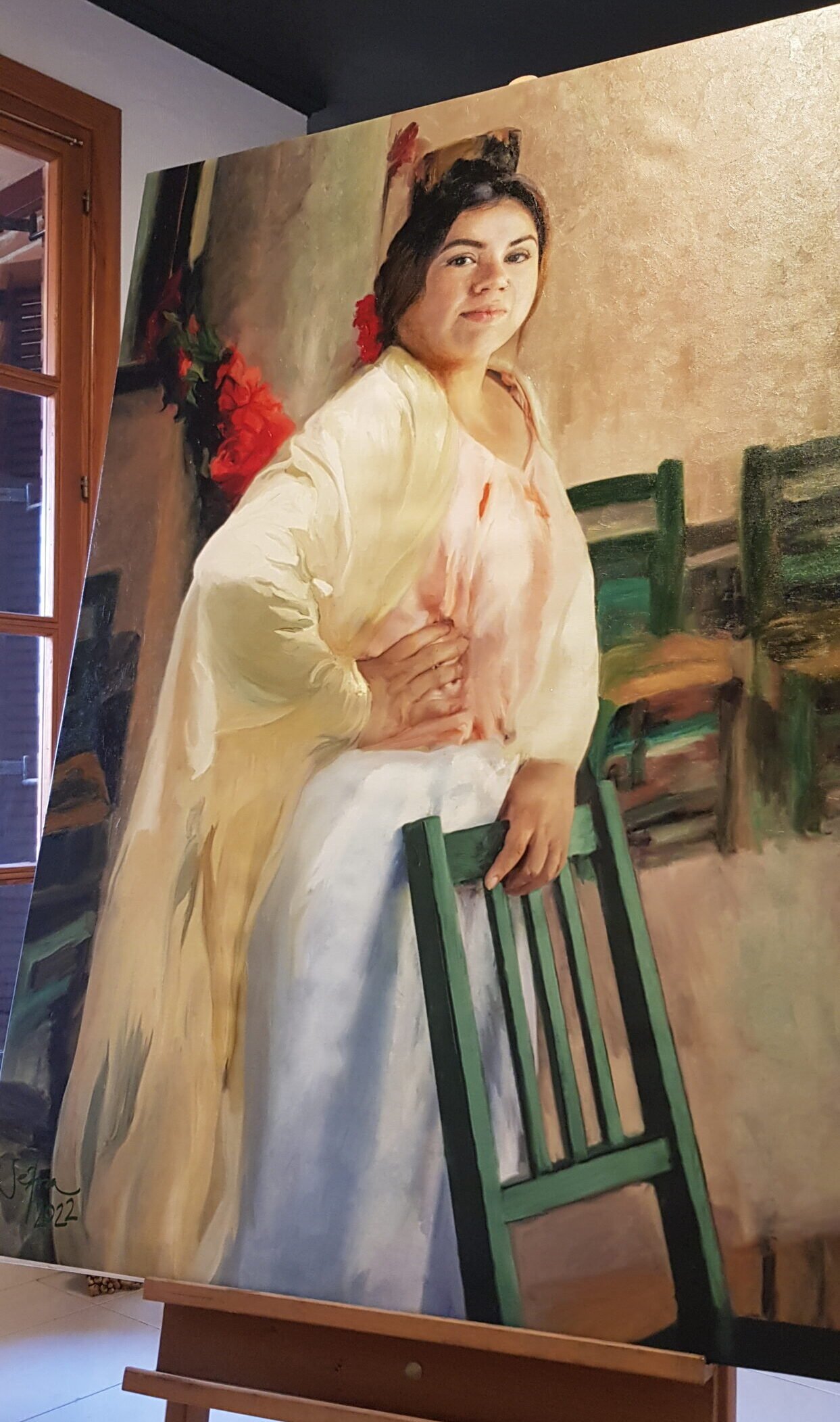
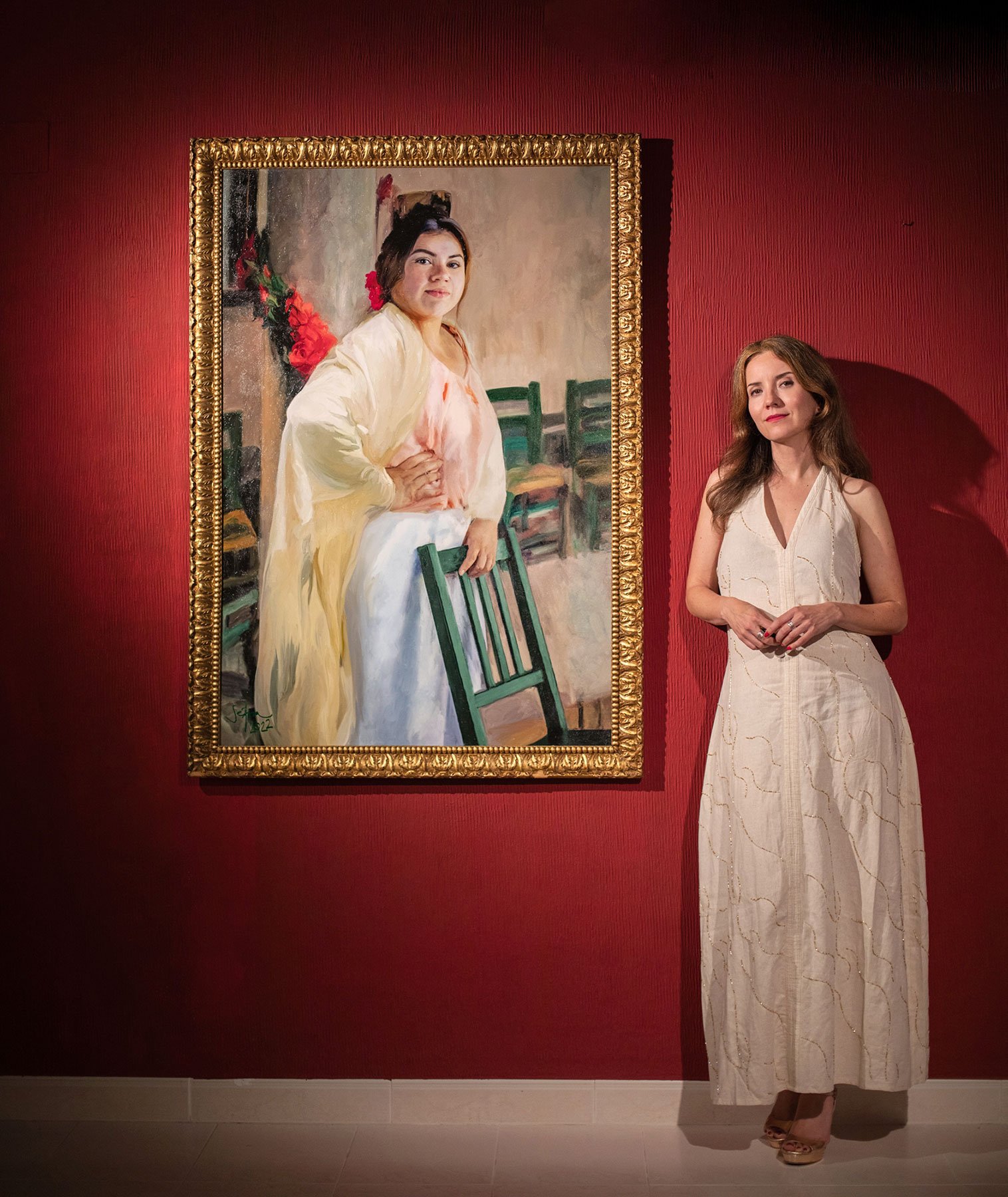
Struggle in the artist’s studio · Valencia
Exhibition history
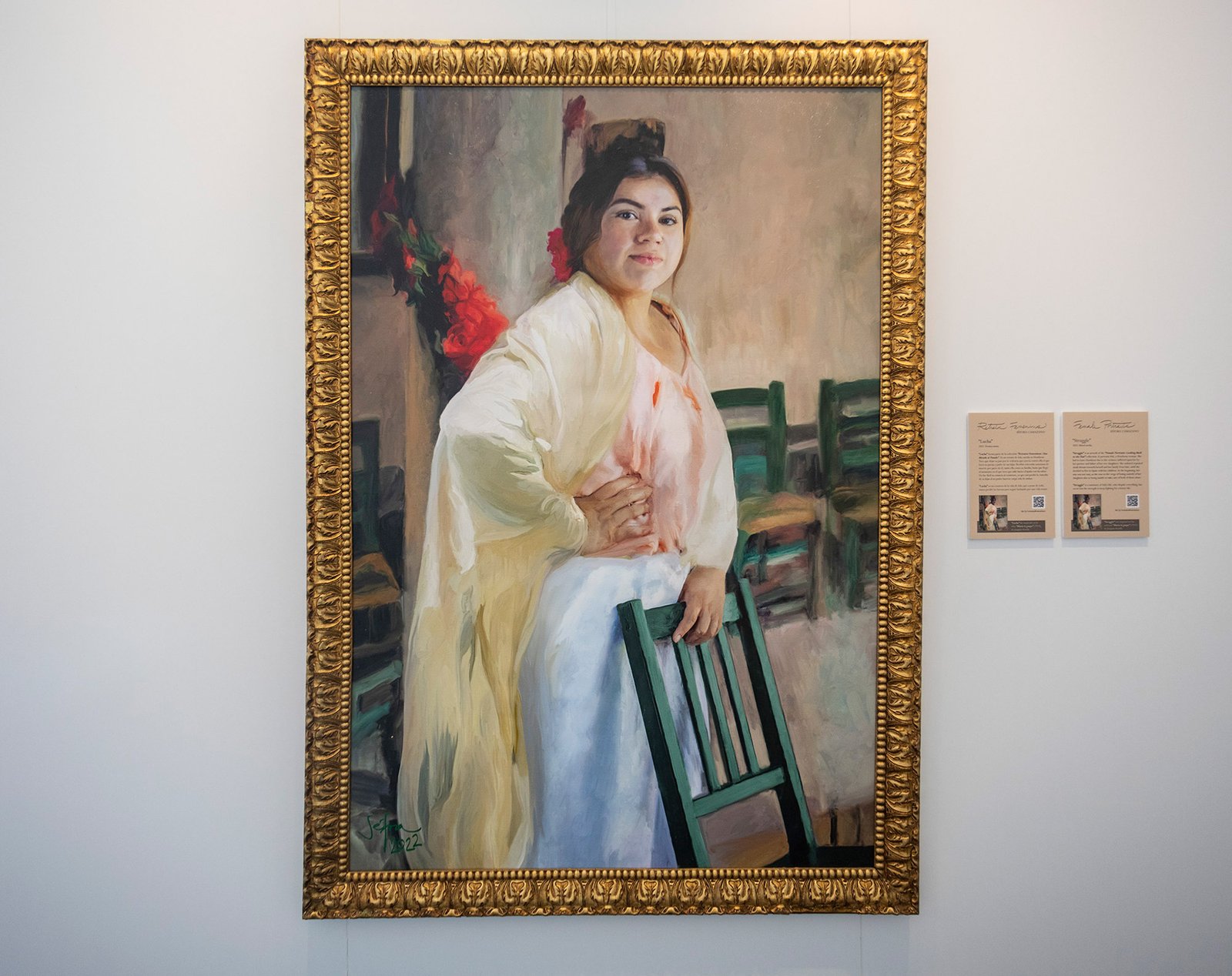
The Westin Valencia
Valencia, Spain · 2023
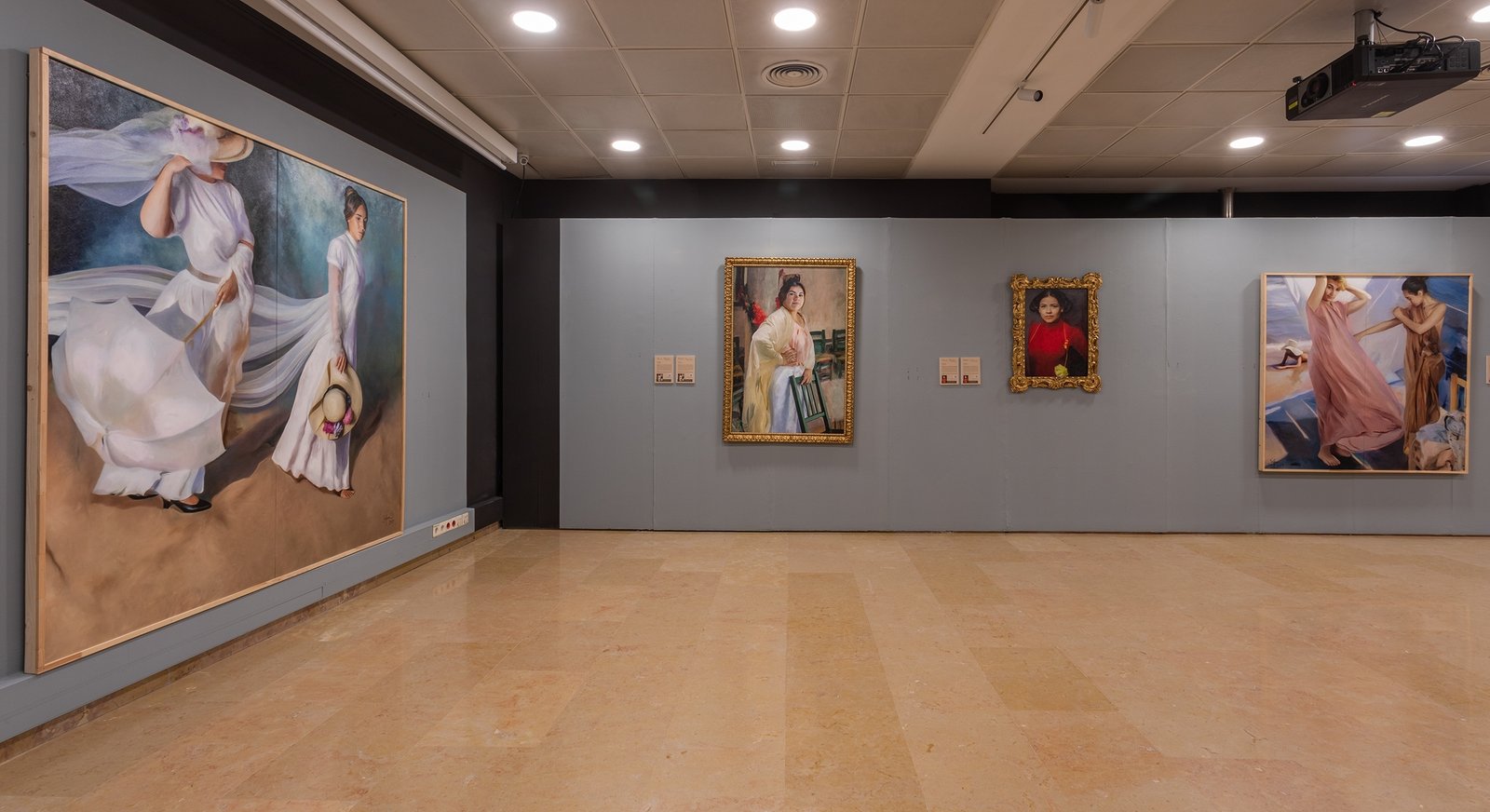
Botanical Garden of the University of Valencia
Valencia, Spain · 2024
Old Town Hall of Bétera
Bétera, Spain · 2024
Galerie Portraits
Interested in this work?
I respond personally within 48 hours
Enquire about the original artworkThe original artwork includes